What insurance do you need for a rental property in North Carolina?
Coverage for long-term rentals, beach rentals and LLC-owned homes, from an independent insurance company in North Carolina since 1977.
Coverage for long-term rentals, beach rentals and LLC-owned homes, from an independent insurance company in North Carolina since 1977.
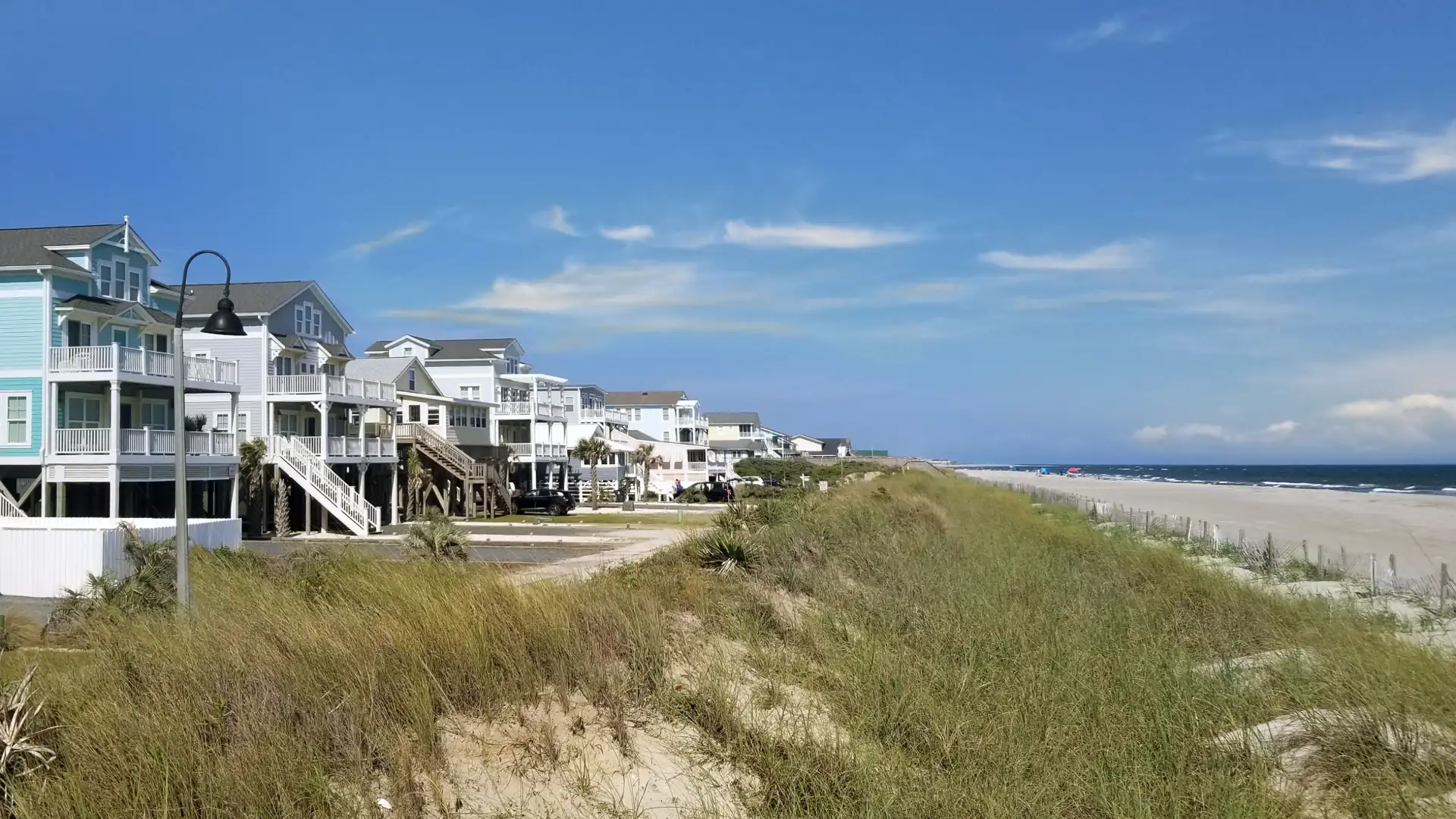
A rental home in North Carolina usually needs a dwelling policy, often called a landlord policy, instead of a homeowners policy. It covers the building, the rent you lose after a covered loss, and your liability as the owner. Short-term and vacation rentals need coverage written for that use, because homeowners forms often limit or exclude renting to paying guests.
On the coast, wind may sit on a separate Beach Plan policy, and flood always needs its own policy. Your lender, your HOA and some cities add their own requirements. We compare many insurance companies and match the policy to how the home is actually rented.
Dwelling coverage (DP-1, DP-2, DP-3). Covers the building and attached structures. A DP-1 is the most basic form and often pays actual cash value for a short list of named perils. A DP-2 adds perils and usually pays replacement cost on the building. A DP-3 covers the building for any cause not excluded. Forms vary by insurance company, so read the declarations, not just the form number.
Other structures. Detached garages, fences, sheds and docks. Some forms set this as a percentage of the dwelling limit, so check it if the property has a large detached structure.
Loss of rents (fair rental value). Pays the rent you lose while the home cannot be rented after a covered loss, such as a kitchen fire or a covered windstorm. It does not pay when a tenant simply stops paying rent.
Landlord liability. Pays defense costs and damages if a tenant, guest or visitor is hurt because of the property's condition, like a loose deck railing or a broken step. On many dwelling policies liability is an add-on, not automatic.
Short-term rental coverage. An endorsement or a policy written for nightly and weekly rentals can cover the building, the furnishings you provide, lost bookings after a covered loss, and guest injury claims. Booking platforms run their own host protection programs, but those have limits and conditions, and Airbnb says its program is not a substitute for your own insurance (Airbnb host protection terms).
Landlord contents. Furniture, appliances, linens and lawn equipment you own and leave at the rental. This matters most for furnished beach and vacation homes.
Wind and hail. On the coast, wind may be excluded from the dwelling policy and written on a separate policy, often through the Beach Plan. Check whether the wind deductible is a percentage of the dwelling limit.
We always include wind and hail
Every home and rental property policy we place includes wind and hail. When the insurance company excludes wind, we write the wind coverage separately through the Beach Plan or another company, so you're never left without it.
Flood. Dwelling and homeowners policies do not cover flood. A separate flood policy covers the building and, if you add it, the contents you own.
Umbrella. Adds liability limits above the rental and auto policies. Owners with several rentals or a busy beach house often carry one, and some umbrellas require each rental to be listed.
Your tenant's renters insurance. Your policy does not cover a tenant's belongings or the tenant's own liability. Many landlords require renters insurance in the lease and keep proof on file.
Forms, endorsements and availability vary by insurance company. Your own policy governs.
Pick your town or county and how close the property sits to the water. These are the typical yearly premiums our clients pay for rental and dwelling fire policies, with any separate Beach Plan wind policy included.
Ready to compare?
We shop 100+ insurance companies for you.
| Dwelling coverage | Typical yearly premium |
|---|
Typical means the median: half of policyholders pay less, half pay more. Beachfront: within a quarter mile of the ocean. Near the water: within a mile of the ocean, a sound or the Intracoastal Waterway. Inland: more than a mile from the ocean and the sounds.
Typical (median) yearly premium from our own clients' in-force rental dwelling policies as of October 10, 2026, not a survey or national average (how we got these numbers). Not a quote; your price depends on the property, where it sits and the coverage you choose.
Type what you pay a year now for your rental or dwelling fire policy, plus any separate wind policy. We compare it with what our clients in your town pay.
Enter your premium to see how it compares.
Ready to compare?
We shop 100+ insurance companies for you.
Nothing you type here is saved or sent. Not a quote.

Vacation rentals have their own state law. The Vacation Rental Act covers residential rentals for vacation, leisure or recreation for fewer than 90 days (G.S. 42A-4). It requires a written vacation rental agreement (G.S. 42A-10) and makes the landlord keep the home fit and habitable, with working smoke and carbon monoxide alarms (G.S. 42A-31).
Hurricane evacuations and guest refunds. When a mandatory evacuation covers the property, guests must leave and are generally owed a prorated refund for the nights they lose. No refund is due if the guest bought, or turned down, evacuation insurance offered before the stay (G.S. 42A-36). That is the guest's coverage; your own loss of rents and property coverage are separate.
Sales tax on accommodations. Rentals of accommodations are taxed at the state's general 4.75% sales tax rate plus applicable local and transit rates (G.S. 105-164.4, NC Department of Revenue). A stay of 90 or more continuous days to the same person is exempt, and so is a private residence rented fewer than 15 days in a calendar year unless a facilitator such as a booking platform makes the rental (G.S. 105-164.4F).
Room occupancy tax is local. Counties and towns levy room occupancy taxes. The operator collects them and files monthly, due by the 20th of the following month (G.S. 153A-155). Rates differ by place: New Hanover County lists a 6% rate (New Hanover County), while Oak Island levies a 5% accommodations tax (Town of Oak Island).
Registration rules are limited by state law. Cities and counties generally cannot require owners to register residential rental property or get permission to rent, except for properties with repeated verified violations or serious crime problems (G.S. 160D-1207). Towns can still regulate short-term rentals through zoning, parking, noise and trash rules, so check the town where the home sits.
Wilmington sets a liability minimum. Wilmington's short-term lodging rules require commercial general liability coverage of at least $500,000 per occurrence while the unit is rented. Whole-house rentals need a local operator available 24 hours a day within 25 miles and one off-street parking space per bedroom (City of Wilmington).
Beach Plan for wind. State law defines the beach area and coastal area served by the NC Insurance Underwriting Association, known as the Beach Plan (G.S. 58-45-5, NCIUA). Rentals in those areas often carry wind on a separate policy.
Flood is always separate. Most homeowners insurance does not cover flood damage (FloodSmart). A rental on or near the water needs its own flood policy, and lenders require one in high-risk flood zones.
The typical numbers above are a starting point, because two rentals on the same street can price very differently. These are the factors insurance companies weigh:
A licensed advisor quotes your actual situation across more than 100 insurance companies.
These numbers come from our own clients' in-force rental dwelling policies. They are not a survey, a national average or an online estimate. They are the premiums Sizemore Insurance clients actually pay to insure rental homes and other dwelling fire properties, more than 1,650 insured properties, as of October 10, 2026.
If you have a mortgage, your lender will require coverage on the building, and a homeowners policy usually stops fitting once the home is rented. A dwelling policy covers the building, lost rent after a covered loss and your liability as the owner.
Often not, or only in a limited way. Many homeowners forms limit or exclude renting to paying guests, so tell us before you list the home and we will match the policy to the rental.
Yes, in most cases. Platform host protection programs have limits and conditions and are not a substitute for your own policy.
A DP-1 covers a short list of named perils and often pays actual cash value. A DP-3 covers the building for any cause not excluded and usually pays replacement cost. Forms vary by insurance company.
Sudden accidental damage such as a kitchen fire is usually covered. Wear and tear is not, and intentional damage by a tenant may be limited or excluded depending on the form.
Loss of rents coverage pays the rent you lose while the home cannot be rented after a covered loss. It does not pay when a tenant stops paying.
Your dwelling policy does not cover flood. Lenders require flood insurance in high-risk zones, and many owners outside those zones buy it anyway.
Wind damage is covered if your policy includes wind or you carry a separate wind policy, subject to the wind deductible. Storm surge and flooding need a flood policy. Every rental policy we place includes wind and hail, on the policy itself or on a separate wind policy we write.
That is a legal and tax decision for your attorney or CPA. If you do, the LLC should be the named insured on the property policy, so tell us before the deed changes.
State law generally bars cities and counties from requiring rental registration or permission to rent. Zoning, parking, noise and trash rules still apply, and HOAs can set their own rental limits.
The guest pays it, and whoever collects the rent must collect and remit it. When a rental company or platform collects the payment, it may handle that for you, so confirm in writing.
No. Your tenant needs renters insurance for their belongings and their own liability.
Forms, endorsements and availability vary by insurance company. Your own policy governs.
Sizemore Insurance is an independent insurance company founded in North Carolina in 1977. Tell us what you need to protect, and a licensed advisor will compare more than 100 insurance companies to find the coverage that fits. Insurance made just for you.
Sources: Airbnb Help Center, host protection terms; NC Vacation Rental Act, G.S. 42A-4; NC Vacation Rental Act, G.S. 42A-10; NC Vacation Rental Act, G.S. 42A-31; NC Vacation Rental Act, G.S. 42A-36; G.S. 105-164.4 (sales tax rate); NC Department of Revenue, Rentals of Accommodations; G.S. 105-164.4F (accommodations); G.S. 153A-155 (room occupancy tax administration); New Hanover County, Room Occupancy Tax; Town of Oak Island, Accommodations Tax; G.S. 160D-1207 (rental registration limits); City of Wilmington, Short Term Lodging; G.S. 58-45-5 (beach and coastal area); NC Insurance Underwriting Association; FEMA FloodSmart.
Forms, exclusions, endorsements, and availability vary by insurance company. This page is general information, not a policy or legal advice. Review your own policy or talk to your advisor.