Do you need flood insurance in North Carolina?
Rising water, storm surge and the policy your homeowners insurance leaves out, explained by an independent insurance company that quotes both NFIP and private flood.
Rising water, storm surge and the policy your homeowners insurance leaves out, explained by an independent insurance company that quotes both NFIP and private flood.
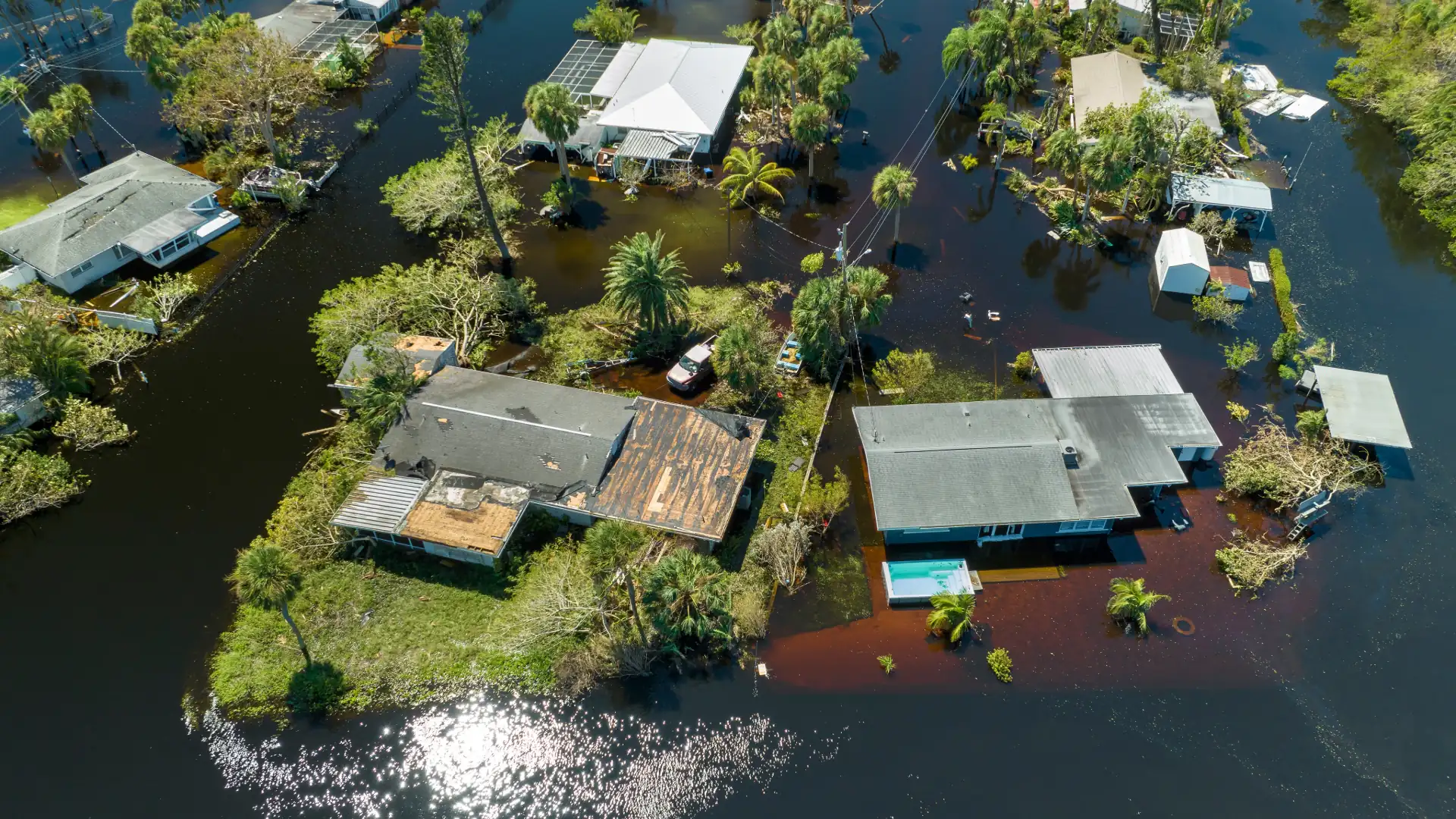
If you own a home in North Carolina, flood insurance is worth pricing, even outside a mapped flood zone. Homeowners policies do not cover flood, including storm surge, and from 2015 to 2019 more than 40% of NFIP claims came from outside high-risk areas (FEMA).
You can buy flood coverage from the National Flood Insurance Program (NFIP), run by FEMA, or from a private insurance company. The NFIP has set limits and rules. Private flood lets you choose your own limits and often adds coverage the NFIP does not offer. We quote both and show you the difference side by side.
Coverage descriptions here are general. Private flood forms and availability vary by insurance company, and your own policy governs.
Building coverage. Covers the structure and foundation, electrical and plumbing, furnace, water heater, central air, built-in appliances, permanently installed carpet and cabinets, and debris removal. The NFIP limit for a 1 to 4 family home is $250,000.
Contents coverage. Covers your belongings up to $100,000 under the NFIP, paid at actual cash value (depreciated). Building and contents are bought separately and carry separate deductibles.
Increased Cost of Compliance. If a flood substantially damages your home and local rules require it, an NFIP policy can pay up to $30,000 to elevate, move or demolish it.
Higher limits (private). Private flood commonly lets you choose dwelling and contents limits above the NFIP caps. An excess flood policy can also sit above an NFIP policy.
Loss of use (private). Many private flood policies pay hotel, meals or rent while you are out of the home, usually with a dollar or time limit. The NFIP does not.
Replacement cost on contents (private). Some private policies pay belongings at replacement cost instead of depreciated value, sometimes as an add-on.
Lower levels and other structures (private). Some private policies give broader coverage for enclosed areas below an elevated home, detached structures and sometimes pools.
Shorter waiting periods (private). Many private policies start sooner than the NFIP's 30 days, and some waive the wait at a closing.
Forms, endorsements and availability vary by insurance company. Your own policy governs.
We always include wind and hail
Flood and wind are separate, and we take care of both. Every home policy we place includes wind and hail. When the insurance company excludes wind, we write the wind coverage separately through the Beach Plan or another company, so you're never left without it.
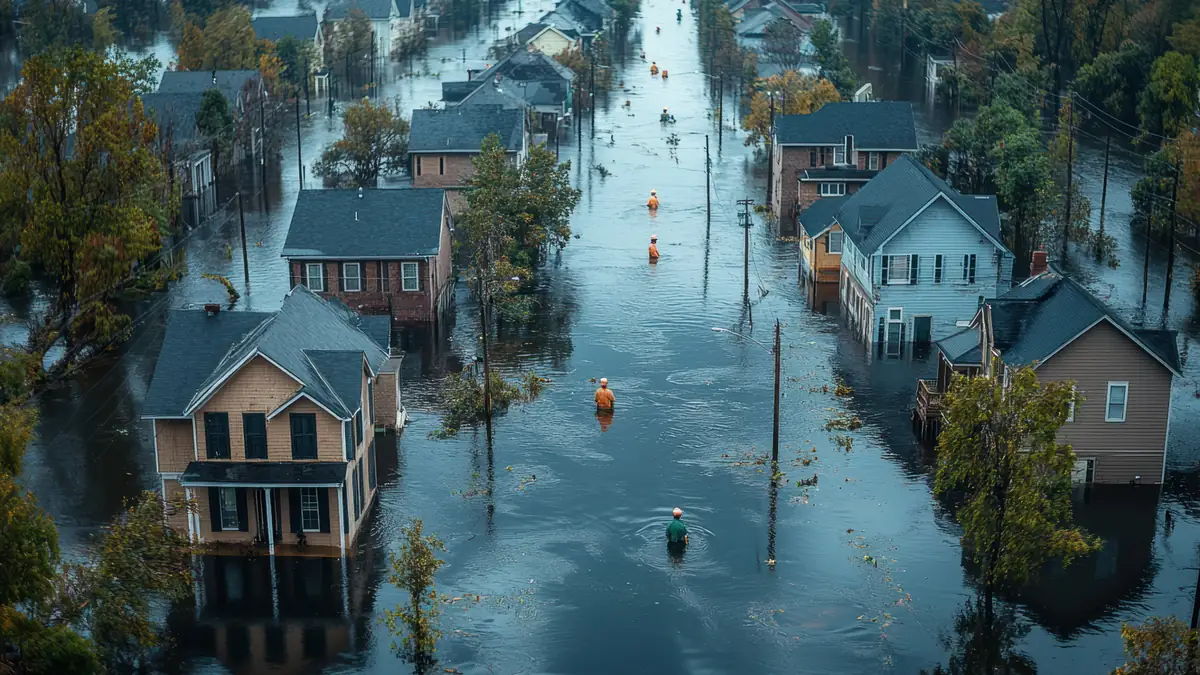
Homeowners policies do not cover flood. NCDOI states that homeowners insurance policies do not cover flood damage, that your lender may require flood insurance in a flood plain, and that the flood policy has a 30-day waiting period with exceptions (NCDOI).
NFIP limits. The NFIP covers up to $250,000 on a residential building and $100,000 on contents (42 U.S.C. 4013, FEMA). Contents are paid at actual cash value, and the policy does not pay additional living expenses (Standard Flood Insurance Policy).
The 30-day wait and its exceptions. New NFIP coverage starts 30 days after purchase. The wait does not apply when coverage is bought in connection with making, increasing, extending or renewing a loan, or within one year after a flood map revision (42 U.S.C. 4013(c)).
Lender rules. Regulated lenders must require flood insurance on a building in a high-risk flood area in a participating community, and must accept private flood that meets the federal definition (42 U.S.C. 4012a).
Flood zones. High-risk areas are the Special Flood Hazard Area, land with a 1% chance of flooding in any year (FEMA). V and VE zones are coastal high hazard areas with storm-driven wave action (44 CFR 59.1). Look up your address on the FEMA Flood Map Service Center or NC Flood Risk Information System.
How the NFIP prices flood now. FEMA's current rating looks at flood frequency, flood types including storm surge and heavy rainfall, distance to water, elevation and cost to rebuild, and does not use flood zones to set the rate (FEMA). By law most existing policies cannot rise more than 18% a year (42 U.S.C. 4015), and the cap usually does not apply to new policies (FloodSmart).
Program authorization. As of Sept. 28, 2026, the NFIP is authorized through Dec. 11, 2026. If it lapses, FEMA keeps paying valid claims but stops selling and renewing policies (FEMA). Private flood is not affected by a lapse.
Florence and Helene. After Hurricane Florence in 2018, the NFIP paid $632.7 million to North Carolina policyholders as of Sept. 10, 2020 (NC Dept. of Public Safety). After Helene in 2024, initial FEMA assistance data showed only 5.2% of people with verified flood damage in western North Carolina had flood insurance (NC OSBM).
Flood prices vary home by home. These are the factors FEMA and private insurance companies weigh:
We do not publish average prices. A licensed advisor quotes your actual situation across more than 100 insurance companies.
Your lender may not require it, but the risk is still there. From 2015 to 2019, more than 40% of NFIP claims came from outside high-risk areas.
No. Homeowners policies exclude flood, including storm surge, so you need a separate flood policy.
State law does not require it for every home. Your lender must require it if you have a federally backed mortgage on a home in a high-risk A or V zone.
An NFIP policy usually starts 30 days after you buy it, with exceptions for a loan closing or a recent flood map change. Many private flood policies start sooner.
$250,000 for the home and $100,000 for belongings. If your home would cost more to rebuild, private flood or an excess flood policy can cover the difference.
It depends on the home. Private flood can offer higher limits, loss of use and shorter waits, while the NFIP renews as long as you pay and may carry discounts you would lose by leaving.
Regulated lenders must accept private flood that meets the federal definition. We confirm with your lender before you switch.
Yes. Storm surge is rising water from the ocean or sound, which is exactly what a flood policy covers.
FEMA's current pricing moves each policy toward its full flood risk cost. Most existing policies cannot rise more than 18% a year, so some will see increases each year until they reach that price.
Your existing policy stays in force until it expires, and FEMA keeps paying valid claims. New NFIP policies and renewals stop until Congress renews the program, and private flood is not affected.
Forms, endorsements and availability vary by insurance company. Your own policy governs.
Sizemore Insurance is an independent insurance company founded in North Carolina in 1977. Tell us what you need to protect, and a licensed advisor will compare more than 100 insurance companies to find the coverage that fits. Insurance made just for you.
Sources: NCDOI, Flood Insurance; 42 U.S.C. 4013 (NFIP limits and waiting period); FEMA FloodSmart, NFIP coverage limits; FEMA Standard Flood Insurance Policy, Dwelling Form (44 CFR Part 61, App. A(1)); 42 U.S.C. 4012a (lender flood requirements); FEMA, Flood Zones glossary; 44 CFR 59.1, NFIP definitions; FEMA Flood Map Service Center; NC Flood Risk Information System; FEMA, Risk Rating 2.0 (updated Apr. 9, 2026); 42 U.S.C. 4015 (rate increase limits); FloodSmart, Premium Costs; FEMA, NFIP Congressional Reauthorization (updated Sept. 28, 2026); NC Dept. of Public Safety, Two Years After Florence (Sept. 14, 2020); NC OSBM, Hurricane Helene Damage and Needs Assessment (Oct. 2024); FEMA FloodSmart, claims outside high-risk areas 2015 to 2019; FEMA, NFIP Summary of Coverage (Dec. 2023).
Forms, exclusions, endorsements, and availability vary by insurance company. This page is general information, not a policy or legal advice. Review your own policy or talk to your advisor.