How do you insure a beachfront or coastal home in North Carolina?
Wind, flood and the rules that come with living near the water, from an independent insurance company on the North Carolina coast since 1977.
Wind, flood and the rules that come with living near the water, from an independent insurance company on the North Carolina coast since 1977.

Most coastal North Carolina homes are insured with two or three policies, not one. A homeowners policy covers fire, theft and liability, wind and hail is either included or written separately (often through the Beach Plan), and flood is always its own policy.
Where the home sits changes the answer. Homes south and east of the Intracoastal Waterway are in the Beach Plan's beach area, the rest of the 18 coastal counties are its coastal area, and an oceanfront house on pilings is underwritten differently from a brick ranch two miles inland. We compare more than 100 insurance companies and the Beach Plan so the pieces fit together without gaps.
Coverage descriptions on this page are general. Forms, endorsements and availability vary by insurance company, and your own policy governs.
Homeowners policy. Covers the dwelling, other structures, belongings, loss of use and personal liability. On the coast many companies write it with wind and hail excluded, so look on the declarations page for a wind exclusion endorsement before you assume a storm is covered.
Wind and hail policy. When the homeowners policy excludes wind, a separate wind and hail policy covers that peril, often from the Beach Plan. It should match the homeowners policy on limits, dates and form so nothing falls between them. See our wind insurance page.
We always include wind and hail
Every home policy we place includes wind and hail. When the insurance company excludes wind, we write the wind coverage separately through the Beach Plan or another company, so you're never left without it.
Flood insurance. Covers rising water, including storm surge, which homeowners and wind policies exclude. You can buy it from the NFIP or from a private insurance company. See our North Carolina flood insurance guide and flood policy page.
Named storm or hurricane deductible. Coastal policies often carry a separate deductible for named storms, set as a percentage instead of a flat dollar amount. A 2% deductible on a $400,000 dwelling limit means you pay the first $8,000 of a named storm wind claim.
Replacement cost on the dwelling. Insure to the cost to rebuild, not the market or tax value. On the coast that cost can include pilings, breakaway walls, engineering and meeting today's elevation rules.
Ordinance or law. Pays part of the extra cost to rebuild to current code after a covered loss, such as higher elevation or stronger roof connections. Many policies include only a small percentage, and older coastal homes may need more.
Loss of use. Pays extra living costs, or lost rent on a rental, while the home is repaired after a covered loss. An NFIP flood policy does not include it.
Liability and umbrella. Renters, guests, docks, pools and golf carts add liability exposure at a beach house. An umbrella policy adds limits above the home and auto policies.
Forms, endorsements and availability vary by insurance company. Your own policy governs.
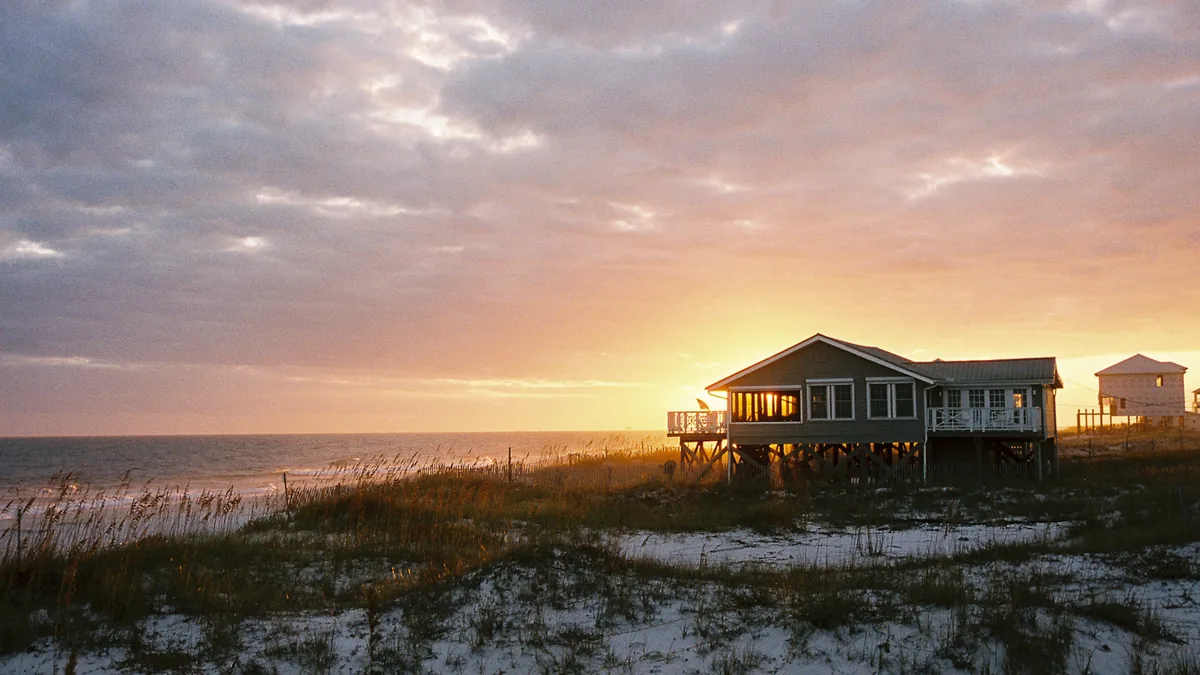
The Beach Plan covers 18 coastal counties. The Coastal Property Insurance Pool, still called the Beach Plan, is run by the NC Insurance Underwriting Association and writes homeowners and wind and hail policies in 18 coastal counties (NCIUA). State law defines the beach area as land south and east of the Intracoastal Waterway, including the Outer Banks, and the coastal area as the rest of those counties (G.S. 58-45-5).
How a Beach Plan wind policy works. To buy a wind and hail policy from the pool, you need a primary policy from an admitted insurance company that excludes windstorm, and the wind policy should closely match its dates, limits and form. The pool's maximum building limit on a residence is $1,000,000, and personal property is capped at 40% of the building limit (NCIUA).
Named storm percentage deductibles. The NC Rate Bureau's homeowners program has an optional Named Storm Percentage Deductible for the beach and coastal territories. On that form the deductible is the percentage times the Coverage A or Coverage C limit, whichever is greater, and it applies to wind and hail losses from the time the National Weather Service issues an advisory, watch or warning for a named storm until 24 hours after the last one ends (NC Rate Bureau).
Mitigation credits and FORTIFIED roofs. NCDOI says mitigation credits can lower the wind and hail premium for qualifying homes in the beach and coastal territories, and that a FORTIFIED roof, verified by inspection, can qualify (NCDOI). In 2025 the state announced a $20 million FORTIFIED roof grant program for eligible Beach Plan policyholders in the 18 coastal counties, first come, first served (NCDOI).
Oceanfront setbacks. Under the state's ocean hazard rules, a building under 5,000 square feet must sit at least 60 feet, or 30 times the long-term erosion rate, landward of the vegetation line, whichever is greater (15A NCAC 07H .0306). The Division of Coastal Management sets the erosion rate factors for each stretch of beach (NC DCM). A house that is badly damaged and sits inside today's setback can be hard to rebuild in the same spot.
Flood is separate. NCDOI states that homeowners policies do not cover flood damage and that your lender may require flood insurance in a flood plain (NCDOI). Oceanfront V zones are coastal high hazard areas subject to high velocity wave action from storms (44 CFR 59.1).
Substantial damage means rebuilding to code. If repairs cost 50% or more of the building's market value, federal rules call it substantial damage (44 CFR 59.1), and the home must meet current flood rules, which often means elevating. NFIP Increased Cost of Compliance coverage can pay up to $30,000 toward elevating, relocating or demolishing a flood-damaged home (FEMA).
Catastrophe recovery charge. If the Beach Plan cannot cover its claims after a major storm, state law allows a catastrophe recovery charge on property policies statewide, capped at 10% of premium in a year (G.S. 58-45-5).
We do not publish a single coastal price because two homes on the same street can differ a lot. Insurance companies weigh these factors:
A licensed advisor quotes your actual situation across more than 100 insurance companies.
It depends on whether your policy includes or excludes wind. Wind damage is covered only if wind is on the homeowners policy or on a separate wind policy, and storm surge is never covered without flood insurance. Every home policy we place includes wind and hail, on the homeowners policy or on a separate wind policy we write.
It is the Coastal Property Insurance Pool, run by the NC Insurance Underwriting Association. It writes homeowners and wind and hail policies in 18 coastal counties when the regular market will not write the coverage you need.
Only if your homeowners policy excludes wind and hail. When it does, we write the wind coverage separately through the Beach Plan or another company, matched to your homeowners limits and dates, so you are never left without it.
Many coastal policies use a named storm deductible set as a percentage of the dwelling limit. At 2% on a $400,000 home, you pay the first $8,000 of a named storm wind claim.
No. Storm surge is rising water, so it is a flood claim, and only a flood policy covers it.
Your lender must require it if the home has a federally backed mortgage and sits in a high-risk flood zone. Even without a loan, most beach homes face flood risk that only a flood policy covers.
Yes, but the form matters. Rentals are usually written on a dwelling or landlord form, and short-term rentals may need a policy built for them.
It can. NCDOI says mitigation credits can lower the wind and hail premium for qualifying homes in the beach and coastal territories, and the amount depends on the home's features.
Hurricane wind, storm surge and erosion risk are concentrated on the coast, and wind is the largest part of the price. Elevation, roof, distance to the water and deductible choices move the cost the most.
Often yes. Some insurance companies limit what they write on homes that are vacant part of the year, and NFIP surcharges are higher for non-primary homes.
Forms, endorsements and availability vary by insurance company. Your own policy governs.
Sizemore Insurance is an independent insurance company founded in North Carolina in 1977. Tell us what you need to protect, and a licensed advisor will compare more than 100 insurance companies to find the coverage that fits. Insurance made just for you.
Sources: NC Insurance Underwriting Association, coverages and territories; N.C. Gen. Stat. 58-45-5 (NCIUA definitions); NC Rate Bureau, Named Storm Percentage Deductible (Circular P-10-4); NCDOI, FORTIFIED Homes and Mitigation Credits; NCDOI, Strengthen Your Coastal Roof grant (July 30, 2025); 15A NCAC 07H .0306, ocean hazard setbacks; NC Division of Coastal Management, oceanfront setback and erosion rates; NCDOI, Flood Insurance; 44 CFR 59.1, NFIP definitions; FEMA, NFIP Summary of Coverage (Dec. 2023); 42 U.S.C. 4012a (lender flood requirements); FloodSmart, Premium Costs.
Forms, exclusions, endorsements, and availability vary by insurance company. This page is general information, not a policy or legal advice. Review your own policy or talk to your advisor.