What is builder's risk insurance and who needs it in North Carolina?
For homeowners building or renovating, general contractors, developers and anyone whose lender wants the project insured before the first wall goes up.
For homeowners building or renovating, general contractors, developers and anyone whose lender wants the project insured before the first wall goes up.
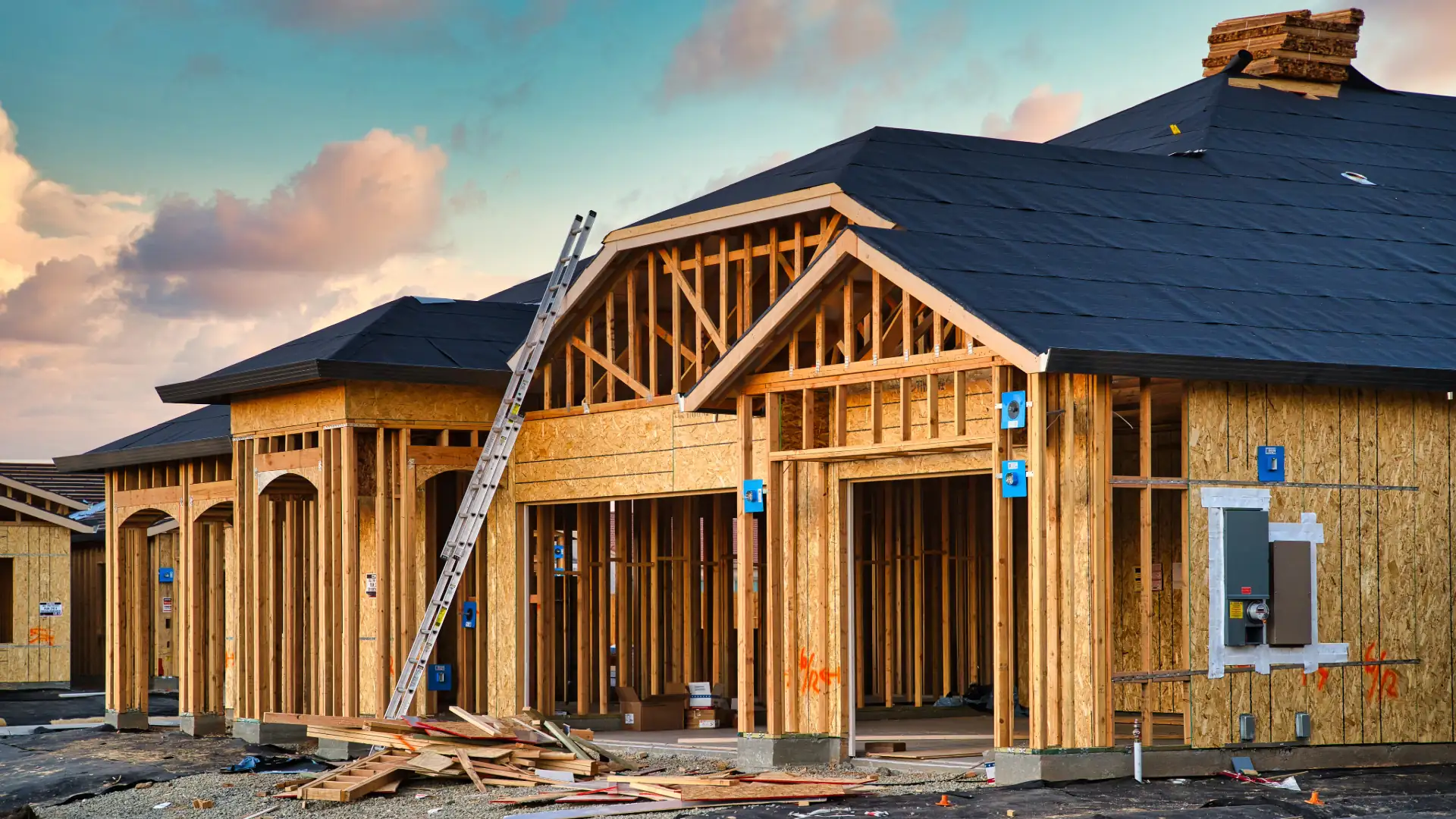
Builder's risk insurance covers a building while it is under construction: the structure itself, the materials waiting to go into it and, on many policies, materials in transit or in storage. It is property insurance written for a project, not for a finished home, and it usually ends when the building is finished and occupied (IRMI).
A regular homeowners policy is not built for a house that is still going up. The standard homeowners form excludes theft from a dwelling under construction and theft of building materials until the home is finished and occupied (ISO HO 3 sample form). That gap is why lenders, builders and owners put a builder's risk policy in place before work starts, then move to a homeowners or dwelling policy at the end.
Sizemore Insurance is an independent insurance company founded in North Carolina in 1977. We compare builder's risk options across many insurance companies and line them up with the wind, flood and homeowners coverage the finished building will need. Coverage descriptions on this page are general. Forms, endorsements and availability vary by insurance company, and your own policy governs.
The structure under construction. Covers the building as it goes up, including foundations, against covered causes of loss such as fire, lightning, wind, hail and vandalism. The limit is usually the completed value of the project, set at the start (IRMI).
Materials and supplies on site. Covers lumber, windows, roofing, fixtures and other materials meant to become part of the building while they are at the job site. Theft of materials that are not yet installed is often limited or needs to be added, so read that section of the policy (ISO causes of loss form).
Materials in transit and in storage. Many policies also cover materials while they are being delivered or stored away from the site until they are installed (IRMI). Ask for the transit and storage limits in writing.
Temporary structures. Scaffolding, construction forms, temporary fencing and similar structures built on site can be covered, depending on the form and the limits you choose.
Debris removal. Helps pay to clear damaged construction and materials after a covered loss, so the rebuild can start.
Soft costs and delay in completion (optional). An optional coverage that pays certain extra costs when a covered loss delays the project, such as extra construction loan interest, added permit or design fees, or lost rent on an investment property (IRMI). Developers and investors ask for it most.
Renovations and additions. Some forms cover only the new work on a renovation, not the existing building around it. If you are adding on to or gutting a home you already own, confirm in writing which policy covers the existing structure.
Forms, endorsements and availability vary by insurance company. Your own policy governs.
The Beach Plan does not write builder's risk on a homeowners form. The NC Insurance Underwriting Association, the Coastal Property Insurance Pool once called the Beach Plan, says in its manual: "BUILDERS RISK: Not eligible on Homeowner form." Its manual does list a dwelling under construction endorsement (DP 11 43) for dwelling policies and builder's risk forms for commercial policies (NCIUA Manual of Rules, 2026).
Wind on the coast during construction. In the 18 coastal counties, wind and hail can be written by the Beach Plan alongside a primary policy that excludes wind, and NCIUA's manual allows a commercial wind and hail policy when the builder's risk coverage comes from a member company's inland marine policy (NCIUA coverage areas, NCIUA manual). Which pieces fit your project depends on the form and on underwriting, so we confirm it before work starts.
Build to the wind code. State law treats one and two family homes built in substantial compliance with the NC building code, including its design-wind requirements, as insurable in the Beach Plan's territory (G.S. 58-45-5). The Beach Plan's builder's risk application asks for a certificate that the home is being built that way (NCIUA application AP-15).
No new coverage once a storm is close. The Beach Plan stops binding new or increased coverage after 12:01 AM on the day after a named storm's center enters a box of the Atlantic set out in its manual (NCIUA manual). Private insurance companies set their own binding limits. Insure the project before hurricane season, not when a storm is on the map.
Named storm deductibles. On the coast, wind losses from a named storm usually carry a percentage deductible. The NC Department of Insurance's example: 2% of $300,000 is $6,000 (NCDOI).
Flood during construction. The federal flood policy can cover a building under construction, with limits: materials are covered only when stored in a fully enclosed building, coverage can stop if work halts for more than 90 days before the building has walls and a roof, and the deductible doubles until the building has at least two rigid exterior walls and a secured roof (44 CFR Part 61, Appendix A(1)). The usual 30-day waiting period does not apply when flood coverage is required for a loan (42 U.S.C. 4013).
When the building is finished. No new home, addition or altered building in North Carolina may be occupied until the inspector issues a certificate of compliance, often called a certificate of occupancy; a temporary certificate can allow earlier occupancy (G.S. 160D-1116). That date is when builder's risk should hand off to a homeowners or dwelling policy.
Renovation loans. For renovation loans it buys, Fannie Mae requires that the property insurance have no exclusions or limits tied to the renovation while the work is underway (Fannie Mae Selling Guide B7-3-05).
Builder's risk is priced project by project. Insurance companies weigh these factors:
We do not publish average prices. A licensed advisor quotes your actual situation across more than 100 insurance companies.
It covers a building while it is under construction, plus materials on site and, on many policies, materials in transit or storage. Fire, wind, hail and vandalism are usually covered, while flood, earthquake and faulty work are often excluded. Forms vary by insurance company.
No state law requires it, but construction lenders usually require the project to be insured, and many building contracts assign it to the owner or the builder. A regular homeowners policy is not written for a house under construction.
Whoever the construction contract says. On many custom homes the builder carries it, and on many owner-builder and renovation projects the homeowner does. Settle it in writing before work starts so the project is never uninsured.
It is written for the expected length of the project and usually ends when the building is finished and occupied, sold, or the policy term runs out. If the project runs long, ask about an extension before the end date.
No. Builder's risk covers a building while it is being built, and homeowners insurance covers a finished home you live in. Most owners move from one to the other when construction is complete.
When the home is finished and you are ready to move in, usually around the certificate of compliance or occupancy. Line up the new policy before that date so there is no gap.
Often, but with limits. Many forms limit theft of materials that are not yet installed or require evidence of a break-in, so check the theft section and secure the site.
It can, but on the coast wind may be written separately or carry a percentage named storm deductible. The Beach Plan does not write builder's risk on a homeowners form, so the right setup depends on the project.
Usually not. Flood is commonly excluded, and the federal flood policy can cover a building under construction with its own rules and a higher deductible until the walls and roof are up.
For a major renovation, addition or gut job, often yes, especially if the home will be empty during the work. Call your current insurance company or us before work starts, because many homeowners policies limit theft and vacancy during construction.
No. Builder's risk is property insurance. Injuries and damage to others are covered by general liability, and injured workers by workers compensation.
Forms, endorsements and availability vary by insurance company. Your own policy governs.
Sizemore Insurance is an independent insurance company founded in North Carolina in 1977. Tell us what you need to protect, and a licensed advisor will compare more than 100 insurance companies to find the coverage that fits. Insurance made just for you.
Sources: IRMI, builder's risk policy; IRMI, delayed completion coverage; ISO Causes of Loss, Special Form CP 10 30 (sample); ISO Homeowners 3 sample policy (Insurance Information Institute); NC Rate Bureau circular P-04-22, dwelling under construction theft endorsement; NCIUA Manual of Rules and Procedures, 2026; NCIUA coverage areas; NCIUA and NCJUA supplemental application, builder's risk (AP-15); G.S. 58-45-5, Beach Plan definitions and insurable risks; G.S. 160D-1116, certificates of compliance and occupancy; Standard Flood Insurance Policy, Dwelling Form (44 CFR Part 61, App. A(1)); 42 U.S.C. 4013, flood waiting period; NC Department of Insurance, windstorm and hail; Fannie Mae Selling Guide B7-3-05; Insurance Information Institute, remodeling your home.
Forms, exclusions, endorsements, and availability vary by insurance company. This page is general information, not a policy or legal advice. Review your own policy or talk to your advisor.