

Elevation is one of the best things a coastal homeowner can have working for them. A house lifted above the base flood elevation on a properly built open foundation is a materially better risk than the same house sitting on grade, and it prices that way.
It also introduces a set of coverage questions that a house on a slab never has, and almost all of them involve the space underneath.
Flood rating under the current federal methodology reflects property-specific characteristics, and how high the lowest floor sits relative to the base flood elevation is among the most influential. A house with real freeboard, meaning elevation above the required minimum, prices meaningfully better than one sitting right at the line.
Wind carriers look at elevation differently. An elevated house presents more surface to the wind and its connections carry more load, which is why the foundation, the connections, and the roof attachment all get scrutinized together.
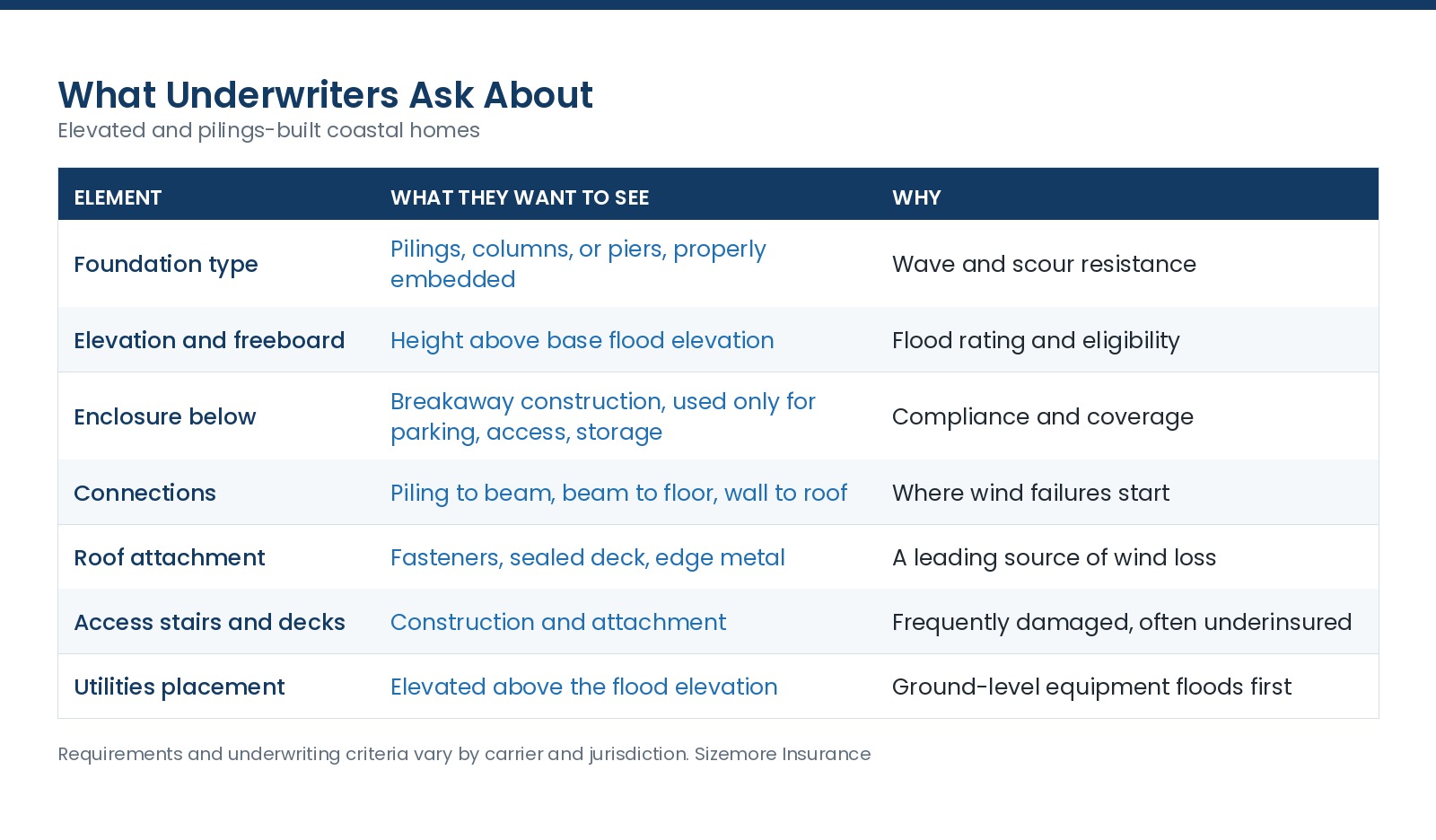
The takeaway: the connections are what carriers care about, and they are what actually fails. A strong roof on a weak connection to the wall is not a strong house.
Requirements and underwriting criteria vary by carrier and jurisdiction. Confirm with your advisor and your local permit office.
This is where the coverage surprises live, and there are three of them.
Flood coverage below the elevation is limited. In an elevated home the enclosed area below the base flood elevation receives restricted building coverage, generally confined to essential building elements and certain equipment. Contents stored there are largely uncovered.
Finishing it can void things. Converting that space to living area is generally not permitted in a coastal high hazard zone, and doing it can create a permit violation and jeopardize the flood policy. Owners do this gradually and with good intentions, adding a bathroom, then insulation, then a bedroom.
Everything you keep down there is at risk with little coverage. Golf carts, kayaks, tools, a second refrigerator, beach furniture, bicycles. It adds up to real money and almost none of it is protected.
If there are items you cannot replace, they do not belong under the house.
Utilities at ground level are a recurring loss. HVAC condensers, water heaters, electrical panels, and well equipment placed under an elevated house flood in events the living space never sees. Elevating utilities is one of the better returns available on a coastal property, both for the loss avoidance and for the flood rating.
Decks and stairs are frequently underinsured. They are typically covered as part of the dwelling or under other structures depending on attachment, and on a coastal house they are frequently damaged. Check how yours are treated.
Scour and undermining are flood claims, not wind claims, in most circumstances. That distinction matters when both are in play after a storm.
Older elevated homes may not meet current standards. A house lifted in the 1980s may sit lower than today's requirements and use connections that would not be permitted now. It can still be insurable, and the substantial damage rules mean a major loss triggers current standards at rebuild.
Freeboard is worth paying for. If you are building or lifting, elevating above the minimum improves the flood rate and reduces the probability of a claim. It is one of the few decisions that improves both sides of the ledger.
Enhanced roof and opening protection stack with elevation. Elevation addresses water. It does nothing for wind. The roof and the openings are the wind story, and credits are available for both in many eastern North Carolina territories.
Does elevation lower my flood insurance?
Generally yes, and meaningfully. Property-specific characteristics including elevation drive the rate under current federal methodology.
Can I use the space under my elevated house?
Generally for parking, access, and storage. Converting it to living space in a coastal high hazard zone is typically not permitted and can affect your coverage.
Is my golf cart covered under the house?
Usually not by the flood policy. Contents in an enclosed area below the flood elevation are largely uncovered, and coverage under the homeowners policy for a golf cart depends on the form and use.
Should I elevate my HVAC and water heater?
Yes. Ground-level utilities flood in events the living space never sees, and elevating them helps both the loss experience and the flood rating.
Are my stairs and deck covered?
Depends on attachment and on your form. Check whether they fall under the dwelling or other structures and whether the limit is adequate.
My house was elevated years ago. Does it meet current standards?
Possibly not, and it can still be insurable. A major loss would trigger current requirements at rebuild, which is what ordinance or law coverage addresses.
We have been an independent insurance company in North Carolina since 1977. Send us the address and the elevation certificate and we will tell you where the coverage is thin on an elevated home. Insurance made just for you.
Coverage, program terms, construction requirements, and underwriting criteria vary and are subject to change. Review your own policy or talk to your advisor.