Reviewed by Joseph "JJ" Johnson, Chief Operating Officer, NPN 7594559 · October 10, 2026
Not every renovation needs builder's risk. A new kitchen in a house you still live in is usually handled by your homeowners policy, with a phone call to raise the dwelling limit. A gut job, a second story or an addition on a house that will sit empty for months is a different situation.
The difference comes down to three questions: how big is the project, will anyone live in the house while the work is done, and does the policy you have now still fit. Answer them before the demolition starts (how builder's risk works).
Theft of building materials. The standard homeowners form excludes theft in or to a dwelling under construction, and theft of materials and supplies for the construction, until the dwelling is finished and occupied (ISO HO 3 sample form). North Carolina has a filed endorsement that adds this theft coverage back for a limited time, ending at 180 days or when the home is finished and occupied (NC Rate Bureau circular P-04-22).
Vacancy. Homeowners forms limit vandalism and glass breakage once the home has been vacant for more than 60 consecutive days (ISO HO 3 sample form). If you move out for the renovation, ask how your policy treats an empty house.
The dwelling limit. Your limit was set for the house as it was. An addition or a high-end remodel raises the cost to rebuild, and the Insurance Information Institute recommends calling your insurance company before or shortly after work begins to raise it (Insurance Information Institute).
The contractor's work. Your policy is not there to pay for a contractor's mistakes. Faulty workmanship is commonly excluded, and injuries to workers belong on the contractor's workers compensation.

The takeaway: a renovation you live through usually stays on your homeowners policy with a few changes. A big renovation in an empty house usually needs builder's risk or a renovation endorsement.
Forms, endorsements and availability vary by insurance company. Your own policy governs.
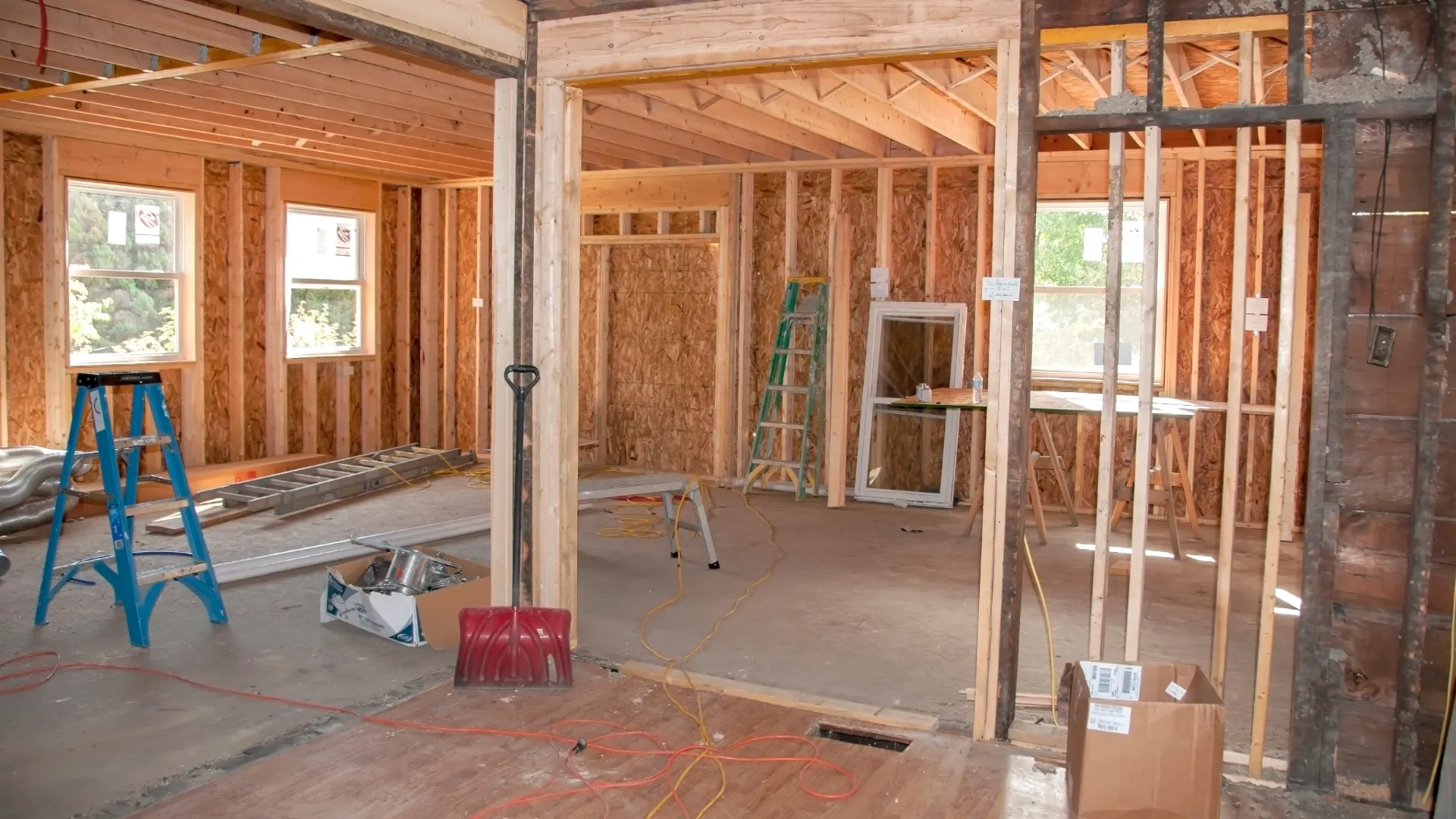
Major renovations and gut jobs. When walls come down to the studs, the house is open to weather and theft for months. A renovation builder's risk policy is written for that.
Additions and second stories. New construction attached to an existing house raises the question of which policy covers what. Some renovation builder's risk forms cover only the new work, not the existing building, so confirm in writing how the existing house is covered.
Houses that will be empty. If nobody will live in the house during the work, the homeowners policy may not fit at all. On the coast, the Beach Plan's homeowners program does not accept unoccupied homes under renovation until the owner moves back in, though they may be considered under its dwelling program (NCIUA Manual of Rules, 2026).
Investment properties and flips. A house bought to renovate and sell or rent is a project, not a residence. It usually belongs on a dwelling policy with a renovation or vacancy endorsement, or on builder's risk.
Renovation loans. For renovation loans it buys, Fannie Mae requires that the property insurance have no exclusions or limits tied to the renovation while the work is underway (Fannie Mae Selling Guide B7-3-05). Your lender will tell you what it needs; let us read the requirement before the policy is chosen.
Forms, endorsements and availability vary by insurance company. Your own policy governs.
Long projects on the coast. The Beach Plan expects renovation projects not to run longer than six months, with occupancy within 60 days of completion, and it can require a completion schedule (NCIUA manual). Plan the timeline with the insurance in mind.
Who carries what. Your contractor should carry general liability and workers compensation. Ask for certificates before work starts, and keep them with your policy.
Cosmetic work is not a renovation. Paint, flooring and fixtures in a house you live in rarely change your coverage. Structural work, roof replacement and anything that empties the house usually do.
Forms, endorsements and availability vary by insurance company. Your own policy governs.
Does homeowners insurance cover a home renovation?
It covers the house you live in while minor work is done, but it usually limits theft of building materials and coverage for an empty home. Call before the work starts so the policy can be adjusted.
Do I need builder's risk insurance for a renovation?
For a major renovation, addition or gut job, often yes, especially if the house will be empty. For a remodel you live through, a higher dwelling limit and the right endorsements may be enough.
Does builder's risk cover the existing house during a renovation?
Not always. Some renovation forms cover only the new work, so get it in writing whether the existing structure is covered by the builder's risk policy or by your homeowners policy.
What if my house will be vacant during the renovation?
Tell us before you move out. Homeowners policies limit some coverage after 60 days of vacancy, and some companies will not keep an empty house on a homeowners form.
Should I raise my dwelling limit for a remodel?
Yes, if the work adds square footage or raises the cost to rebuild. Call before or shortly after work begins so the new value is covered if something happens mid-project.
Who pays if the contractor damages my house?
The contractor's general liability usually responds to damage caused by their work. Ask for a certificate of insurance before the job starts.
Sizemore Insurance is an independent insurance company founded in North Carolina in 1977, with offices from Wilmington and Leland to Southport, Shallotte, Hampstead and Charlotte. We review your current policy against the project, add what the renovation needs, and compare builder's risk across many insurance companies when the job calls for it, from Wilmington to Charlotte. Insurance made just for you.
Keep reading. Builder's risk insurance in North Carolina; Building a Home on the NC Coast: Builder's Risk, Wind and Flood During Construction; What Happens to Builder's Risk When Your House Is Finished?.
Sources: ISO Homeowners 3 sample policy (Insurance Information Institute); NC Rate Bureau circular P-04-22 (HO 32 25); Insurance Information Institute, remodeling your home; NCIUA Manual of Rules and Procedures, 2026; Fannie Mae Selling Guide B7-3-05.
This article is general information, not a coverage determination or legal advice. Forms, exclusions, endorsements and availability vary by insurance company and change over time. Review your own policy or talk to your advisor.