Yes, and the change is simpler than most investors expect and more consequential than they realize.
The policy should name whoever owns the property. If an LLC holds the deed, the LLC is the named insured. That sounds like paperwork. It is the difference between a structure that works and one that exists only on a filing.
Why the Name Matters
Insurance responds to an insurable interest. The named insured is who the policy protects and who a claim pays.
If the LLC owns the building and the policy names you personally, there is a mismatch. The party with the insurable interest in the building is not the party named on the policy. Carriers handle that differently and none of the outcomes are good.
A claim payment can go to the wrong party, or be complicated to the point of delay.
Liability defense can be misaligned, because a suit names the property owner and the policy defends someone else.
And the structural point. People form an LLC to create a liability boundary around a rental. Then they insure the property in their personal name, which is exactly the argument an opposing attorney uses to say the LLC is not being treated as a separate entity. The insurance mismatch becomes evidence against the structure it was meant to protect.
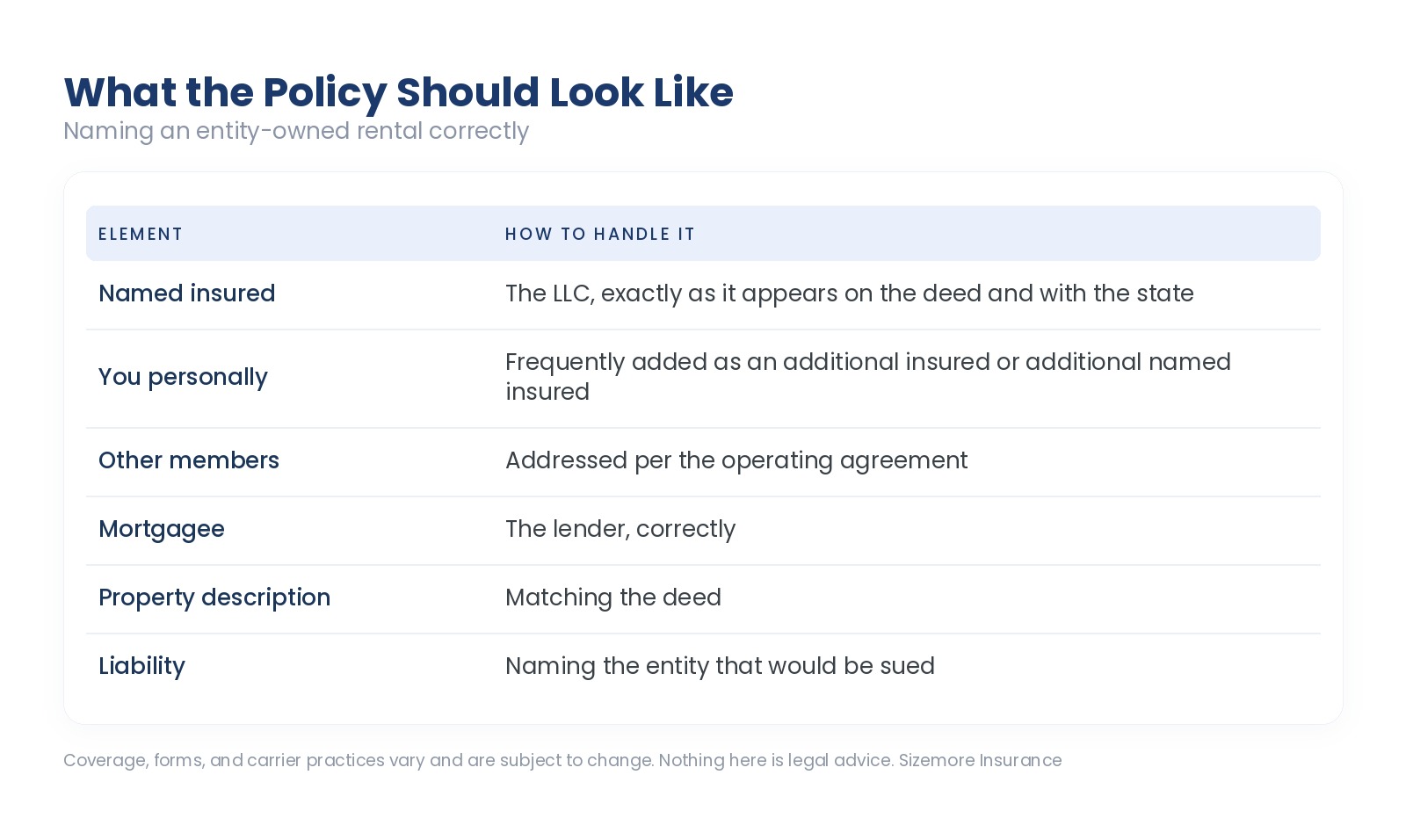
The takeaway: name the LLC as the insured and get yourself added as well, because a suit frequently names both the entity and the individual.
Coverage, forms, and carrier practices vary and are subject to change. Nothing here is legal advice.
The Transfer Is When the Gap Opens
A common version of this problem is a timing problem.
An investor transfers a property into an LLC. The deed records. The insurance policy still names the individual, and nobody calls the carrier because the transfer felt like a legal step rather than an insurance one.
Months or years pass. Then a claim.
Call before the deed records, or immediately after. The policy change is routine and it takes minutes. The gap it prevents is not routine.
The lender has to know too, because a transfer can affect the loan and the mortgagee clause has to carry over. That has its own article and it is one of the most preventable failures in this category.
Where This Gets Complicated
An LLC pays nothing toward a claim. This is worth stating plainly. An LLC is a liability boundary, not a source of funds. Insurance is what pays. An investor who formed an LLC instead of buying adequate liability coverage has the structure backwards, and that comparison has its own article.
A personal umbrella frequently will not reach an LLC-owned rental, which surprises people who assumed their umbrella covered everything. A commercial umbrella over the entity is generally the answer.
Multiple properties in one LLC concentrates exposure and it has its own article.
A trust is a different question with its own naming requirements.
The market can shift when an entity owns the property, because some personal lines carriers prefer individual ownership. Access matters here.
Your lender may have opinions about entity ownership, particularly on a conventional loan.
Consult counsel on the structure itself. Whether to form an LLC, and how, is a legal and tax question. What we can tell you is how to insure it once you have.
Common Questions
Should my rental policy name my LLC?
If the LLC owns the property, generally yes, with you added as well.
What happens if the policy still names me personally?
A mismatch between the insurable interest and the named insured, which can complicate a claim and undercut the structure.
Does an LLC replace insurance?
No. An LLC pays nothing toward a claim. Insurance pays.
Will my personal umbrella cover an LLC-owned rental?
Frequently not. A commercial umbrella over the entity is generally the answer.
When should I call about a transfer?
Before the deed records, or immediately after. It takes minutes.
Should I form an LLC?
That is a legal and tax question for counsel. We can tell you how to insure whatever you decide.
The Bottom Line
- Name the LLC exactly as it appears on the deed.
- Get yourself added as well, because a suit frequently names both.
- Call before or immediately after a transfer, because that is when the gap opens.
- Notify the lender so the mortgagee clause carries over.
- Do not treat the LLC as coverage, because it pays nothing toward a claim.
- Ask about a commercial umbrella if your personal umbrella will not reach the entity.
Sizemore Insurance is an independent insurance company founded in North Carolina in 1977, writing in both North Carolina and South Carolina. Send us the deed and the policy and we will tell you whether they match. Insurance made just for you.
Coverage, forms, carrier practices, and legal considerations vary and are subject to change. Nothing here is legal or tax advice. Consult counsel about entity structure and your advisor about the coverage.