Condo Association Insurance in North Carolina: The Master Policy Explained
For condominium associations, boards and managers, from small coastal buildings to large multi-building communities.
For condominium associations, boards and managers, from small coastal buildings to large multi-building communities.
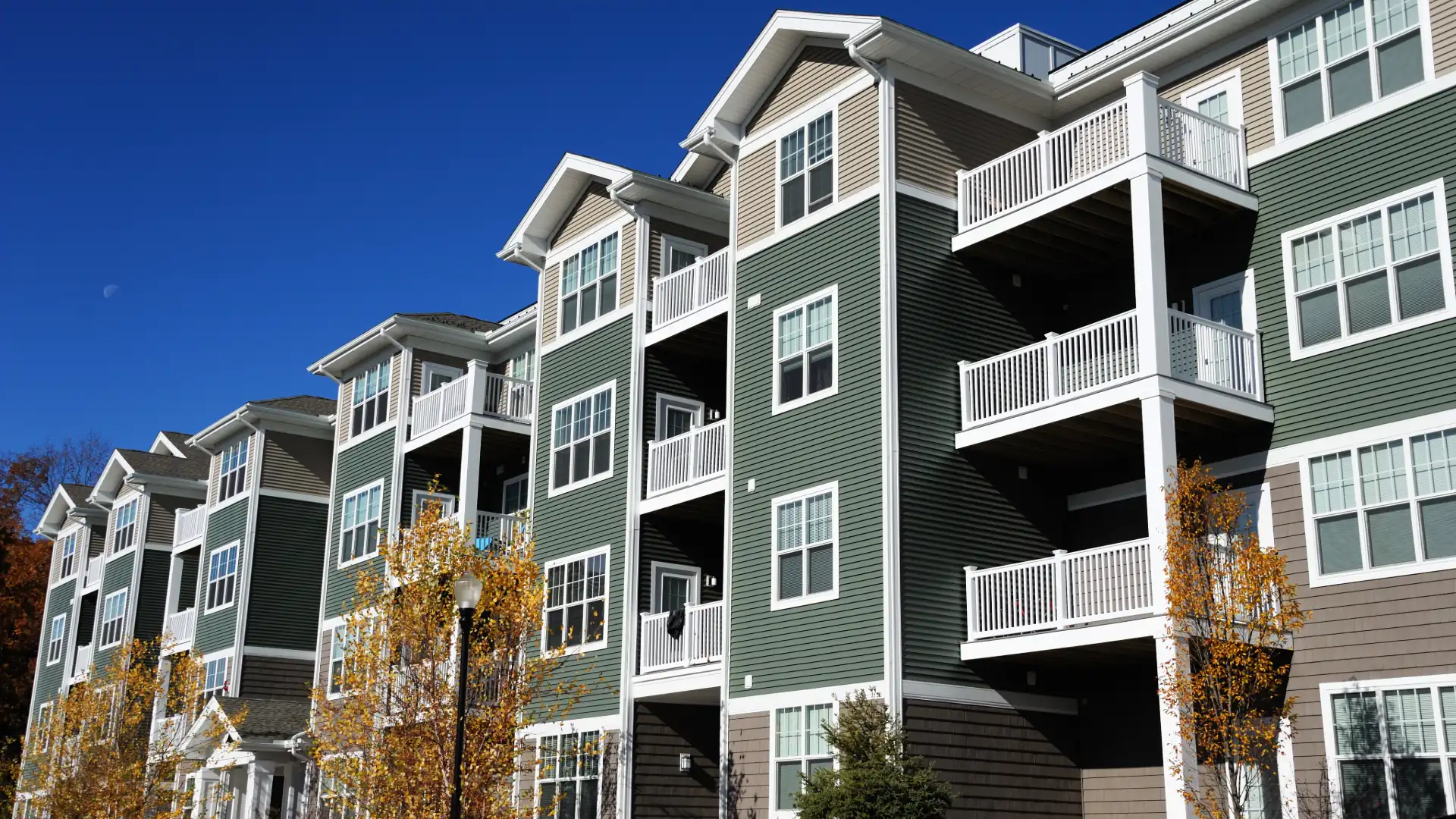
A condo association's master policy insures the buildings and common elements, carries the association's liability, and decides how much each unit owner has to insure on their own. When it is set up wrong, owners find out after a loss, usually in the form of an assessment.
North Carolina's Condominium Act sets a floor. Lenders set a higher bar if owners want conventional or FHA mortgages. And the declaration decides who pays the deductible and where the association's coverage stops inside each unit.
Single-family and townhome communities usually fall under a different law. See HOA Insurance.
Master property policy. Covers the buildings and common elements and, in stacked buildings, the units as the declaration defines them. Lenders expect 100 percent of replacement cost.
General liability. Covers injuries and damage on common elements: hallways, stairs, pools, parking areas and docks. Lenders expect at least $1 million per occurrence.
Directors and officers (D&O). Covers claims against the board over its decisions, including assessments, rules enforcement and repair choices.
Fidelity or crime coverage. Covers theft of association money by board members, employees or the management company. Lenders require it for projects of more than 20 units.
Flood (RCBAP). The NFIP Residential Condominium Building Association Policy covers the building in a flood zone, up to $250,000 per unit.
Wind and named storm. Coastal buildings often need wind written separately. When the master policy excludes wind, we write it separately through the Beach Plan or another company, often with a percentage named storm deductible.
We always include wind and hail
Every business property policy we place on the coast includes wind and hail. When the insurance company excludes wind, we write the wind coverage separately through the Beach Plan or another company, so your building and business property are never left without it.
Equipment breakdown. Covers elevators, boilers, central HVAC and similar systems. Lenders require it when the building has central heating or cooling.
Ordinance or law. Pays the extra cost to rebuild to current code after a loss, which older buildings almost always face.
Umbrella and workers comp. An umbrella adds liability limits; workers comp is needed if the association has three or more employees.
Forms, endorsements and availability vary by insurance company. Your own policy and your declaration govern.
Which condos the Act covers. The Condominium Act applies to condominiums created after October 1, 1986. Older condominiums follow the Unit Ownership Act and their own documents on insurance (G.S. 47C-1-102).
Property insurance. The association must insure the common elements against all risks commonly insured against, at no less than 80 percent of replacement cost after deductibles, to the extent available. In buildings where units are stacked, the coverage must include the units, but it does not have to include improvements and betterments installed by owners (G.S. 47C-3-113).
Liability, notice and rebuilding. The association must carry liability insurance in reasonable amounts, give 30 days' notice before cancellation or nonrenewal, name owners as insureds, and repair damaged property unless owners vote not to (G.S. 47C-3-113).
Not in the statute. The Act does not require fidelity coverage and does not say who pays the master policy deductible. The declaration and bylaws decide that, and owners are responsible for damage they cause that the association's policy does not pay (G.S. 47C-3-107). D&O is allowed by G.S. 47C-3-102 but not required.
Fannie Mae requirements. For conventional loans, the master policy must cover 100 percent of replacement cost with a deductible of no more than 5 percent of the policy amount (B7-3-03), liability of at least $1 million per occurrence (B7-4-01), and fidelity coverage for projects of more than 20 units equal to at least three months of assessments when financial controls are in place (B7-4-02).
Flood. In a special flood hazard area, lenders expect the association to carry an RCBAP or equivalent at the lesser of 80 percent of replacement cost or the NFIP maximum per unit (Fannie Mae B7-3-06). The NFIP pays up to $250,000 of building loss per unit (FEMA). FHA asks about liability, fidelity, hazard and flood coverage in its condo questionnaire (HUD Form 9991).
Coastal wind. Condominium associations are eligible for the Coastal Property Insurance Pool, which uses a condominium association form and limits commercial coverage to $4 million per structure; larger buildings need excess coverage (NCIUA manual).
Master policy premiums follow the buildings' value and their exposure. The main factors:
We do not publish average prices. A licensed advisor quotes your actual operation across more than 100 insurance companies.
It is the association's policy on the buildings, common elements and association liability. In stacked buildings it also covers the units up to the line the declaration draws.
The buildings and common elements, the association's liability, and, if the board buys them, D&O, crime, flood and equipment breakdown coverage. It does not cover owners' belongings or personal liability.
Yes. An HO-6 covers your belongings, personal liability, loss of use, your upgrades and whatever the master policy leaves to you. Lenders require it when the master policy does not cover the unit interior.
Bare walls covers the structure only. Single entity also covers original fixtures and finishes, and all-in includes owner improvements too. The labels are used loosely, so read the declaration.
North Carolina law leaves that to the declaration and bylaws. Many pass all or part of it to owners, which is why loss assessment coverage on an HO-6 matters.
It is coverage on an owner's HO-6 that pays their share when the association assesses owners for a covered loss or deductible. Make sure the limit can handle a percentage named storm deductible.
State law does not name flood specifically, but lenders require an RCBAP or equivalent for buildings in a special flood hazard area. Owners can add their own flood policy for contents.
North Carolina law does not require it, but Fannie Mae requires fidelity coverage for projects of more than 20 units. Without it, buyers may struggle to get conventional loans.
It depends on the buildings' replacement cost, construction, coastal wind and flood exposure, deductibles and claims history. We compare many insurance companies against your declaration and lender requirements.
Forms, endorsements, and availability vary by insurance company. Your own policy governs.
Sizemore Insurance is an independent insurance company founded in North Carolina in 1977. Tell us what your business does and what you need to protect, and a licensed advisor will compare more than 100 insurance companies to find the coverage that fits. Insurance made just for you.
Sources: G.S. 47C-1-102, Condominium Act applicability; G.S. 47C-3-113, Condominium Act insurance; G.S. 47C-3-107, upkeep of the condominium; G.S. 47C-3-102, powers of the association; Fannie Mae Selling Guide B7-3-03, master property insurance; Fannie Mae Selling Guide B7-4-01, general liability; Fannie Mae Selling Guide B7-4-02, fidelity and crime; Fannie Mae Selling Guide B7-3-06, flood insurance; FEMA, NFIP flood insurance for condominium associations (2025); HUD Form 9991, FHA condominium questionnaire; NCIUA Coastal Property Insurance Pool, Manual of Rules and Procedures (2026); Insurance Information Institute, insuring a co-op or condo.
Forms, exclusions, endorsements, and availability vary by carrier. This page is general information, not a policy or legal advice. Review your own policy or talk to your advisor.