Reviewed for insurance accuracy by Brad Sizemore, Owner and CEO, NPN 6595451 · November 25, 2026
Property coverage is bounded. A house costs what it costs to rebuild, and above that number nothing more can happen to it. Personal liability pays for bodily injury or property damage you are legally responsible for, and a personal umbrella adds liability limit above your home and auto policies.
Liability has no ceiling except the one you buy. A judgment can reach past the policy into wages, savings, and equity for years afterward.
That is the entire argument for looking at Coverage E, and for most households it is the cheapest protection available.
Bodily injury or property damage you are legally responsible for. A guest injured at your home, a child who damages a neighbor's property, a dog bite, a tree from your yard onto a car.
Defense costs, generally in addition to the limit, which matters because defending a claim that ultimately pays nothing is still expensive.
Certain personal injury offenses such as libel and slander on some forms or by endorsement.
Coverage that follows you, not just your property. An incident at a rental house on vacation, or your child at college, is generally within it.
Medical payments, Coverage F, sits alongside it and pays small amounts for guest injuries without regard to fault, which resolves minor incidents before they become claims.
Most policies default to $100,000. That number has not been adequate for a long time.
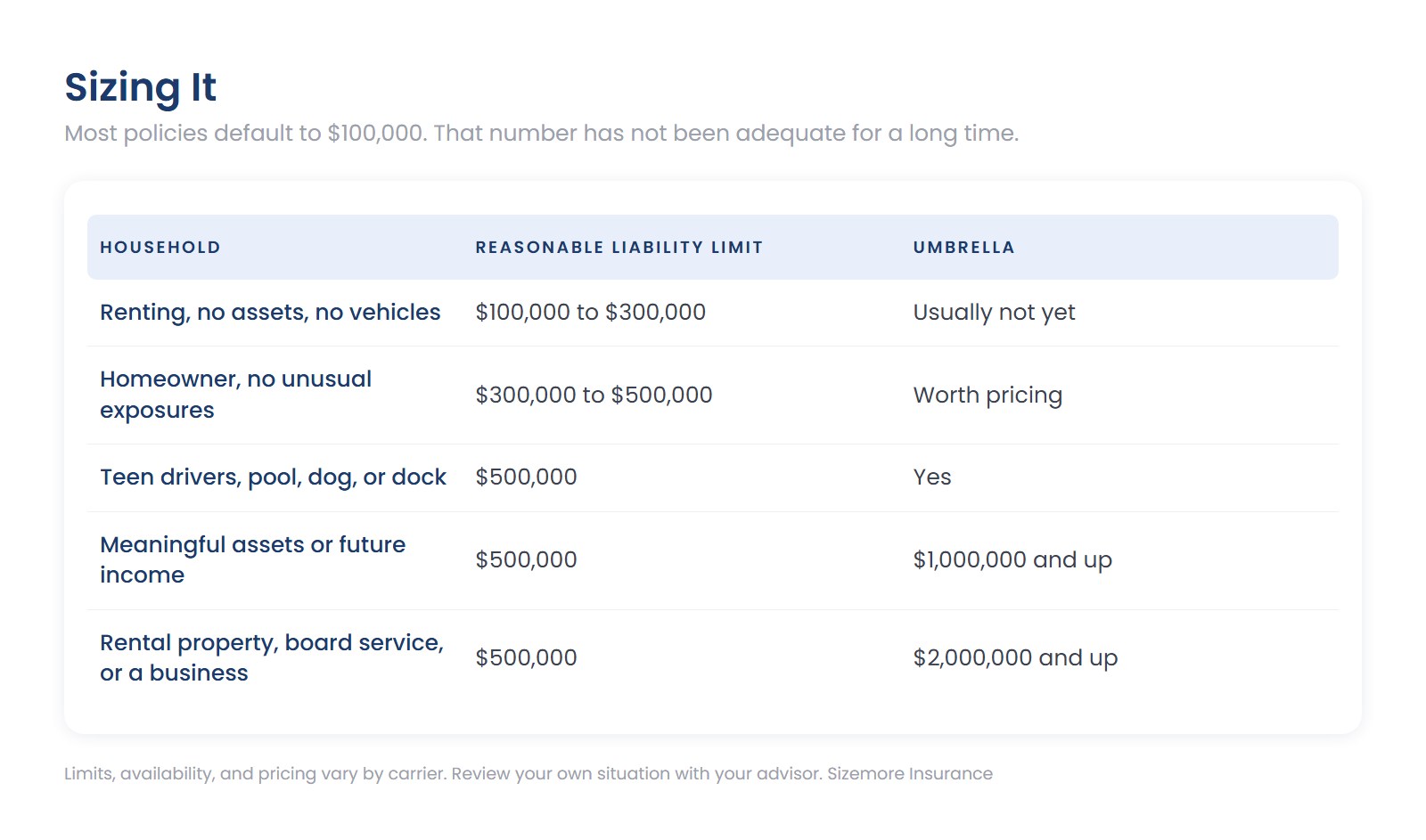
The takeaway: the jump from the default to $300,000 or $500,000 costs very little, and it is the single best value on a homeowners policy.
Limits, availability, and pricing vary by carrier. Review your own situation with your advisor.
A personal umbrella adds liability limit above your home and auto policies, typically in millions.
It requires underlying limits. The umbrella specifies minimum liability on the home and auto policies beneath it. If you do not maintain them, the gap falls on you.
It is priced per million and the first million is inexpensive. The primary layer is expensive because small claims are common. Additional layers cost far less because large claims are rare.
It can be broader than the underlying. A true umbrella may cover some claims the primary excludes, subject to a retention.
It should reach everything. Every vehicle, every property, the watercraft, and any rental. Items not scheduled are not covered.
North Carolina's contributory negligence rule is favorable to a defendant, which reduces frequency. It does nothing about a claim where fault is clear, and it does nothing about defense cost.
Business activity is excluded. A home business, a rental property, or paid work at your house sits outside personal liability. Those need their own structure.
Auto liability and home liability are separate until an umbrella sits over both. Raising one does nothing for the other.
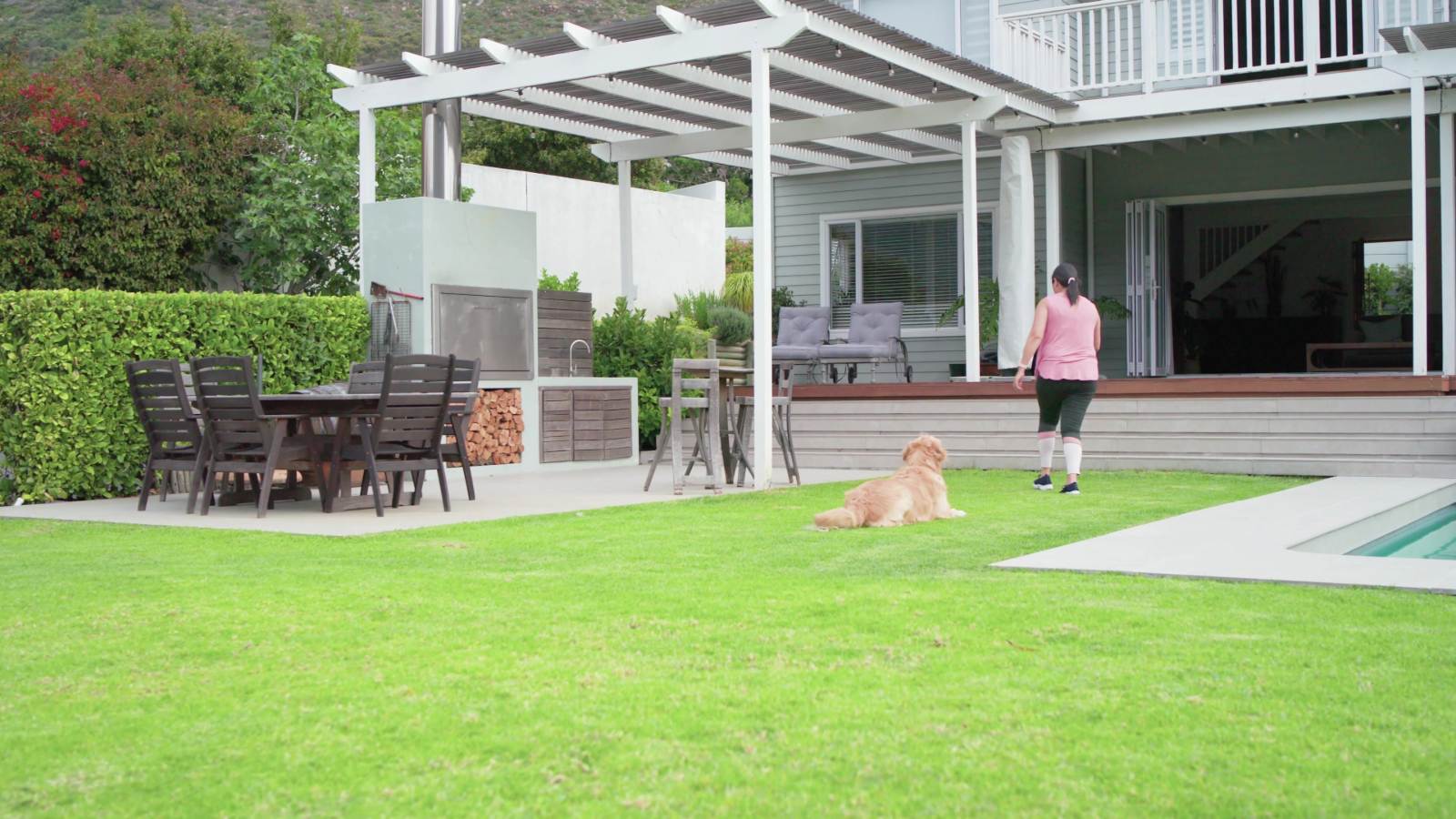
Dogs, pools, trampolines, and docks are the exposures underwriters ask about, and some carriers restrict or exclude them. Disclose them.
Teen drivers are the largest liability change most households experience, and it is the moment to look at an umbrella.
Board service for an HOA or a nonprofit may have limited coverage under a personal umbrella and may need its own arrangement. Ask.
Rental property liability should be on the dwelling policy, with the umbrella scheduled over it.
How much personal liability should I carry?
At least $300,000 for most homeowners and $500,000 where there are teen drivers, a pool, a dog, or meaningful assets.
What does an umbrella cost?
The first million is typically a modest annual amount, far less per million than the primary layer.
Do I need an umbrella if I do not have much?
Future income is an asset too. A judgment can follow wages for years.
Does it cover my rental property?
Only if the property is scheduled on it and the underlying liability requirement is satisfied.
Does it cover my boat?
Only if the watercraft is scheduled and the underlying requirement is met.
What happens if I lower my auto liability?
You may fall below the umbrella's underlying requirement and create a gap. Tell us before changing any primary limit.
Sizemore Insurance is an independent insurance company founded in North Carolina in 1977. Send us your home and auto declarations pages and we will price the liability across both and show you what an umbrella costs. Insurance made just for you.
Sources: North Carolina Department of Insurance, consumer guidance on homeowners and personal umbrella liability coverage (ncdoi.gov); North Carolina Rate Bureau, the standard North Carolina homeowners forms, including personal liability (Coverage E) and medical payments (Coverage F) (ncrb.org).
Coverage, limits, underlying requirements, and availability vary by carrier and form. Review your own policy or talk to your advisor.
Coverage details: North Carolina Home Insurance