

Most states apportion fault. If you are twenty percent responsible for an accident, you recover eighty percent of your damages.
North Carolina does not work that way. Under contributory negligence, a claimant who contributed to their own injury may be barred from recovering from the at-fault party entirely. Not reduced. Barred.
North Carolina is one of a small number of jurisdictions that still applies this rule. It is not a technicality, and it changes what coverage you should buy.
Someone runs a light and hits you. Clear liability, straightforward claim.
Now add a fact. You were going five over. Or you glanced at your phone. Or you had a taillight out.
In most states those facts reduce your recovery. In North Carolina they become a defense, and if a fact finder concludes you contributed to the accident, you may recover nothing from the other driver's insurance.
That is an uncomfortable thing to read and it is the law as it currently stands. Legal questions belong with an attorney. What I can tell you is what it means for your insurance.
Your uninsured and underinsured motorist coverage responds when the other driver has no insurance or not enough of it. Your collision coverage repairs your car regardless of fault, subject to your deductible. Your medical payments coverage pays regardless of fault.
Those coverages do not disappear because a fault argument developed. They are yours.
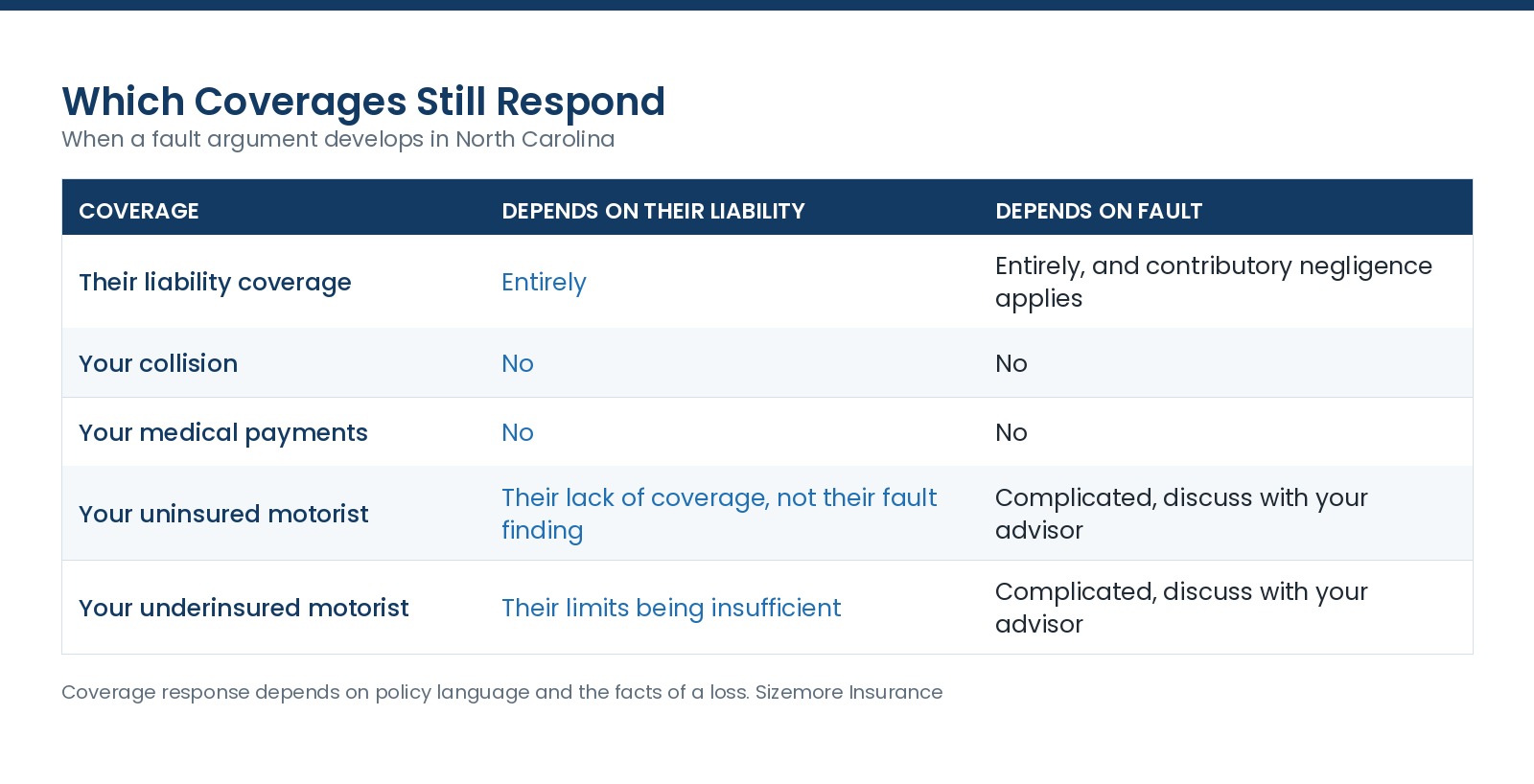
The takeaway: in a state where the other driver's coverage can produce nothing, the coverages you control matter more.
Coverage response depends on policy language and the facts of a loss. Nothing here is legal advice or a coverage determination.
The rule cuts both ways, and for a driver being sued it is favorable.
If someone claims against you and they contributed to the accident, that is a complete defense rather than a percentage reduction. It is frequently cited as one factor in North Carolina's comparatively low auto insurance costs.
It also means the specific facts decide cases, which is why what you do at the scene matters so much: photographs, a police report, witness names, and not making statements about fault before anyone knows what happened.
There are exceptions and doctrines that can apply, including the last clear chance doctrine and rules around gross negligence. Whether any of them apply to a specific accident is a question for an attorney, not for your insurance advisor.
Insurers evaluate it, and so do juries. A carrier denying a claim on contributory negligence grounds is making a legal argument, and it can be challenged.
It applies to injury claims against the other party. It does not stop your own collision coverage from repairing your car.
Comparative negligence states are next door. South Carolina applies a modified comparative rule. If you drive across state lines regularly, know which environment you are in.
This is one reason to carry real uninsured and underinsured limits. Since July 1, 2025 those coverages are mandatory at limits matching your liability, and since the underinsured setoff was eliminated they stack on top of the at-fault driver's payment. The state made them more valuable at the same time.
Medical payments coverage is generally inexpensive and it pays regardless of fault, which makes it worth more here than in a state that apportions.
What is contributory negligence?
A rule under which a claimant who contributed to their own injury may be barred from recovering from the at-fault party.
Does North Carolina really use it?
Yes. It is one of a small number of jurisdictions that still applies it.
If I was five percent at fault, do I recover nothing?
Potentially, from the other driver. Your own collision, medical payments, and in some circumstances uninsured or underinsured coverage may still respond.
Is this good or bad for me?
Both, depending on which side you are on. As a defendant it is favorable. As a claimant it is harsh.
What should I do at an accident scene?
Document everything, get a report, get witness names, and do not speculate about fault. Facts decide these cases.
What coverage protects me from this?
Collision, medical payments, and adequate uninsured and underinsured motorist coverage. Those are the ones you control.
Sizemore Insurance is an independent insurance company that has been placing coverage in North Carolina since 1977. Send us your declarations page and we will tell you which of your coverages would respond regardless of how a fault argument goes. Insurance made just for you.
This article explains insurance implications and is not legal advice. Negligence rules, exceptions, and their application are legal questions. Coverage depends on policy language and the facts of a loss. Consult an attorney about a specific claim and your advisor about your policy.