Reviewed for insurance accuracy by Brad Sizemore, Owner and CEO, NPN 6595451 · November 16, 2026
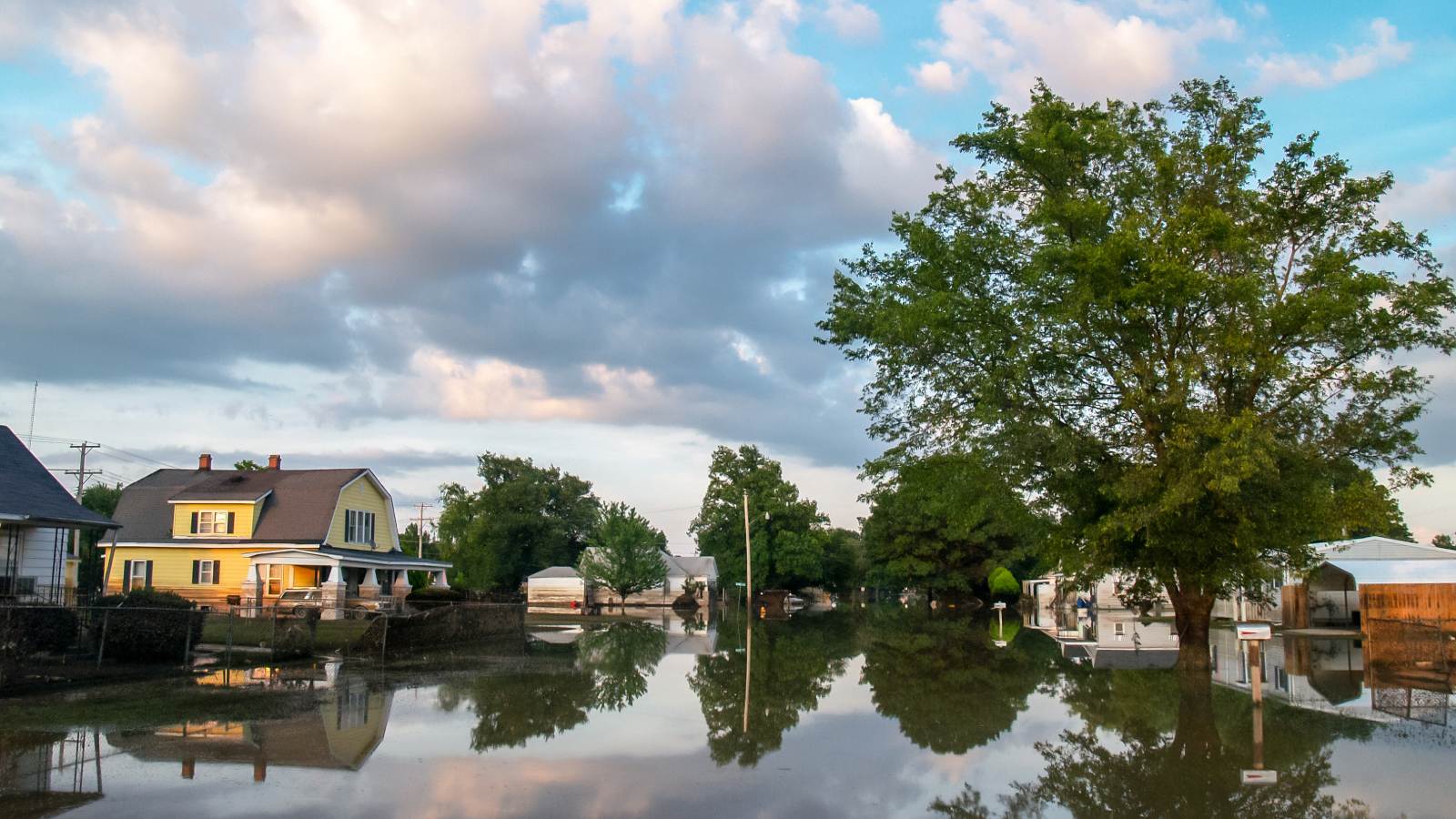
View reviewer profileThe most common thing I hear from inland homeowners is that they are not in a flood zone. Inland homes flood outside mapped high-risk zones too, a homeowners policy does not cover it, and a flood quote is worth getting at any address.
Everyone is in a flood zone. The question is which one, and being in a low-risk zone means a lender is not requiring coverage. It does not mean water cannot reach the house.
Hurricanes Matthew, Florence, and Helene all produced significant inland flooding in this state, on properties far from the coast, and FEMA has long reported that a substantial share of flood claims come from outside high-risk areas.
Stormwater has nowhere to go. Development upstream replaces ground that absorbed water with surfaces that shed it. A culvert sized for 1990 conditions carries 2026 volume.
Creeks rise faster than rivers. Small drainages respond in hours, which is why creek flooding catches people who watched a river gauge.
Rainfall events have outrun the design assumptions. Storms in the last decade repeatedly delivered more water in less time than the infrastructure was built for.
Maps lag the watershed. New development, changed drainage, and altered channels all change how water moves faster than map revisions follow.
Topography is local. Being outside a mapped zone describes a broad area. It says very little about your grade, your driveway, or the ditch behind your property line.
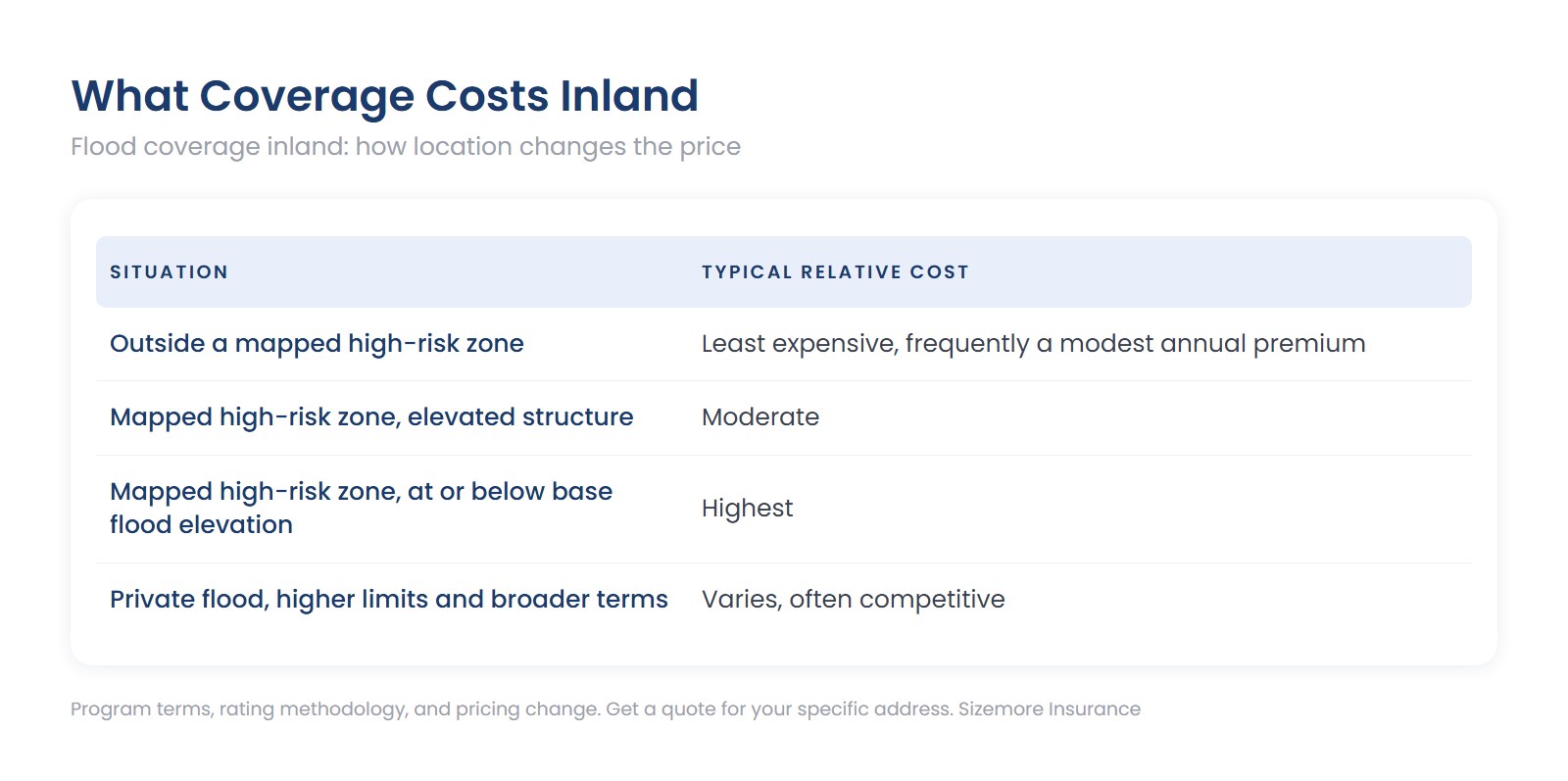
The takeaway: coverage outside a high-risk zone is inexpensive relative to what it protects, which makes it one of the better values in a household insurance program.
Program terms, rating methodology, and pricing change. Get a quote for your specific address.
The 30-day waiting period. Flood coverage generally does not take effect for 30 days, with narrow exceptions tied to loan closings. It cannot be purchased when weather is in the forecast.
Building and contents are separate purchases. A building-only policy leaves everything inside uncovered.
Federal limits cap at $250,000 building and $100,000 contents for residential property. On a larger inland home, private or excess flood is where the actual coverage sits.
Basements and below-grade areas are restricted under the federal program. If you have a finished basement, understand those limits before assuming the space is protected.
Additional living expense is generally not included under the federal residential program. Some private policies include it, which matters if the house is uninhabitable for months.
Water backup is a different coverage. Sewer and drain backup and sump pump failure are excluded from a homeowners policy and are added by an inexpensive endorsement. That is a separate purchase from flood and it is one of the most frequent inland claims.
Grading and drainage on your own lot matter. Downspout extensions, swales, and getting water away from the foundation prevent the losses nobody insures.
A sump pump with a battery backup is worth having on any house with a basement or crawlspace, and pump failure during the outage that accompanies the storm is a classic loss.
Anti-concurrent causation language matters. Where water arriving from outside and water from inside both contribute, the policy language frequently resolves ambiguity toward the flood exclusion. Having a flood policy converts an argument into a claim.
Map changes can go either way. A house that was low-risk can be remapped into a high-risk zone. Owners who carried coverage beforehand can be treated more favorably, which is one more reason to buy before you are required to.
Elevation certificates help inland too, where rating is uncertain.
Do I need flood insurance if I am not in a flood zone?
It is not lender-required there, and a substantial share of claims come from those areas, and the premium is usually modest. Get a quote.
Does homeowners insurance cover flooding?
No. Rising water and surface water are excluded on every homeowners policy.
Is water backup the same as flood?
No. Backup through a sewer, drain, or failed sump pump is a separate endorsement on your homeowners policy.
How much does inland flood insurance cost?
Outside a high-risk zone it is typically inexpensive. Ask for a quote on your specific address.
Is my finished basement covered?
Coverage below grade is restricted under the federal program. Understand the limits before you assume.
When should I buy it?
Well before you need it, because of the 30-day waiting period.
Sizemore Insurance is an independent insurance company founded in North Carolina in 1977. Send us the address and we will pull the zone, quote the flood, and tell you what water backup would cost alongside it. Insurance made just for you.
Sources: FEMA, National Flood Insurance Program, coverage limits, waiting period, and basement and living expense rules (fema.gov, floodsmart.gov); North Carolina Department of Insurance, consumer guidance on homeowners flood and water backup exclusions (ncdoi.gov).
Program terms, limits, waiting periods, and rating methodology are set federally and by private carriers and are subject to change. Review your own policy or talk to your advisor.
Coverage details: North Carolina Home Insurance