Reviewed for insurance accuracy by Brad Sizemore, Owner and CEO, NPN 6595451 · November 25, 2026
The call comes in August. The air conditioning quit, the repair company says the compressor is gone, and the estimate is several thousand dollars. Equipment breakdown coverage is the endorsement that pays for the sudden, accidental breakdown of your home's systems and equipment, which a standard homeowners policy excludes.
Under a standard homeowners policy the answer is no. Mechanical breakdown is excluded, and the policy responds to sudden accidental events like fire and storm rather than to a machine failing on its own.
Equipment breakdown coverage is the endorsement that changes that answer, and it is one of the least expensive things on a homeowners policy.
Sudden and accidental mechanical, electrical, or pressure system breakdown of the home’s systems and equipment.
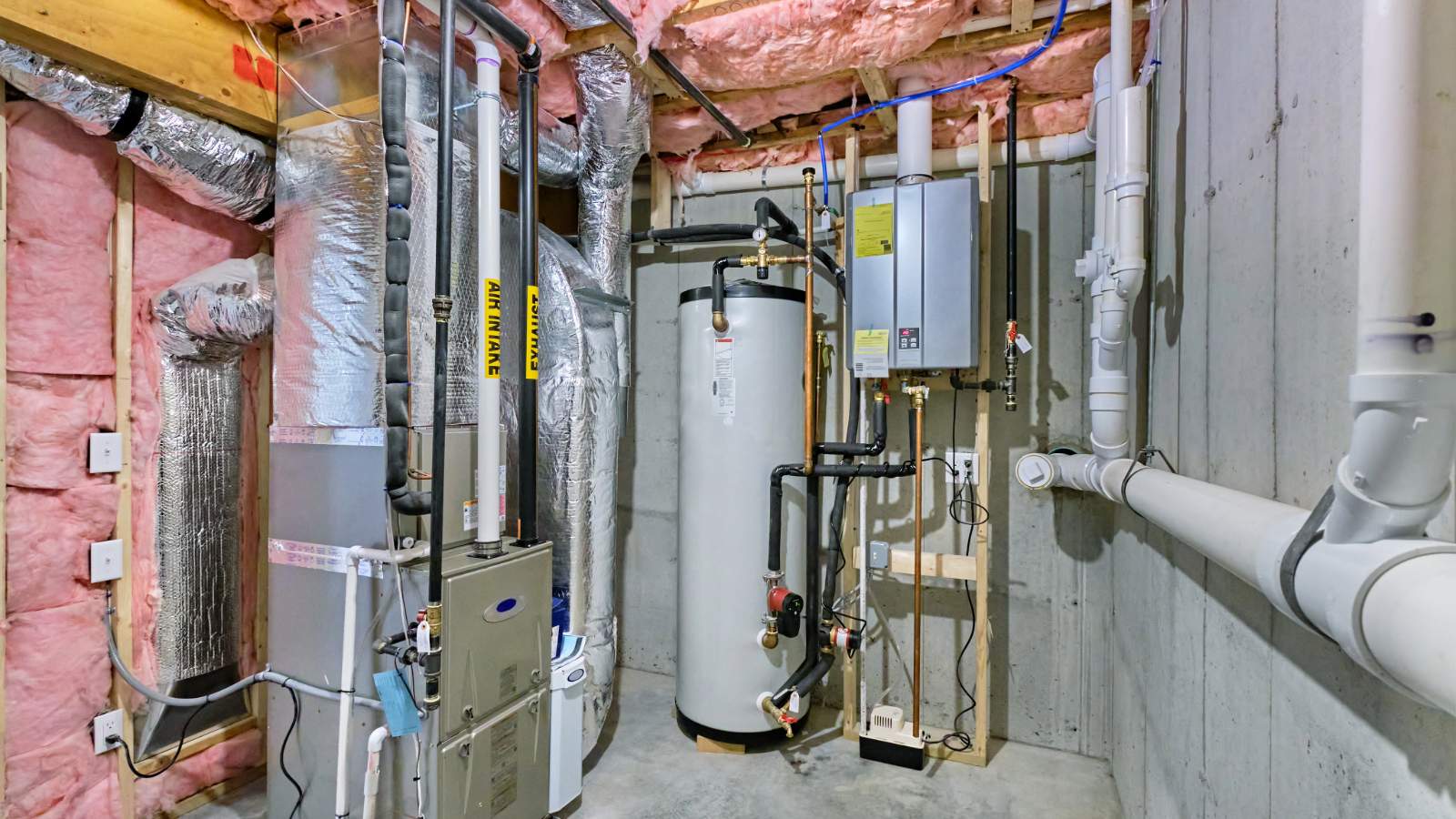
Heating and cooling. Furnaces, heat pumps, air handlers, and condensers.
Electrical. Panels, service equipment, and wiring components damaged by an electrical event such as an arc or a power surge from within the system.
Water heaters, well pumps, and pressure tanks.
Built-in appliances, and on many forms portable appliances and home electronics as well.
The resulting damage, including water damage from a failed component and spoiled food when refrigeration fails.
Many forms also cover the additional cost of upgrading to a more efficient replacement, and the extra expense of getting the repair done quickly.
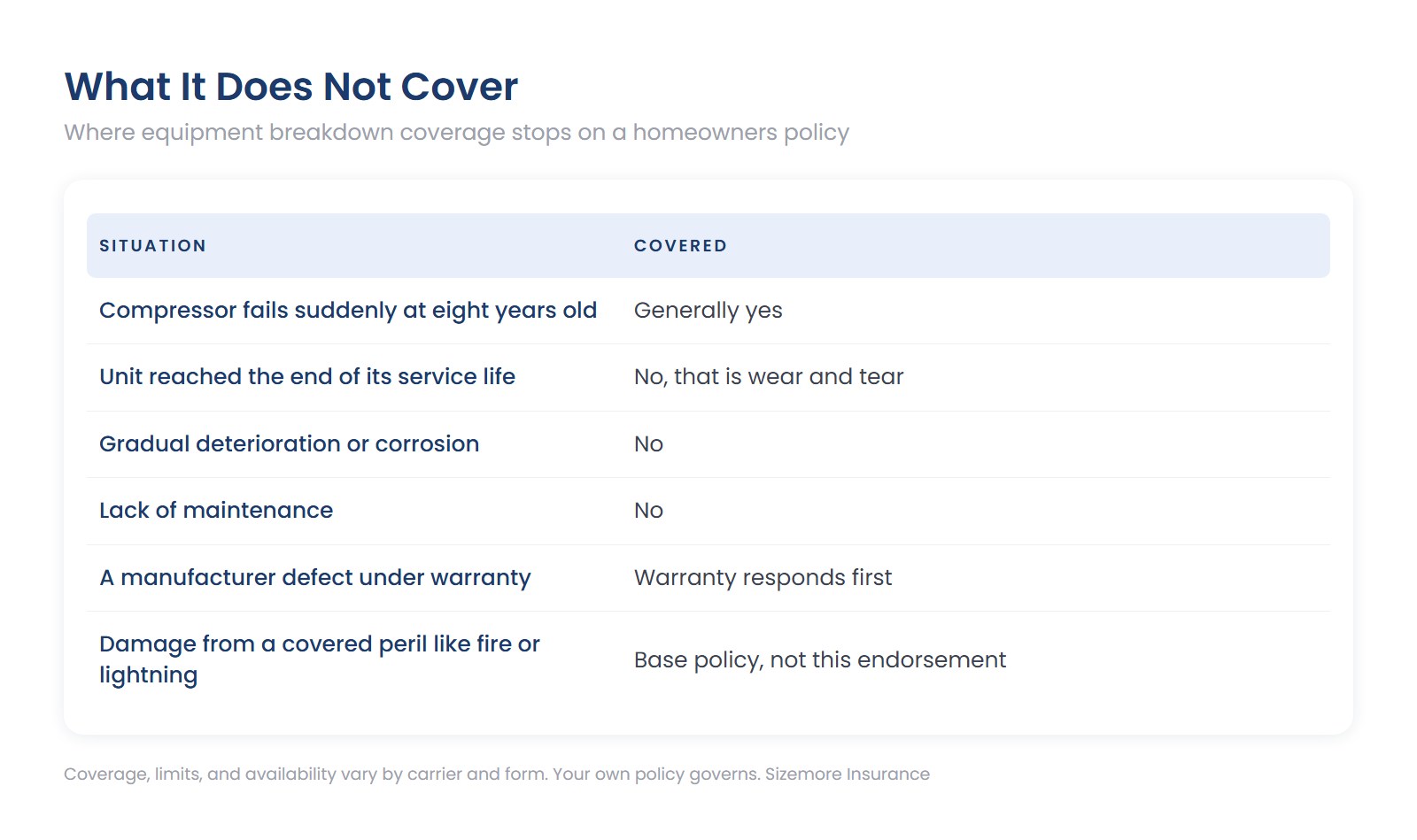
The takeaway: it covers a sudden failure, not an old system finally giving up. The distinction is real and it is judged on the facts.
Coverage, limits, and availability vary by carrier and form. Your own policy governs.
Clients ask me this constantly and the difference matters.
A home warranty is a service contract. You pay an annual fee, call the warranty company, they send their contractor, and coverage extends to failures including those from age and use, subject to their terms, their contractors, and their limits.
Equipment breakdown is an insurance endorsement on your homeowners policy. You use your own contractor, you file a claim, and it responds to sudden accidental breakdown rather than to wear.
They overlap and they are not substitutes. The endorsement is generally far less expensive and narrower in what triggers it. Which fits depends on the age of your systems and how you want to handle repairs.
A power surge from outside is treated differently than an internal electrical event on some forms. Ask how yours handles a utility surge or a nearby lightning strike, because that is a common claim.
Deductibles are usually small, frequently a few hundred dollars, and separate from your main deductible.
Limits are typically generous relative to the exposure, commonly $50,000 to $100,000, which is more than most home systems cost.
Well pumps matter in rural North Carolina. A failed pump is an expensive and immediate problem, and it is one of the more common claims on this endorsement in our area.
Solar and generators may or may not be included. If you have either, ask specifically.
Spoilage limits are modest but real, and after a refrigeration failure they help.
Maintenance records help. Where a carrier is deciding between sudden failure and end of life, documented service is what supports your position.
Does homeowners insurance cover my HVAC breaking?
Not under a standard policy. Mechanical breakdown is excluded. Equipment breakdown coverage addresses it.
Is this the same as a home warranty?
No. A warranty is a service contract covering wear. This is an insurance endorsement covering sudden accidental breakdown.
How much does it cost?
Typically a small annual addition, frequently one of the least expensive endorsements available.
Does it cover my appliances?
Built-in appliances generally, and many forms include portable appliances and electronics. Ask about yours.
What about a lightning strike?
Damage from lightning is usually a covered peril under the base policy. A surge originating within the system is more likely this endorsement. Either way, report it.
Does it cover my well pump?
On most forms yes, and that is a meaningful benefit on rural property.
Sizemore Insurance is an independent insurance company founded in North Carolina in 1977. Send me your declarations page and I will tell you whether you have this and what adding it would cost. Insurance made just for you.
Sources: North Carolina Department of Insurance, consumer guidance on homeowners coverage in North Carolina (ncdoi.gov); North Carolina Rate Bureau, standard homeowners policy forms and endorsements (ncrb.org).
Coverage, limits, deductibles, and availability vary by carrier and form. Review your own declarations page or talk to your advisor.
Coverage details: North Carolina Home Insurance