Reviewed for insurance accuracy by Brad Sizemore, Owner and CEO, NPN 6595451 · November 13, 2026
View reviewer profileThere are three or four questions on a homeowners application that can change the answer entirely rather than change the price. Supplemental heat is one of them. Carriers want a disclosed, listed stove that was professionally installed, permitted, inspected, and maintained, with the paperwork to show it.
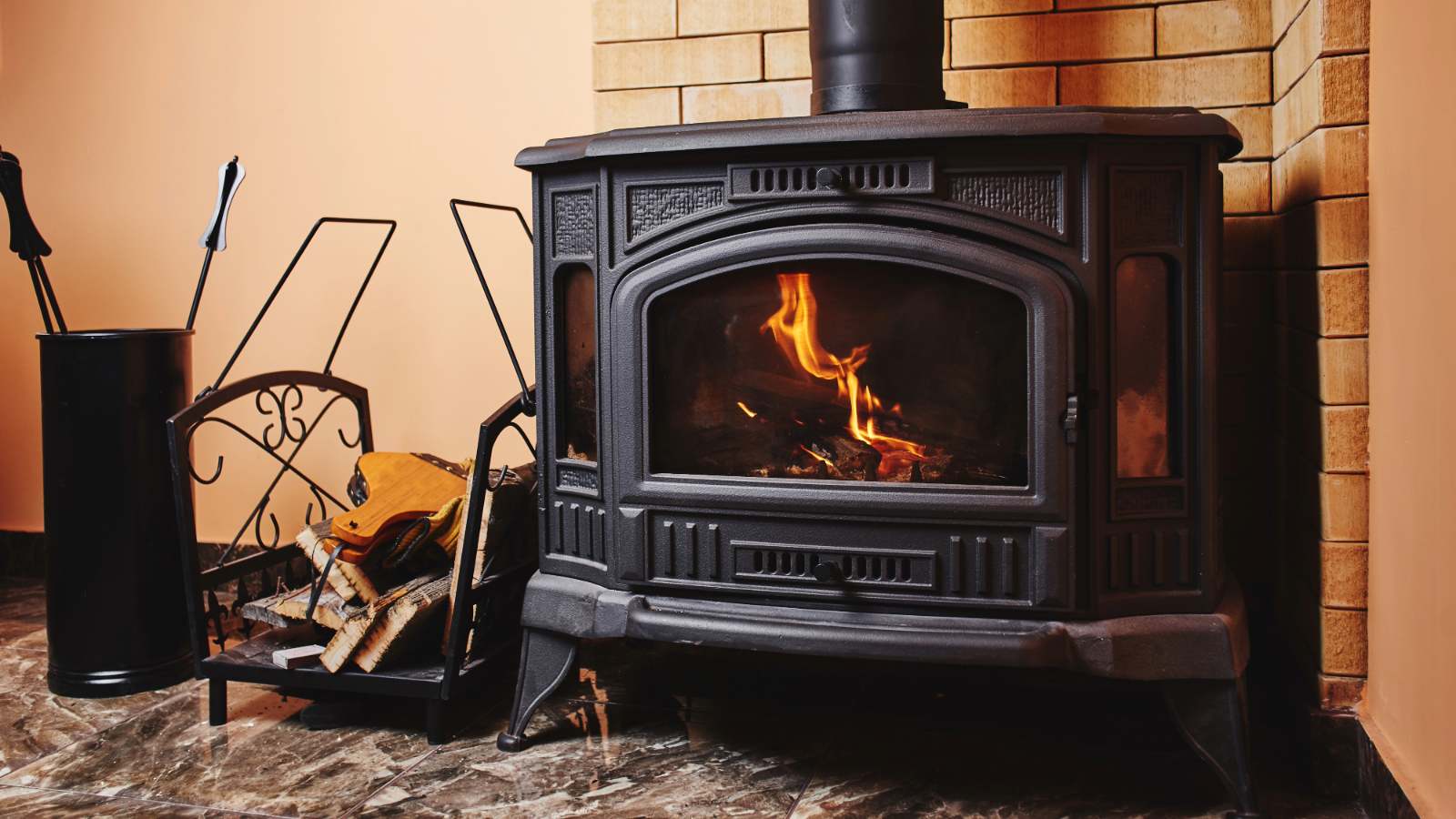
A wood stove in a mountain house is normal, sensible, and in an ice storm it is the difference between staying home and leaving. It is also a solid fuel appliance inside a wooden building, and carriers underwrite it seriously.
The good news is that a properly installed and maintained stove is a routine placement. What causes problems is the undisclosed one, or the one somebody put in themselves.
Is it a listed appliance? Tested and labeled by a recognized laboratory, with a manufacturer's plate. A homemade or unlabeled stove is a different conversation entirely and frequently an unwritable one.
Who installed it, and was it permitted and inspected? Professional installation with a permit and a passed inspection is what most carriers want to see. Self-installation without a permit is the most common reason a stove causes a problem.
Are the clearances correct? Distance from combustible walls, floors, and ceilings, per the manufacturer's specification. Reduced clearances are permitted only with proper listed shielding.
What is the chimney or flue? Listed class A chimney or a properly lined masonry flue. Connecting a stove into an unlined masonry chimney is a recurring problem in older mountain houses.
Is it the primary heat source or supplemental? A house heated entirely by wood is underwritten differently than one with a central system and a stove for comfort and backup.
How is it maintained? Annual professional inspection and cleaning, with documentation.
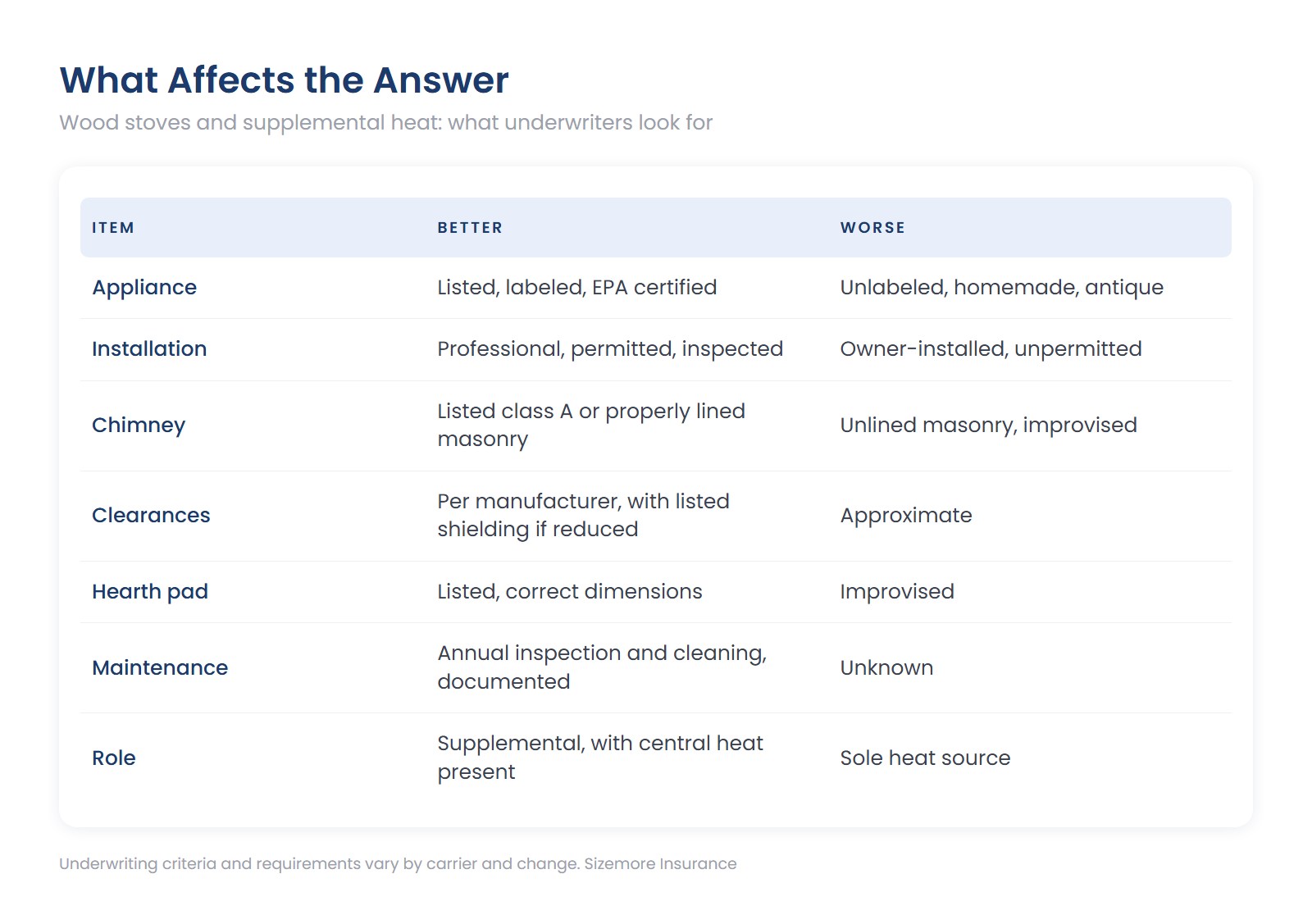
The takeaway: the paperwork matters as much as the installation. A stove that was installed correctly and cannot be documented is treated closer to one that was not.
Underwriting criteria and requirements vary by carrier and change.
Pellet stoves are generally viewed favorably relative to wood, with similar installation and venting questions.
Fireplace inserts raise the same questions as a freestanding stove and are frequently installed without a permit during a remodel.
Open masonry fireplaces are generally routine, with chimney condition and a spark arrestor being the usual points.
Outdoor wood boilers are a distinct exposure with distinct rules and some carriers decline them outright. Disclose one before you install it.
Space heaters and kerosene heaters are not usually underwriting questions and they are a real fire cause, particularly during outages.
Generators are worth mentioning to your advisor, both for the installation and because a properly installed standby generator prevents freeze losses during outages.
An undisclosed stove is a misrepresentation problem. If a carrier learns at a claim that a solid fuel appliance was never disclosed, that is a policy issue rather than a pricing one. Disclose it.
Buying a house with a stove already in it. Ask the seller for the permit and inspection records during due diligence. If they do not exist, a professional inspection before closing is worth the cost, because the alternative is discovering it during the insurance placement two days before you close.
Adding one to an existing house. Tell your advisor before installation, not after. A five-minute call can prevent a placement problem.
Creosote is the actual risk. Chimney fires come from accumulated creosote, and burning unseasoned wood accelerates it. Annual cleaning is the control and it is also the documentation.
Ash disposal causes fires. Hot ash in a plastic container on a wooden deck is a recurring loss and it is entirely preventable with a metal can on a non-combustible surface.
During an outage, a stove is an asset. It is also the moment people run it hard, which is when clearances and maintenance matter most.
Does a wood stove raise my home insurance?
It can, modestly, and the larger question is eligibility. Some carriers are comfortable with a properly installed and documented stove and some are not.
Do I have to tell my insurance company about a wood stove?
Yes. It is a material fact and nondisclosure is a serious problem at a claim.
What if it was installed without a permit?
Have it professionally inspected. A qualified inspection report showing correct installation is frequently enough, and where it is not, correcting the installation is the path.
Can I insure a house heated entirely by wood?
It is placeable and the market is narrower. Documentation matters more.
Does an annual chimney cleaning matter?
Yes, for the risk and for the underwriting. Keep the receipts.
What about a fireplace insert?
Same questions as a stove. It is a solid fuel appliance and it needs to be disclosed and documented.
Sizemore Insurance is an independent insurance company founded in North Carolina in 1977, and we write a lot of mountain homes with wood heat. Tell us what you have and how it was installed and we will place it properly. Insurance made just for you.
Sources: North Carolina Department of Insurance, Office of State Fire Marshal, North Carolina State Building Code and local permitting and inspection (ncdoi.gov); U.S. Environmental Protection Agency, wood heater certification (epa.gov).
Underwriting criteria, requirements, and availability vary by carrier and change. Installation and permitting requirements are set locally. Review your own policy or talk to your advisor.
Coverage details: North Carolina Home Insurance