Reviewed for insurance accuracy by Brad Sizemore, Owner and CEO, NPN 6595451 · November 17, 2026
View reviewer profileTownhome owners get the wrong policy more often than any other category of homeowner in this state. Where HOA coverage stops depends on how your community is legally structured: in fee simple you insure the building yourself on an HO-3, and in a condominium regime the master policy covers it to a defined point and an HO-6 covers the rest.
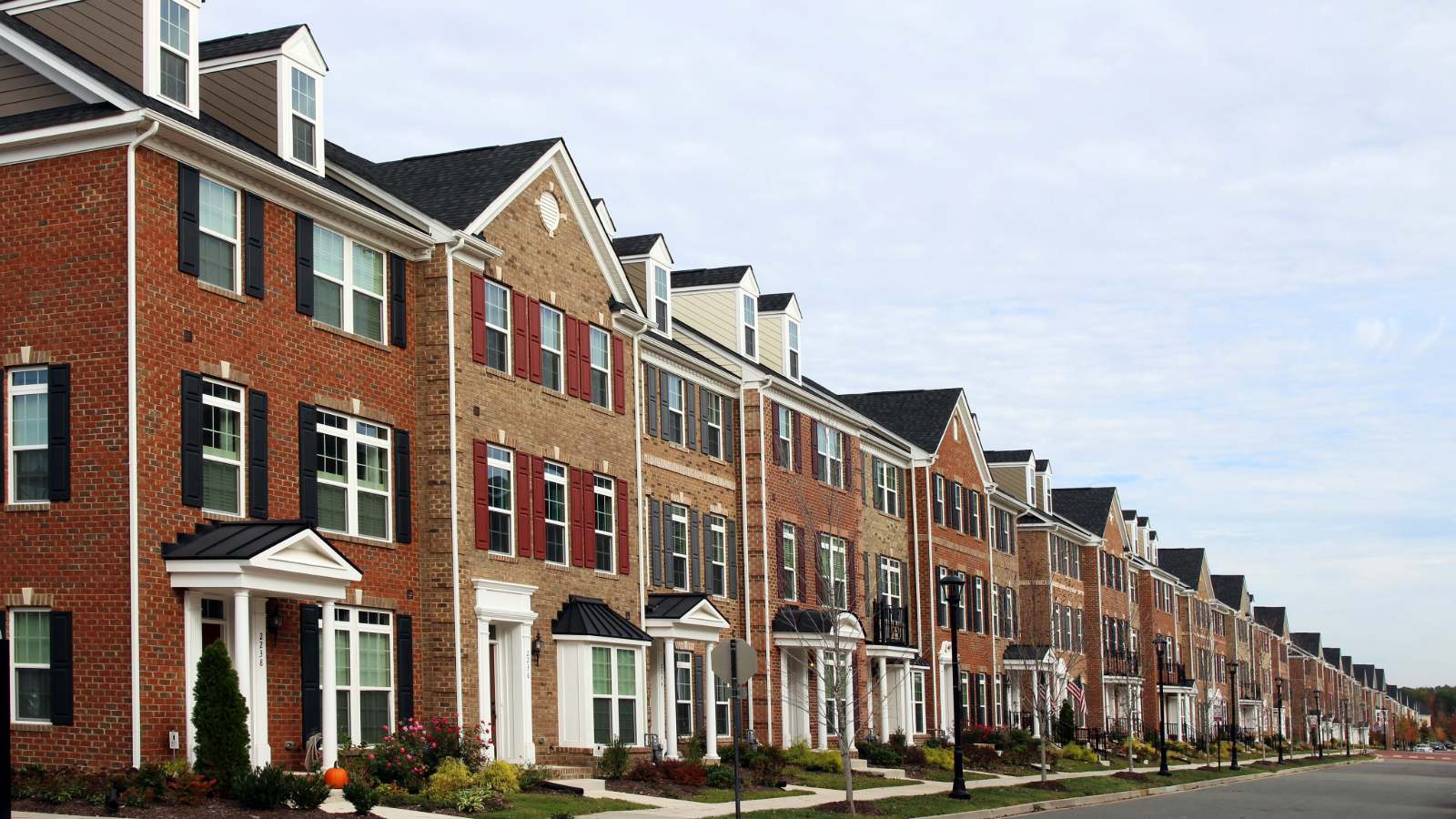
The reason is that “townhome” describes the building, not the ownership. Two units that look identical from the street can be legally structured in completely different ways, and the structure determines which policy form you need.
Fee simple. You own the structure and the land under it. The association maintains common areas and may handle exterior maintenance, and it does not insure your building. You need a standard homeowners policy, typically an HO-3, covering the dwelling itself.
Condominium regime. The community is legally a condominium even though the units look like townhomes. The association’s master policy covers the structure to some defined point and you need an HO-6 covering the balance.
The exterior appearance tells you nothing. The declaration and the deed tell you everything.
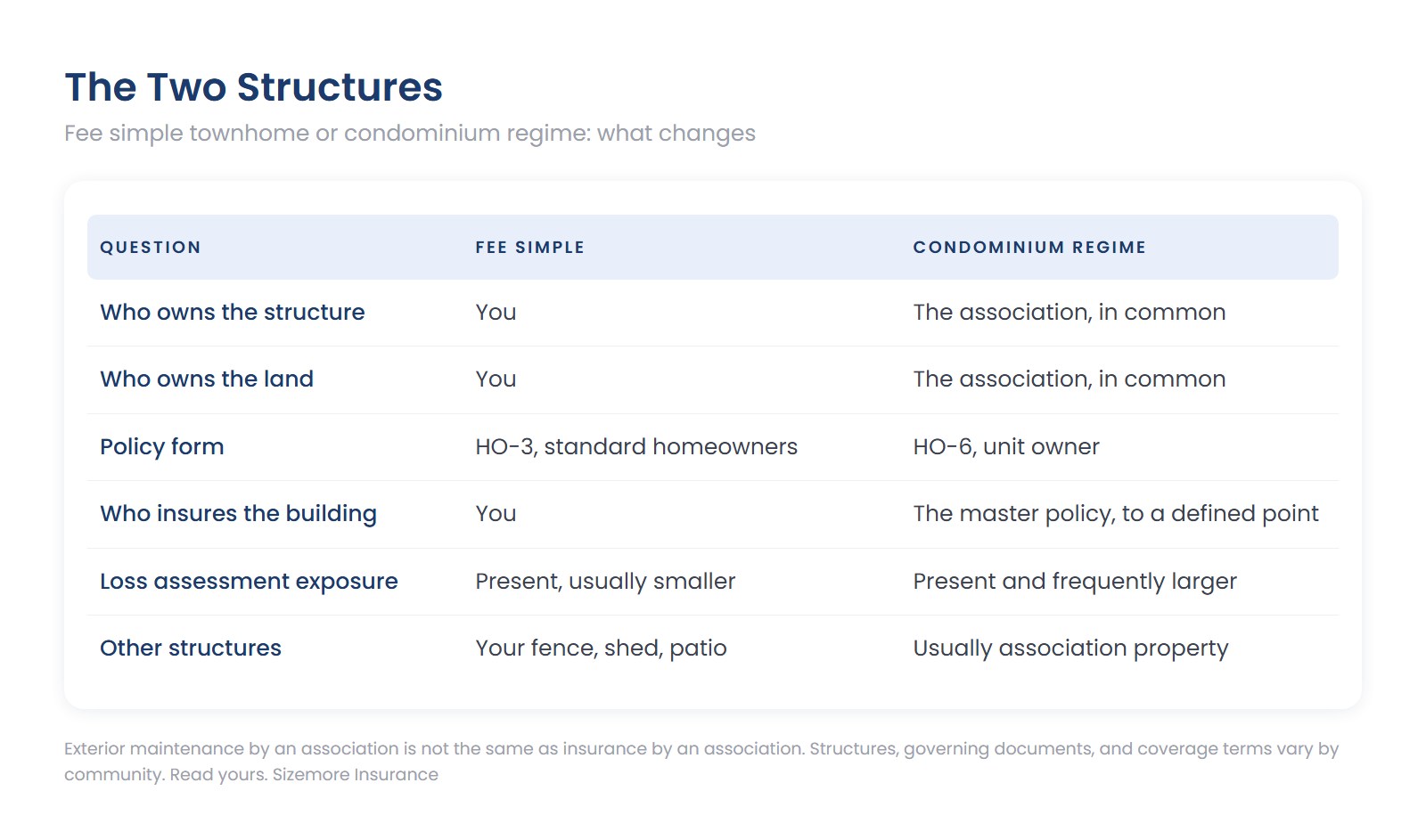
The takeaway: exterior maintenance by an association is not the same as insurance by an association. Many fee simple communities handle the landscaping and the roofs and insure none of it.
Structures, governing documents, and coverage terms vary by community. Read yours.
Read the deed. If you own the lot, it is fee simple. If you own a unit and an undivided interest in common elements, it is a condominium regime.
Read the declaration and bylaws. They allocate maintenance and insurance responsibility, and those two are not always assigned to the same party.
Ask the association for the master policy declarations page. If there is a master property policy covering the structures, you are almost certainly in a regime. If the master is liability and common areas only, you are almost certainly fee simple.
Ask your closing attorney. They read the documents at purchase and can tell you in one sentence.
Party walls create shared exposures. A fire or water loss that starts in your unit and travels next door brings your liability into it, and the governing documents typically address responsibility. Adequate liability limits matter more here than in a detached home.
Loss assessment applies in both structures. Even fee simple associations own common property, and an assessment following a covered loss to it can reach you. Carry more than the default limit.
Maintenance responsibility does not follow insurance responsibility. An association that maintains the roofs may not insure them, and vice versa. Read both provisions.
The roof is the recurring dispute. In a regime, whether the master covers the roof and at what settlement basis is worth confirming before a hail season, not after.
Water travels between attached units more readily than owners expect. Water backup coverage and adequate liability both matter.
Rental restrictions are common and they are the association’s rules, separate from what your policy allows.
Do I need an HO-3 or an HO-6 for a townhome?
It depends on whether the community is fee simple or a condominium regime. Read the deed and the declaration, or ask your closing attorney.
My HOA maintains the exterior. Does that mean they insure it?
Not necessarily. Maintenance and insurance are allocated separately in most governing documents.
Who insures the roof?
In a regime, usually the master policy. In fee simple, usually you, even if the association replaces it.
What happens if a fire spreads to my neighbor’s unit?
Your liability coverage and the governing documents both come into it. Carry adequate limits.
Do I need loss assessment coverage in a fee simple community?
Yes. Associations own common property in both structures and can assess for covered losses.
Can I rent my townhome?
Check the association’s rules first, then your policy form.
Sizemore Insurance is an independent insurance company founded in North Carolina in 1977. Send us your deed or your association documents and we will tell you which policy form your townhome actually needs. Insurance made just for you.
Sources: North Carolina Department of Insurance, consumer guidance on homeowners and condominium unit owners policies and loss assessment (ncdoi.gov); South Carolina Department of Insurance, consumer guidance on homeowners and condominium coverage (doi.sc.gov); North Carolina General Assembly, the North Carolina Condominium Act and Planned Community Act, which govern declarations and association insurance (ncleg.gov).
Ownership structures, governing documents, coverage, and availability vary by community and carrier. Nothing here is legal advice. Review your documents and policy or talk to your advisor.
Coverage details: North Carolina Home Insurance