

Read this now and keep it where you can find it, because nobody looks up an article standing on the shoulder of Highway 74.
In North Carolina the first hour matters more than it does in most states. Contributory negligence means that if you are found to have contributed to the accident, you may recover nothing from the other driver. The facts decide that, and the facts get established at the scene.
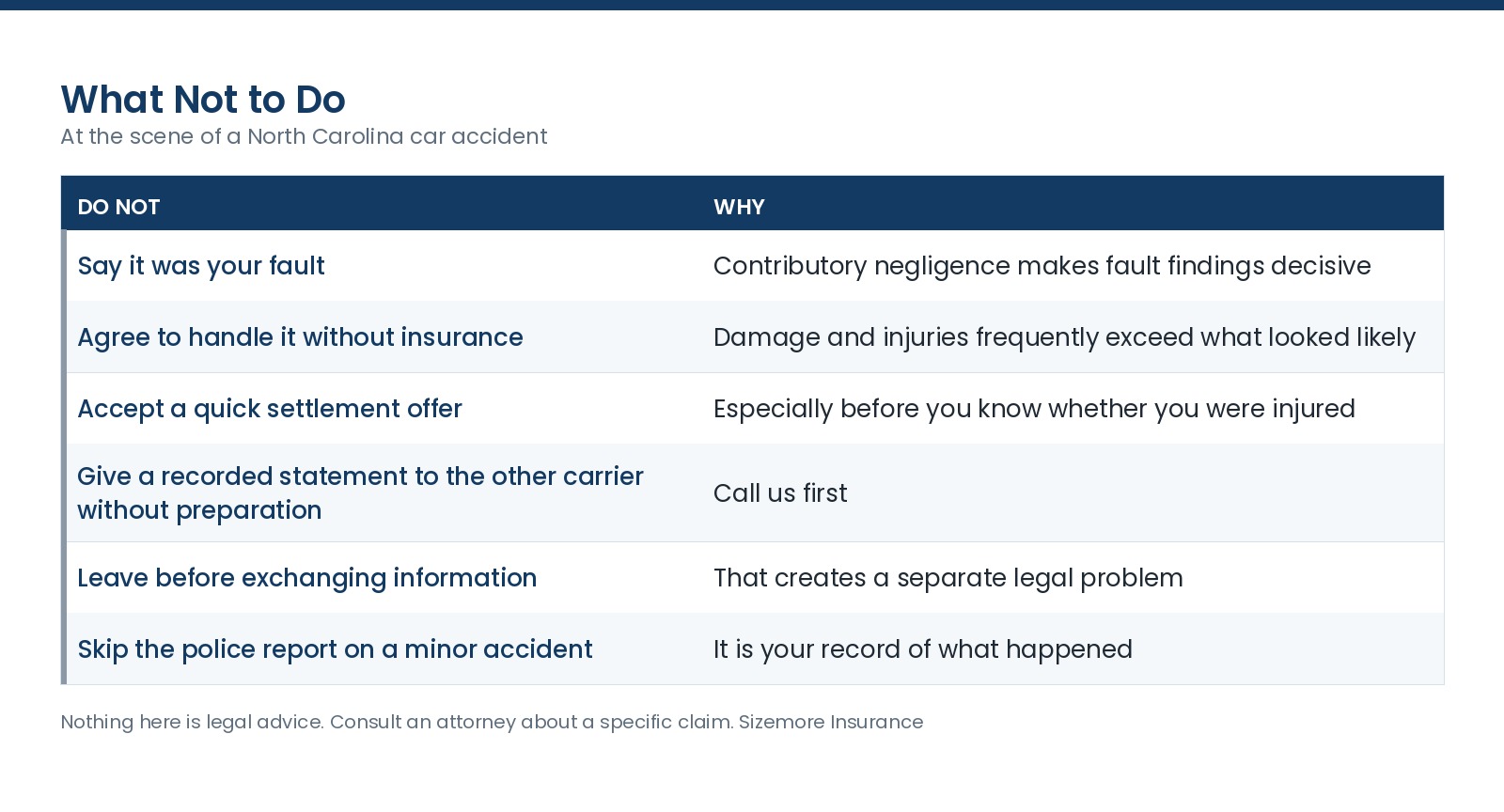
The takeaway: describe, document, and do not conclude. Whose fault it was is decided later by evidence, not at the scene.
Nothing here is legal advice. Consult an attorney about a specific claim.
Your carrier opens a claim and assigns an adjuster.
The other carrier may call you. You are not obligated to give a recorded statement to another party's insurer, and it is reasonable to say you will call back after speaking with your own company.
Fault gets determined, based on the report, the statements, the photographs, and the physical evidence.
Your collision coverage can repair your car regardless of fault, subject to your deductible, and your carrier can pursue the other party afterward. On a disputed claim that is frequently the faster path.
Medical payments coverage pays for treatment regardless of fault, which matters in a contributory negligence state.
Injuries appear later. Soft tissue injuries frequently present a day or two afterward. Do not sign anything closing an injury claim in the first week.
Hit and run is an uninsured motorist claim, and reporting to law enforcement promptly is generally a requirement.
A no-contact accident counts. If someone ran you off the road without touching you, that is potentially an uninsured motorist claim and the reporting requirements matter.
Your deductible comes back if the other party is found at fault and their carrier pays, in most cases.
Rental coverage only exists if you bought it. Ask now, not after.
Passengers have their own claims, including against your policy if you were at fault.
Should I call the police for a minor accident?
Generally yes. The report is your record of what happened and it helps when fault is disputed later.
Do I have to talk to the other driver's insurance company?
You are not obligated to give a recorded statement. Call us first.
Should I use my own collision coverage or wait for theirs?
On a disputed claim, using your own is frequently faster, and your deductible generally comes back if the other party is found at fault.
What if the other driver has no insurance?
That is an uninsured motorist claim under your own policy.
What if they say it was my fault?
That is their position, not a determination. Document everything and tell us.
When should I call an attorney?
Any time there are injuries or fault is genuinely contested.
Sizemore Insurance is an independent insurance company serving North Carolina since 1977. Call me from the scene if you can. I will tell you what to photograph before you leave. Insurance made just for you.
Coverage, claim handling, and reporting requirements vary by carrier and policy. Nothing here is legal advice. Consult an attorney about a specific accident and your advisor about your policy.