Water is one of the most common losses in apartments and one of the most confusing, because whether you are covered depends entirely on where the water came from.
Water that came from inside the building is generally covered. A pipe bursts, a water heater fails, the unit above you overflows, or a sprinkler discharges.
Water that came from outside and rose is flood, and it is excluded from standard renters policies.
That is the line. Same water in your apartment, entirely different answer.
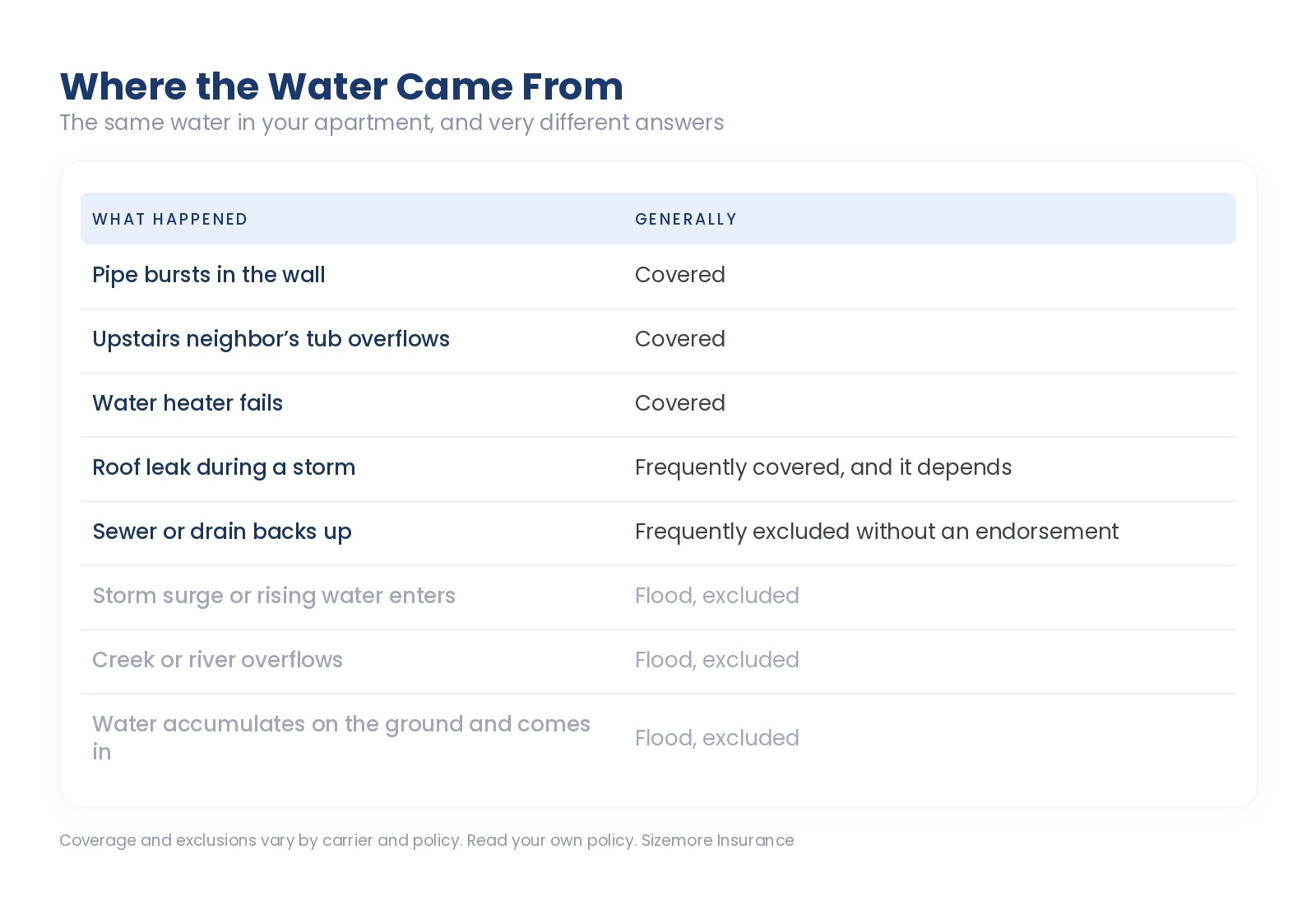
The takeaway: from inside is generally covered, from outside and rising is flood, and backup through a drain is its own category that frequently needs an endorsement.
Coverage and exclusions vary by carrier and policy. Read your own policy.
Water backing up through drains or sewers is a third category and it is frequently excluded without a specific endorsement.
It happens in older buildings and in ground floor and basement units.
The endorsement is generally inexpensive and it is worth having if you are on a lower floor or in older construction.
Ask for it specifically, because it is not automatic.
This is the part few renters know, and it matters in this state.
Renters can buy flood insurance covering their contents. You do not need to own the building. A contents-only flood policy for a tenant is a real product.
It matters if you live on the coast, near a river or creek, on a ground floor in a flood-prone area, or anywhere water has reached before.
It generally costs less outside high-risk zones, and being outside a mapped zone is not a guarantee. Western North Carolina learned that in 2024, in places where nobody expected water.
There is generally a waiting period before it takes effect, which means it cannot be bought when a storm is coming.
If you rent a ground floor apartment in Wilmington, a place along a creek in the mountains, or anything near the water, ask about it. Many renters have never been offered it.
Your landlord’s building coverage is not yours. They repair the building. Your belongings are yours.
If the upstairs neighbor caused it, your policy generally responds and then may pursue them, which is between the insurers rather than something you have to negotiate.
Mold follows water, and mold coverage is frequently limited. Report water losses immediately, because fast drying is what prevents it.
A slow leak that went unnoticed is frequently treated as maintenance rather than a sudden loss.
Ground floor units carry more of all of this.
Report promptly, because delay makes both the damage and the claim worse.
Is water damage covered by renters insurance?
It depends on the source. From inside the building generally yes. Rising water from outside is flood and is excluded.
Does it cover the apartment above me flooding my place?
Generally yes, for your belongings.
Is sewer backup covered?
Frequently not without an endorsement. Ask for it, especially on a lower floor.
Can renters buy flood insurance?
Yes. A contents-only flood policy is available to tenants and few renters know it.
Do I need it if I am not in a flood zone?
Being outside a mapped zone is not a guarantee. If you are near water or on a ground floor, ask.
Is there a waiting period on flood?
Generally yes, which means it cannot be bought when a storm is coming.
Sizemore Insurance is an independent insurance company founded in North Carolina in 1977, writing in both North Carolina and South Carolina. Tell us your address and which floor you are on and we will tell you what to add. Insurance made just for you.
Coverage, exclusions, endorsements, and waiting periods vary by carrier, policy, and program and are subject to change. Nothing here is a coverage determination. Review your own policy or talk to your advisor.