

Two policies both showing a two percent deductible can respond very differently to the same storm.
The percentage is the number people compare. The trigger is what decides whether that percentage applies at all, and it is in language most owners never read.
Wind and hail. The broadest. Applies to wind and hail damage generally, whether or not a storm has a name. A thunderstorm in July, a nor’easter in March, and a hurricane in September all fall under it.
Named storm. Applies when the damage comes from a storm the National Hurricane Center has named. That includes tropical storms, not only hurricanes, which means it applies more often than owners expect.
Hurricane. The narrowest. Typically requires the storm to reach hurricane strength, and frequently requires a watch or warning for the area.
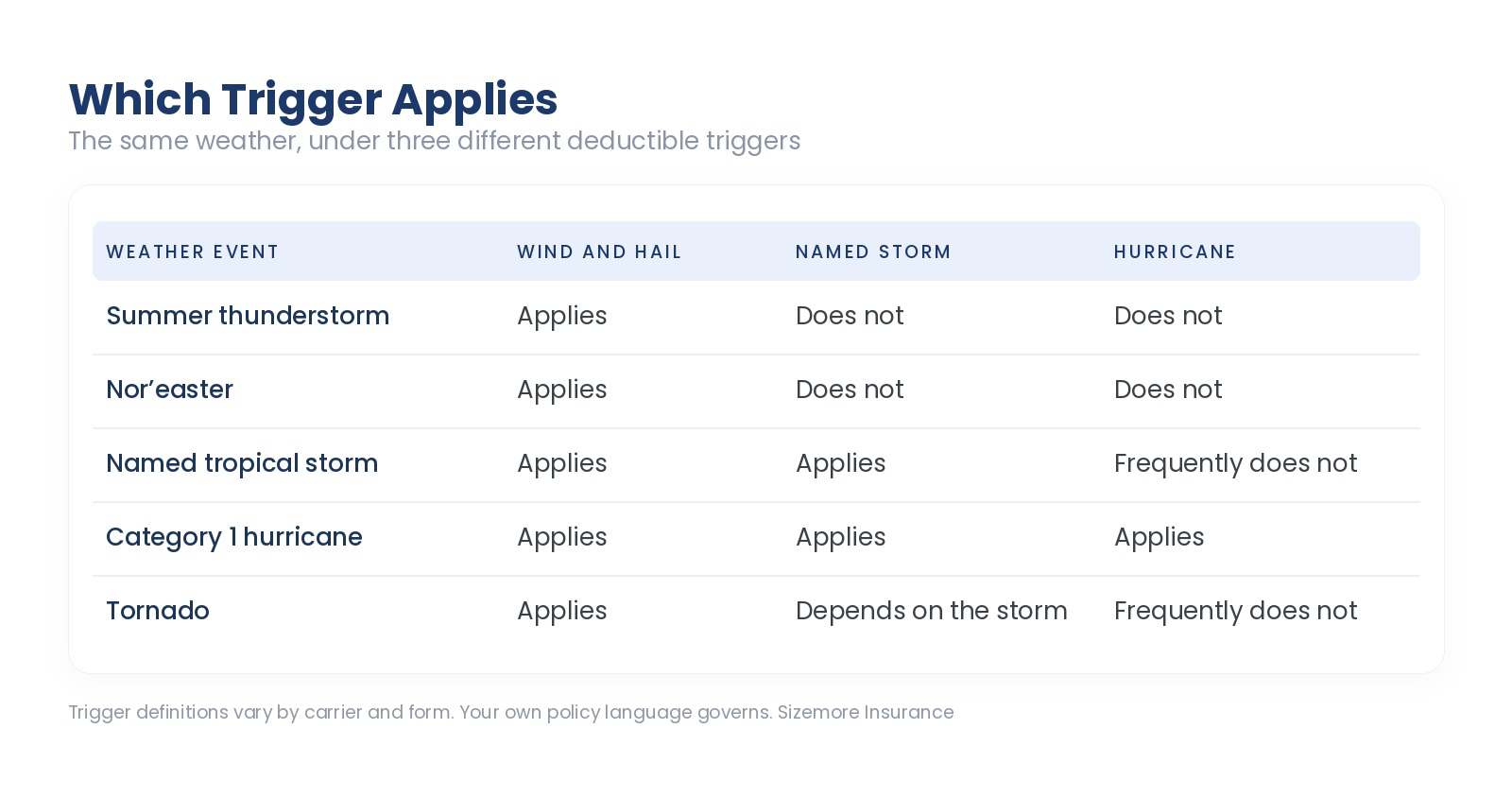
The takeaway: a wind and hail deductible applies to more events than a hurricane deductible, so the same percentage is worse for you under the broader trigger.
Trigger definitions vary by carrier and form. Your own policy language governs.
Beyond which category of storm, the specifics differ.
When it starts. Some triggers begin when a watch or warning is issued for the area, some when the storm makes landfall within a defined distance, and some at the first damage.
When it ends. Frequently a stated number of hours after the last watch or warning is lifted, which can be a day or more after the weather passes.
Whether wind speed at the location matters, which some forms address and some do not.
Whether the storm has to affect your specific county or a broader region.
Two policies with identical percentages and different windows produce different answers to the same event. This is worth reading before you compare quotes on price.
A single storm can span triggers. A system that arrives as a tropical storm and strengthens is one event, and the language determines which deductible applies to damage occurring at which point.
Multiple deductibles on one policy is normal. An all other perils deductible for everyday claims, and a separate percentage for the storm trigger.
It applies per event, so two named storms in a season means the deductible twice.
The trigger affects what the percentage should be. If your trigger is broad, a lower percentage matters more, because it applies to more events.
Commercial policies have the same structures with the added question of whether the deductible applies per building or per occurrence across a schedule.
Boat policies use the same triggers, frequently named storm.
A cheaper quote may have a broader trigger, which is a real difference that price comparison hides.
What is the difference between a named storm and a hurricane deductible?
A hurricane deductible generally requires hurricane strength. A named storm deductible applies to any storm the National Hurricane Center has named, including tropical storms.
Which trigger is best for me?
Narrower is better from a coverage standpoint. A hurricane trigger applies to fewer events than a wind and hail trigger.
Does a thunderstorm trigger my storm deductible?
Under a wind and hail trigger it can. Under a named storm or hurricane trigger it generally does not.
How long does the trigger window last?
Frequently until a stated number of hours after the last watch or warning is lifted. Read yours.
Do I have more than one deductible?
Usually. An everyday deductible and a separate percentage for the storm trigger.
Does the trigger matter as much as the percentage?
Frequently more, because it determines how often the percentage applies.
We have been an independent insurance company in North Carolina since 1977. Send us your declarations page and endorsement list and we will tell you exactly what weather triggers your storm deductible. Insurance made just for you.
Trigger definitions, windows, and provisions vary by carrier and form. Review your own policy or talk to your advisor.