A coffee shop and a late-night bar are both restaurants and they are not the same insurance problem.
Four coverages are close to universal. Everything else depends on whether you serve alcohol, whether you deliver, whether you lease or own, and how much of your business runs after ten at night.
The Core Four
General liability. Third-party injury and property damage. A guest who slips, a customer who is injured, damage you cause to someone else’s property. This is the foundation and it is also where the alcohol exclusion sits.
Commercial property. Your equipment, your inventory, and critically your tenant improvements and betterments. If you built out a leased space, that buildout is generally your property to insure even though it is attached to someone else’s building. This gets underinsured constantly.
Business income. Lost revenue and continuing expenses while you are closed after a covered loss. On thin margins with a lease that keeps running, this is frequently the coverage that determines whether the restaurant reopens.
Workers compensation. Statutory for employees. North Carolina and South Carolina have different thresholds and their own counting rules.
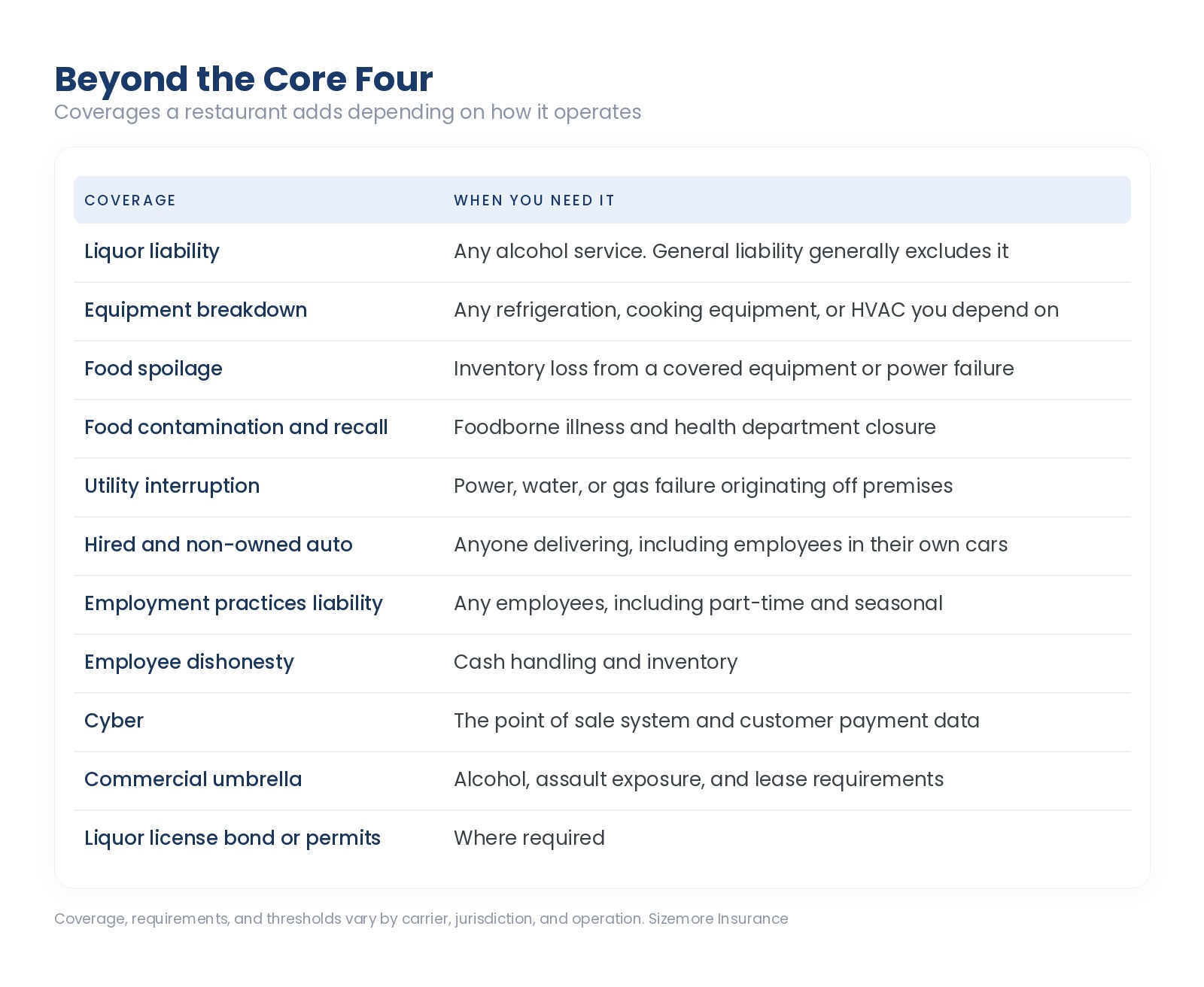
The takeaway: the core four get you open, and liquor, equipment, and delivery are what actually decide whether a claim gets paid.
Coverage, requirements, and thresholds vary by carrier, jurisdiction, and operation and are subject to change.
How the Concept Changes It
A coffee shop or bakery. Simplest placement. Property, general liability, workers compensation, equipment breakdown, and spoilage. Equipment is the exposure.
Quick service and fast casual. Add delivery if you do it, and payroll classification matters at audit.
Full service with alcohol. Add liquor liability, and the alcohol percentage of sales drives the pricing.
A bar or late-night venue. Assault and battery becomes the defining exposure, the surplus lines market becomes likely, and security practices become an underwriting question.
A brewery or taproom. Production, hospitality, and liquor at once, plus product liability on what you distribute.
A food truck. Auto-led rather than property-led, because the vehicle is the business.
Catering. Off-premises exposure, venue certificate requirements, and alcohol service away from your licensed premises.
Where This Gets Complicated
Your lease dictates part of this. Landlords specify limits, additional insured status, waivers of subrogation, and sometimes coverages you would not have bought. Read the insurance section before you sign, because it is easier to negotiate then than to comply later.
Tenant improvements are yours to insure. The buildout you paid for is your property under most leases, and undervaluing it triggers a coinsurance penalty.
Alcohol percentage matters more than alcohol presence. A restaurant at fifteen percent alcohol sales and a bar at eighty percent are different risks and different markets.
Delivery has to be disclosed. Whether you use employees, third-party platforms, or both changes the auto exposure and it is a common gap.
Warranty endorsements are conditions. Hood cleaning and suppression service requirements turn a maintenance contract into a condition of coverage.
Franchise agreements dictate requirements the same way a lease does, and frequently more specifically.
Common Questions
What insurance does a restaurant need?
General liability, commercial property including tenant improvements, business income, and workers compensation, plus liquor liability if you serve alcohol and equipment, spoilage, and delivery coverage depending on your operation.
Does general liability cover alcohol claims?
Generally not. Serving alcohol typically requires separate liquor liability coverage.
Do I have to insure my buildout?
Under most leases the tenant improvements are yours to insure, and undervaluing them creates a coinsurance problem.
Do I need equipment breakdown?
If you depend on refrigeration, cooking equipment, or HVAC, yes. Property coverage generally excludes mechanical breakdown.
What if employees deliver in their own cars?
Their personal auto likely excludes it and the exposure can reach your business. Hired and non-owned auto addresses it.
Where do I start?
With your lease, because it frequently dictates part of the answer.
The Bottom Line
- Start with the lease, because it specifies requirements you have already agreed to.
- Insure the tenant improvements to value, not to a guess.
- Add liquor liability if any alcohol is served, without exception.
- Add equipment breakdown and spoilage, because refrigeration is what actually fails.
- Disclose delivery, including third-party platforms.
- Build the business income limit around a real closure, not an annual average.
Sizemore Insurance is an independent insurance company founded in North Carolina in 1977, writing in both North Carolina and South Carolina. Send us your lease and a description of how you operate and we will build the program to match. Insurance made just for you.
Coverage, requirements, thresholds, and regulations vary by carrier, jurisdiction, lease, and operation and are subject to change. Nothing here is legal advice. Review your own lease and policies or talk to your advisor.