Liability covers what you do to other people. Physical damage covers your own equipment, which for most owner-operators and small fleets is the entire capital base of the business.
It is not federally required. Lenders generally require it, and on a truck you could not replace out of pocket it is not optional in any real sense.
The Structure
Collision. Hitting something or being hit, regardless of fault.
Comprehensive, sometimes called other than collision. Fire, theft, vandalism, weather, falling objects, and animal strikes.
Specified perils, a narrower alternative naming specific causes rather than covering everything but the exclusions. Less expensive and less coverage.
Towing and recovery after a covered loss, which on a loaded tractor-trailer is a substantial cost and frequently sublimited.
How the Value Is Set
This is the setting that decides what a total loss pays, and it is the one carriers most often have wrong.
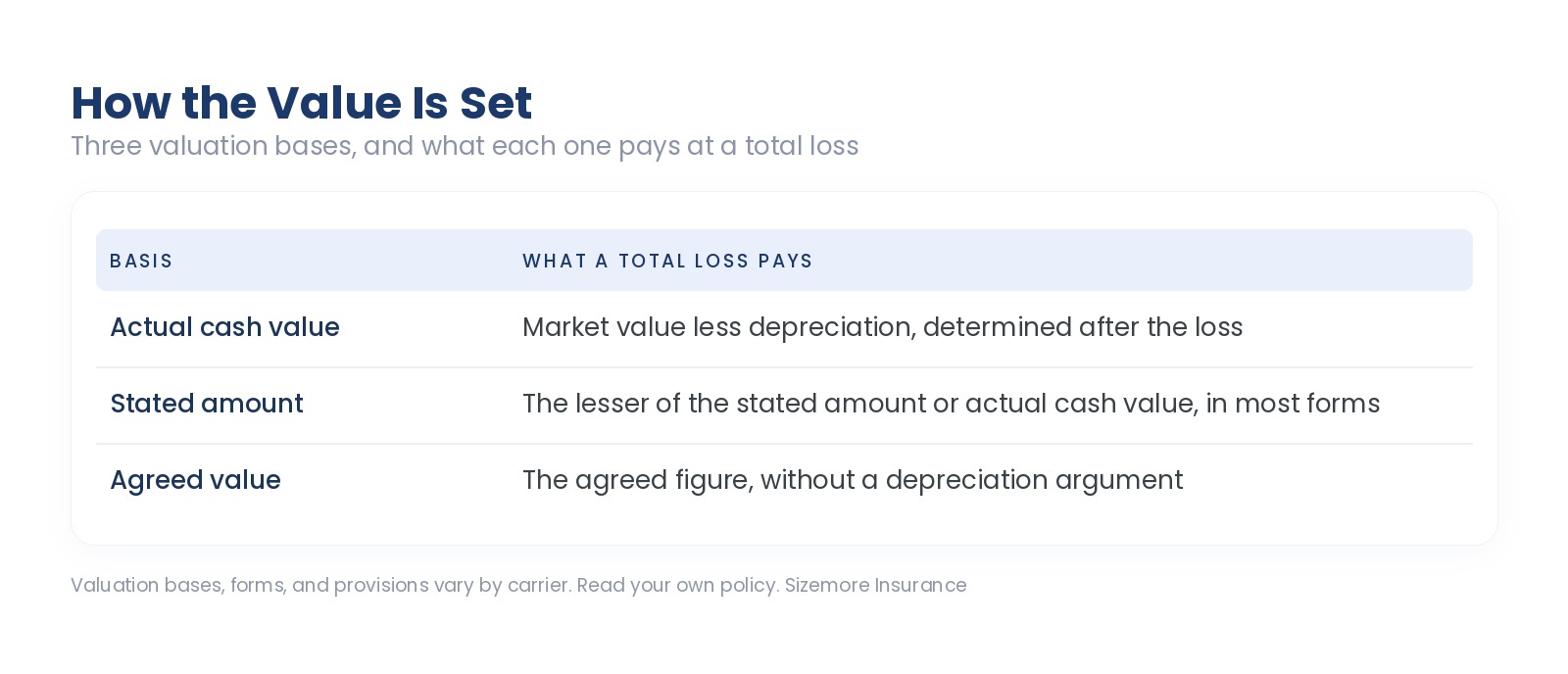
The takeaway: stated amount is not agreed value. A great many carriers believe they have agreed value because they stated a number on the application. In most forms, stating a value sets a ceiling rather than a guarantee, and the settlement is still the lesser of that figure or actual cash value.
Valuation bases, forms, and provisions vary by carrier. Read your own policy.
Ask which basis you are on. On specialized or heavily specified equipment, agreed value is worth pursuing.
What Gets Overlooked
Trailers need their own values, and a schedule with a stale trailer value pays a stale number.
Aftermarket and specified equipment including APUs, chrome, custom interiors, and specialized bodies may need to be scheduled specifically.
Downtime coverage pays a stated daily amount while the unit is out of service after a covered loss. On a one-truck operation that is the difference between a repair and a shutdown.
Rental or replacement vehicle coverage, which is a different approach to the same problem.
Gap. On a financed unit early in the loan, the loan balance can exceed the value. Ask what is available, because the answer differs from the personal auto world.
Deductibles are frequently substantial in trucking, and there is real room to trade deductible for premium if you can absorb it.
Where This Gets Complicated
A leased owner-operator generally needs their own physical damage. The motor carrier’s coverage typically does not extend to your tractor, and the lease should say so.
Reporting new equipment matters. A unit acquired and not reported may sit outside the coverage depending on the form.
Total loss on a tractor is a real valuation fight on an actual cash value basis, because comparable sales vary widely by specification, mileage, and engine.
Cargo is not physical damage. The freight is a separate policy.
Trailer interchange is not physical damage either. Trailers you do not own are their own coverage.
A lender is a loss payee and their interest has to be shown correctly, or a claim payment gets complicated.
Older equipment is worth running the math on, comparing the annual premium against the unit’s value, the same way you would on any vehicle, with the difference that this one produces revenue.
Common Questions
Is physical damage required?
Not federally. Lenders generally require it, and on equipment you could not replace it is not optional in practice.
What is stated amount coverage?
A value you state that generally sets a ceiling, with settlement at the lesser of that amount or actual cash value in most forms. It is not agreed value.
Can I get agreed value?
Sometimes, and it is worth asking about on specialized or heavily specified equipment.
Does it cover my cargo?
No. That is motor truck cargo.
Does it cover a trailer I am pulling that I do not own?
No. That is trailer interchange.
What is downtime coverage?
A stated daily amount while the unit is out of service after a covered loss. On a small operation it matters more than the coverage limit.
The Bottom Line
- Ask which valuation basis you are on, because stated amount is not agreed value.
- Update your equipment values annually, including trailers.
- Schedule specified and aftermarket equipment.
- Add downtime coverage if losing the truck means losing the revenue.
- Confirm the towing and recovery sublimit, because recovering a loaded rig is expensive.
- Carry your own physical damage if you are leased on, because the carrier’s coverage generally does not reach your tractor.
Sizemore Insurance is an independent insurance company that has been placing coverage in North Carolina since 1977. Send us your equipment schedule and we will tell you what a total loss would actually pay on each unit. Insurance made just for you.
Coverage, valuation bases, forms, and provisions vary by carrier and are subject to change. Nothing here is a coverage determination. Review your own policy or talk to your advisor.