A trailer you do not own sits in a gap between three policies.
Your liability policy covers what the trailer does to other people. Your cargo policy covers the freight inside it. Neither one covers the trailer itself, and your physical damage policy covers your equipment rather than someone else’s.
If you pull other people’s trailers, that is a coverage you have to buy on purpose.
The Two Forms
Trailer interchange coverage applies where you have a written interchange agreement with the trailer’s owner. That agreement is the trigger. No agreement, no coverage under this form.
Non-owned trailer physical damage applies more broadly to trailers you do not own that are in your possession, without requiring a written interchange agreement.
They sound similar and they behave differently, and which one fits depends on how you actually get trailers.
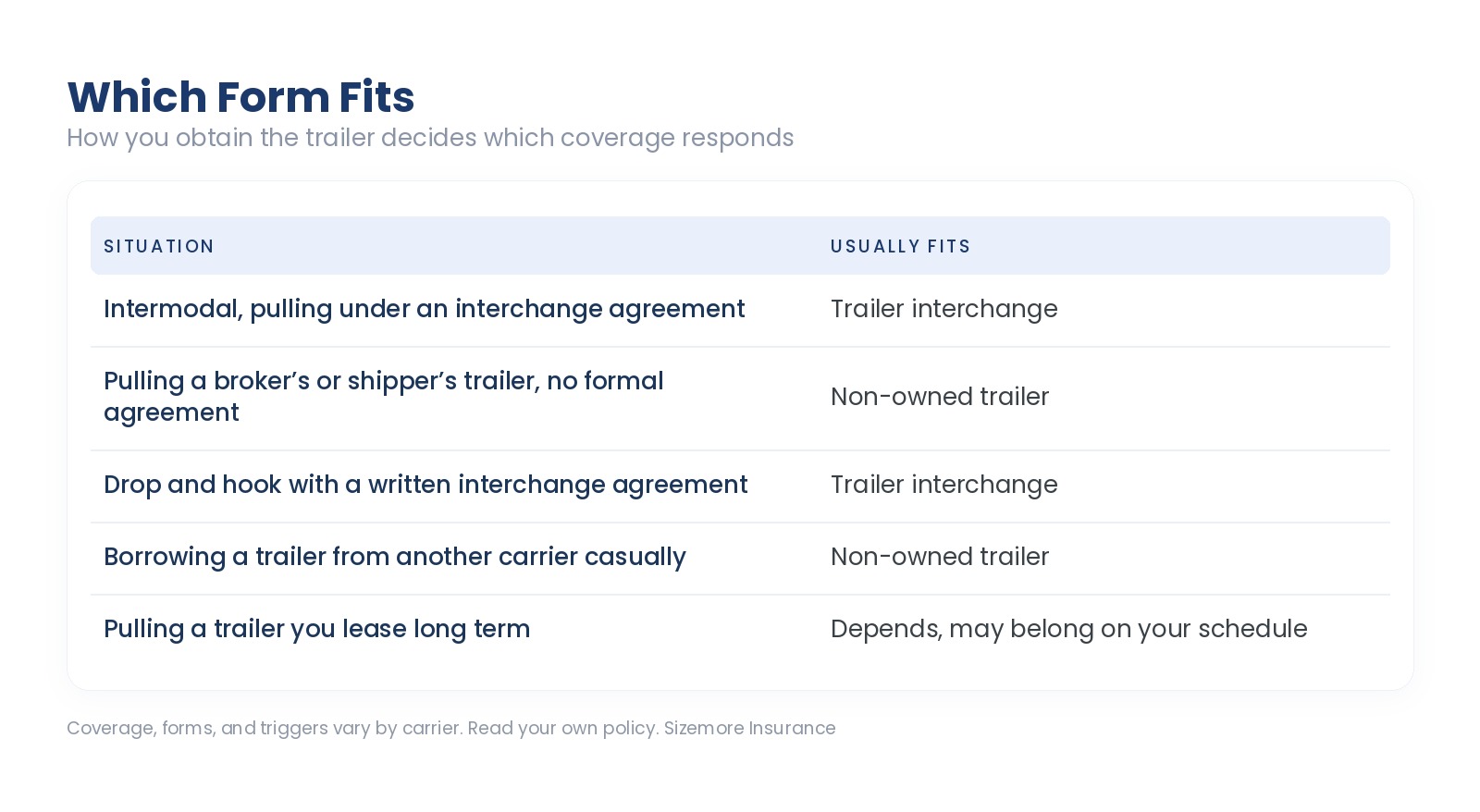
The takeaway: ask how you actually obtain trailers before choosing the form, because the written agreement requirement is a real condition.
Coverage, forms, and triggers vary by carrier. Read your own policy.
What It Covers and How
Physical damage to the trailer from covered causes while in your possession, subject to a limit and a deductible.
Two coverage triggers exist across the market. Some forms cover your legal liability for the trailer, meaning you have to be responsible. Others cover the trailer on a direct primary basis, responding regardless of fault. The second is broader and it is worth asking which you have, because a trailer damaged by weather or by an unknown cause plays out differently under each.
The limit should reflect trailer values, and reefer trailers and specialized equipment are worth substantially more than a dry van.
Where This Gets Complicated
Intermodal chassis are their own question. Chassis pulled under an intermodal agreement raise coverage and liability questions that a standard trailer interchange form may not fully answer. If you run drayage, this needs specific attention, and it is covered in the port drayage article.
The interchange agreement creates contractual obligations beyond insurance, including for maintenance and for return condition. Read it.
Damage found at return is a common dispute, and photographs at pickup and at drop are the practical answer.
Cargo is separate. Freight in a non-owned trailer is still cargo coverage.
Liability while attached is generally your auto liability policy, which is a different question from damage to the trailer itself.
Storage and detention raise questions about how long a trailer sits in your possession and whether coverage continues.
Your own trailers should be on your physical damage schedule, not here.
Common Questions
Does my physical damage policy cover a trailer I do not own?
Generally no. That is trailer interchange or non-owned trailer coverage.
What is the difference between the two?
Trailer interchange generally requires a written interchange agreement. Non-owned trailer coverage applies more broadly to trailers in your possession.
Which one do I need?
It depends on how you obtain trailers. If you pull without formal agreements, the written agreement requirement can leave you uncovered.
Is the freight covered?
By your cargo policy, not by this.
How much limit should I carry?
Enough for the most valuable trailer you pull. Reefers and specialized equipment run well above a dry van.
What about intermodal chassis?
A specific question that a standard form may not fully answer. If you run drayage, address it directly.
The Bottom Line
- Buy it if you pull trailers you do not own, because nothing else covers them.
- Match the form to how you actually get trailers, because the written agreement requirement is a real condition.
- Ask whether the trigger is legal liability or direct primary, since the second is broader.
- Set the limit to the most valuable trailer you pull.
- Photograph trailers at pickup and at drop, because return condition disputes are common.
- Address chassis separately if you run intermodal or drayage.
Sizemore Insurance is an independent insurance company that has been placing coverage in North Carolina since 1977. Tell us how you obtain trailers and we will put the right form in place. Insurance made just for you.
Coverage, forms, triggers, and provisions vary by carrier and agreement. Nothing here is legal advice or a coverage determination. Review your own agreements and policy or talk to your advisor.