
This is one of the least understood benefits in the federal flood program and it addresses one of the largest exposures a property owner in a flood zone has.
If a building in a mapped high-risk zone is damaged badly enough, the local floodplain administrator can determine it was substantially damaged. That determination triggers a requirement to bring the structure into compliance with current floodplain standards, which frequently means elevating it.
That cost has nothing to do with repairing the damage. It is a separate obligation, and increased cost of compliance is the benefit that helps pay for it.
A structure is generally considered substantially damaged when the cost to repair it to its pre-damage condition reaches or exceeds a defined percentage of its market value before the damage, commonly fifty percent.
Three things about that are worth understanding.
It is determined locally, by the floodplain administrator in your jurisdiction, not by your insurance company.
It uses market value before the damage, which on an older structure can be a low number, meaning the threshold is reached more easily than owners expect.
It counts the cost to repair, not what you choose to spend. A modest older building can cross the threshold on damage that would be routine on a newer one.
Repetitive loss provisions can also trigger similar requirements in some circumstances.
Thresholds, determinations, and requirements are set federally and locally and vary. Confirm with your local floodplain administrator.
Depending on the jurisdiction and the structure, one of four things:
Every one of those is expensive, and none of them is covered by ordinary building coverage, which pays to repair what was there.
It is a separate benefit under a federal flood policy, up to a stated amount, helping fund the compliance work.
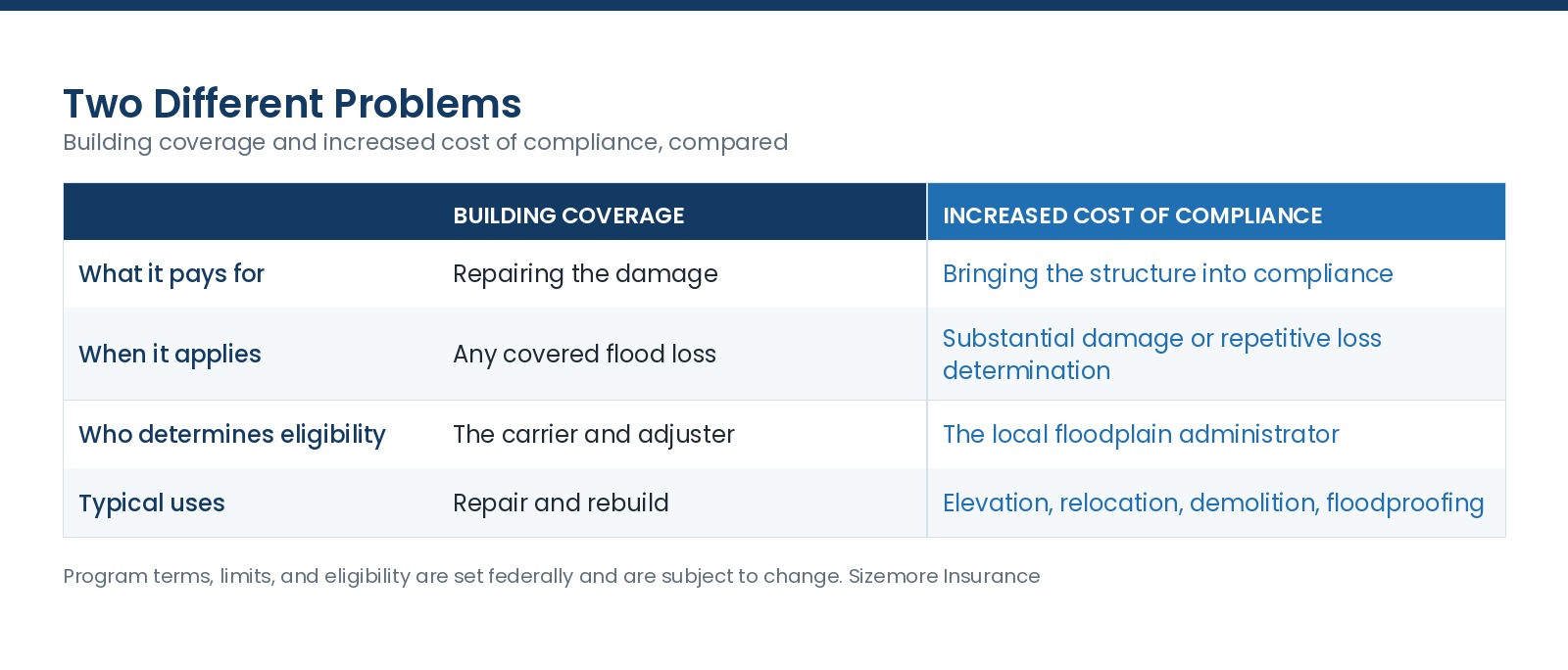
The takeaway: the two coverages address different problems, and the compliance obligation is the one that can exceed the value of the building.
Program terms, limits, and eligibility are set federally and are subject to change.
The benefit is capped and elevation frequently costs more than the cap. It is a contribution rather than a solution, and it is a meaningful one.
Ordinance and law coverage on the property policy addresses a related but different problem, and neither covers the whole exposure. On a coastal or riverine property both are worth having.
The determination is local and it is appealable in most jurisdictions. If you believe the market value or repair estimate used was wrong, that is a conversation with the floodplain administrator.
It applies to commercial buildings too, with floodproofing available as an alternative that residential structures generally do not have.
Timing matters. There are deadlines around when compliance work must begin and be completed to remain eligible.
Grant programs sometimes exist for elevation and mitigation, administered at the state or local level, and they can stack with this benefit. Ask.
Planning ahead changes the math. An owner who knows the threshold exists can make different decisions about repairs, about elevation before a loss, and about how much coverage to carry.
What is substantial damage?
A determination, generally made locally, that repair costs reach or exceed a defined percentage of the structure's market value before the damage, commonly fifty percent.
Who makes that determination?
The local floodplain administrator, not your insurance company.
What is increased cost of compliance?
A separate benefit under a federal flood policy helping fund the work required to bring a substantially damaged building into floodplain compliance.
Does it cover the whole cost of elevating?
It is capped and elevation frequently costs more. It is a meaningful contribution rather than a full solution.
Can I appeal a substantial damage determination?
In most jurisdictions yes. That is a conversation with the floodplain administrator.
Does ordinance and law coverage cover this?
It addresses a related problem on the property policy side. Neither covers the whole exposure and both are worth having.
Sizemore Insurance is an independent insurance company that has served North Carolina since 1977. Tell us where the property sits and we will walk through what a substantial damage determination would mean for it. Insurance made just for you.
Thresholds, determinations, benefits, limits, and requirements are set federally and locally and are subject to change. Nothing here is legal advice. Confirm with your local floodplain administrator and review your own policy with your advisor.