North Carolina Home Insurance

From the Outer Banks to the Blue Ridge, one company comparing many insurance companies for your home. Eight offices in North Carolina since 1977.
Ready to compare?

We shop 100+ carriers for you.

Reviewed for insurance accuracy by Joseph "JJ" Johnson, Chief Operating Officer, NPN 7594559 · October 10, 2026 · How we review
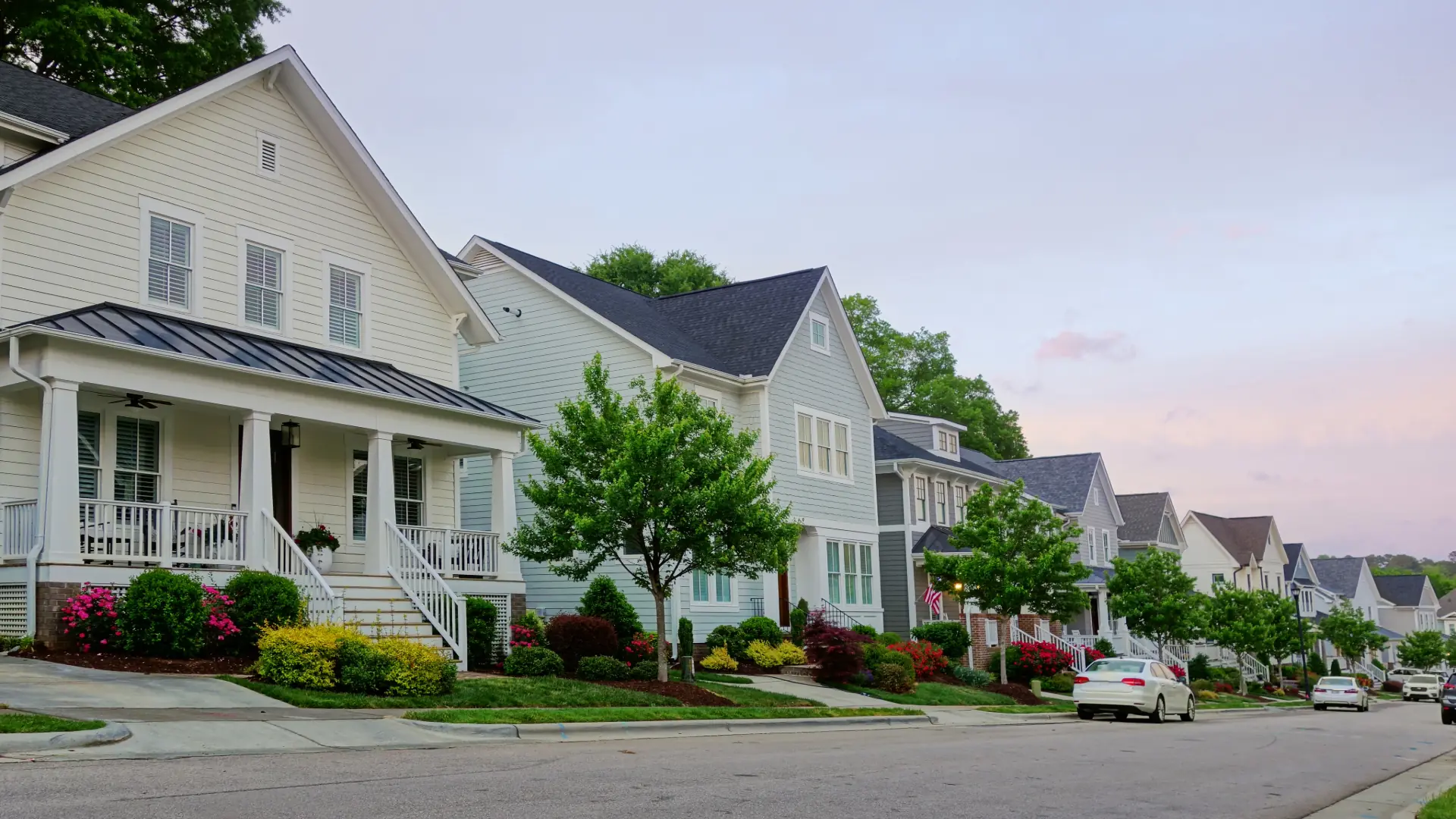
New homes on a quiet street at sunset in Raleigh, North Carolina

At a Glance

  • Is home insurance required by law? No. Your mortgage lender requires it.
  • Who sets base rates? The North Carolina Rate Bureau files them; the Department of Insurance approves or settles them
  • Rate changes: Statewide average base rates rose 7.5% on June 1, 2025, and 7.5% on June 1, 2026, under the settlement announced January 17, 2025
  • Coastal market of last resort: Coastal Property Insurance Pool (formerly the Beach Plan, run by NCIUA), 18 coastal counties
  • Market of last resort elsewhere: NC FAIR Plan (NCJUA)
  • Is flood covered? No. Flood is a separate policy (NFIP or private)
  • NFIP waiting period: 30 days, with narrow exceptions
  • Our offices: Wilmington (3), Leland, Hampstead, Shallotte, Southport, Charlotte

One state, three different insurance markets

Home insurance in North Carolina depends on where the house sits, more than in most states.

The coast. In the 18 coastal counties, wind is the whole conversation. Many companies won't write wind and hail near the water, so a coastal home often carries two policies: one for everything except wind, and a wind and hail policy from the Coastal Property Insurance Pool. Hurricane and named storm deductibles are usually a percentage of your dwelling limit, not a flat dollar amount. On a $400,000 home, a 5% deductible is $20,000 out of pocket before the policy pays a storm claim.

The Piedmont. Around Charlotte, the Triad and the Triangle, hail and wind from severe thunderstorms drive most claims, and roof age drives most of the price. Companies look hard at roofs over 15 years old, and some will only pay actual cash value on an older roof.

The mountains. Hurricane Helene in 2024 showed that the biggest storm losses in western North Carolina came from water, not wind. Most of those homes had no flood policy because they weren't in a mapped flood zone. Flood coverage isn't part of any standard homeowners policy in North Carolina.

How rates work here

North Carolina homeowners rates start from a base set through the North Carolina Rate Bureau, an organization that files rates for the companies writing here. The Department of Insurance reviews those filings. The current settlement raised statewide average base rates 7.5% in June 2025 and another 7.5% in June 2026, and bars the Rate Bureau from seeking another increase before June 1, 2027.

Your own price can sit above or below that base. Companies apply credits and surcharges for roof age and type, claims history, wind mitigation features and coverage choices. In some cases a company can charge more than the bureau rate. This is called consent to rate. You don't sign a form: your declarations page has to show, in bold capital letters, both the premium at the approved rate and the higher premium the company is charging, and paying the bill counts as your consent. If your renewal shows a consent-to-rate notice, call us before you pay it. Another company may write the home at the standard rate.

What usually goes wrong for North Carolina homeowners

  1. No flood policy. Water from a storm surge, a river or heavy rain isn't covered by a homeowners policy. The 30-day waiting period means it has to be bought before a storm is named.
  2. The wind deductible surprise. People shop on premium and find out about a 2% or 5% hurricane deductible after the storm.
  3. Wind excluded and never replaced. On the coast, a policy can exclude wind entirely. If nobody added a wind and hail policy, the home is uninsured for the most likely loss.
  4. Old roof, cash value. A roof paid at actual cash value after depreciation can leave a five-figure gap.
  5. Underinsured rebuild cost. Construction costs rose faster than many dwelling limits. The limit should match what it costs to rebuild, not the market value or the purchase price.

Coverage we place across North Carolina

Homeowners (HO-3 and HO-5)

HO-3 is the most common North Carolina homeowners form. HO-5 adds broader protection for your belongings and fits higher-value homes. What is an HO-3 policy?

Condo (HO-6)

Covers your unit's interior, your belongings and your liability. The association's master policy covers the building, and the gap between the two is where condo owners get hurt.

Wind and hail

Separate wind coverage for coastal homes where the main policy excludes it, including through the Coastal Property Insurance Pool.

We always include wind and hail

Every home policy we place includes wind and hail. When the insurance company excludes wind, we write the wind coverage separately through the Beach Plan or another company, so you're never left without it.

Flood

NFIP and private flood policies. Private flood can offer higher limits than the federal program and sometimes a shorter waiting period.

Second homes and rentals

Dwelling policies (DP-1, DP-3) for homes you rent out, and coverage for short-term rentals. DP-1 vs DP-3

Umbrella

Extra liability above your home and auto, from $1 million.

Our North Carolina offices

  • Oleander (headquarters): 4815 Oleander Dr, Suite 101, Wilmington, (910) 791-1011
  • Midtown: 2508 Independence Blvd, Suite 200, Wilmington, (910) 791-5447
  • Porters Neck: 8024 Market St #4, Wilmington, (910) 686-2138
  • Leland: 1105 New Pointe Blvd, Suite 4, Leland, (910) 383-9945
  • Hampstead: 16406 US Hwy 17, Suite 6, Hampstead, (910) 270-9111
  • Shallotte: 4702 Main St, Shallotte, (910) 754-4366
  • Southport: 701 N Howe St, Suite 1, Southport, (910) 448-4818
  • Charlotte: 101 S Tryon St, Suite 2700, Charlotte, (910) 791-1011

North Carolina cities we serve

We also write home insurance in South Carolina, Virginia and Maryland.

We quote both kinds of flood coverage. The National Flood Insurance Program (NFIP), run by FEMA, has set limits and set rules. Private flood is written by insurance companies, and you choose your own dwelling and contents limits. Many private policies also add coverage the NFIP does not offer. We compare both for your home and show you the difference in coverage and price side by side.

NFIP vs private flood, side by side

CoverageNFIP floodPrivate flood
Dwelling limitUp to $250,000You choose. Limits well above $250,000 are commonly available; varies by insurance company.
Contents limitUp to $100,000You choose. Higher limits are commonly available; varies by insurance company.
How contents are paidActual cash value (depreciated)Replacement cost is commonly available, sometimes as an add-on; varies by insurance company.
Loss of use (hotel, meals, rent while you are out)Not coveredCommonly available, usually with a dollar or time limit; varies by insurance company.
Basement and enclosed areas below an elevated homeLimited to listed items like the furnace, water heater, washer and dryerBroader coverage is commonly available, usually with a sublimit; varies by insurance company.
Other structures, pools, decksDetached garage only, up to 10% of the dwelling limit and taken from it. Pools, decks, fences, and landscaping are not coveredDetached structures are commonly covered, and some policies add pool repair; varies by insurance company.
Waiting period30 days, with exceptions such as a loan closing or a flood map changeSome of the private flood companies we work with have waiting periods shorter than 30 days, so coverage can start sooner. Varies by insurance company.
Deductible optionsSeparate building and contents deductibles, from $1,000 up to $10,000Different deductible options, sometimes one combined deductible; varies by insurance company.
How it is pricedFEMA's rating looks at your home's elevation, distance to water, flood types, and cost to rebuild. Increases on most existing policies are capped at 18% a year by lawEach company sets its own price. It can be lower or higher than the NFIP for the same home; varies by insurance company.

Private flood features vary by insurance company and policy. We show you exactly what each quote includes before you decide.

When private flood is worth a look

  • Your home would cost more than $250,000 to rebuild.
  • You want your belongings paid at replacement cost.
  • You could not stay in your home for weeks after a flood and want help with the cost of living somewhere else.
  • You have a pool, a dock-side structure, or an enclosed ground level you want covered.
  • You are closing soon and need coverage without a 30-day wait.

When the NFIP is the better fit

  • Your current NFIP policy carries a discounted or grandfathered rate you would lose if you left and later came back.
  • You want a policy that renews as long as you pay. Private companies can choose not to renew.
  • Your lender or loan type has a requirement we need to confirm first.

Some homeowners carry both: an NFIP policy for the first $250,000 and a private excess policy above it. We will tell you if that makes sense for your home.

Do I need flood insurance if I'm not in a flood zone?

Your lender may not require it, but the risk is still there. From 2015 to 2019, more than 40% of NFIP claims came from homes outside high-risk zones. In Hurricane Florence, homes in Leland that were not in a mapped flood zone flooded with no flood policy in place.

Does my homeowners or wind policy cover storm surge?

No. Storm surge is rising water, so it is a flood claim. Wind-driven rain that comes in through a roof or window damaged by wind is usually a wind claim. Flood coverage is what pays for water that comes up from the ground.

How long does a flood policy take to start?

An NFIP policy starts 30 days after you buy it, with exceptions such as a policy bought for a loan closing or within a set time after a flood map change. Some of the private flood companies we work with have waiting periods shorter than 30 days, so coverage can start sooner. Do not wait for a storm in the forecast.

Will my lender accept private flood?

Federally regulated lenders must accept a private flood policy that meets the federal definition, which includes coverage at least as broad as the NFIP. FHA loans have accepted qualifying private flood since December 2022. We confirm with your lender before you switch.

Can I switch from the NFIP to private flood?

Yes. Before you do, we check three things: whether your NFIP policy has a discounted rate you could lose if you come back later, whether the private company can decline to renew, and whether your lender will accept the new policy. Then you decide with the full picture.

Sources: FEMA, Standard Flood Insurance Policy, Dwelling Form (44 CFR Part 61, App. A(1)); FEMA, NFIP Summary of Coverage (Dec. 2023); FEMA, Risk Rating 2.0 (updated Apr. 9, 2026); 42 U.S.C. 4012a, 4013, 4015; NC Department of Insurance, Flood Insurance; FEMA, NFIP claims outside high-risk areas, 2015 to 2019.

Ready to compare?

We shop 100+ carriers for you.

Your Local Office

Common Questions

Is home insurance required in North Carolina?

No state law requires it. If you have a mortgage, your lender will require it and will name itself on the policy.

Why did my North Carolina home insurance go up in 2026?

Statewide average base rates rose 7.5% on June 1, 2026, the second step of the settlement between the Department of Insurance and the Rate Bureau. Your change can be higher or lower depending on your territory, your roof, your claims and your coverage limits.

Does homeowners insurance cover hurricanes in North Carolina?

It covers wind damage from a hurricane unless wind is excluded, which is common near the coast. It never covers flood or storm surge. Coastal homes often need a separate wind policy and a flood policy.

What is the Beach Plan?

It's the common name for the Coastal Property Insurance Pool, run by the North Carolina Insurance Underwriting Association. It writes wind and hail coverage, and homeowners coverage, for properties in the 18 coastal counties when the regular market won't.

Do I need flood insurance if I'm not in a flood zone?

Your lender may not require it, but Helene showed how much flood damage happens outside mapped zones. Policies outside high-risk zones usually cost less, and the 30-day wait means you can't buy it when a storm is coming.

Why work with an independent insurance company for North Carolina home insurance?

We compare many companies for the same home. When one company raises rates, restricts roofs or stops writing near the coast, we can move you to another one without you starting over.

The Bottom Line

Keep Reading

Get Your Quote

Every client works with a licensed Sizemore advisor. We compare 100+ carriers and recommend the one that fits. Request a quote online in about two minutes, or call us at (910) 791-1011, Monday through Friday, 8:00 AM to 5:00 PM.

Ready to compare?

We shop 100+ carriers for you.

Sources

Sizemore Insurance is an independent insurance company founded in North Carolina in 1977. Tell us where you live and what you need to protect, and we will compare 100+ carriers to find the coverage that fits. Insurance made just for you.

Forms, exclusions, endorsements, and availability vary by carrier. This page is general information, not a policy. Review your own policy or talk to your advisor.

Reviewed by:
Licensed agent, NPN
· Reviewed