

A DWI conviction produces the largest insurance consequence available in this state.
If you or someone in your household is facing one, the legal side belongs with an attorney and it should be your first call. This article covers what happens on the insurance side, because that part is rarely explained and it lasts longer than most people expect.
The maximum surcharge applies. A DWI conviction carries the highest point assignment under the Safe Driver Incentive Plan, and the resulting surcharge is the largest in the system.
The period runs five years, not three. Convictions assigned four or more SDIP points occurring on or after July 1, 2025 carry a five-year experience and surcharge period. A DWI is well above that threshold.
Cession to the Reinsurance Facility is likely. North Carolina requires carriers to write eligible applicants, and the Facility is where risks a carrier does not want to retain go. A DWI conviction makes that outcome very likely.
Non-renewal of the existing policy is common, which does not mean uninsurable. It means the account moves.
Coverage is available. That is the important part. North Carolina's structure means very few drivers become genuinely uninsurable, and the question is cost and where the policy sits rather than whether one exists.
Many states require an SR-22 filing after a serious conviction. North Carolina handles proof of financial responsibility through its own certificates rather than that mechanism, principally the DL-123 for licensing and the FS-1 for vehicle registration.
If you are moving to North Carolina with an out-of-state SR-22 requirement, or moving away from North Carolina with a conviction here, the filing requirements differ and that is a Division of Motor Vehicles question. Confirm current requirements with NCDMV rather than assuming what another state told you carries over.
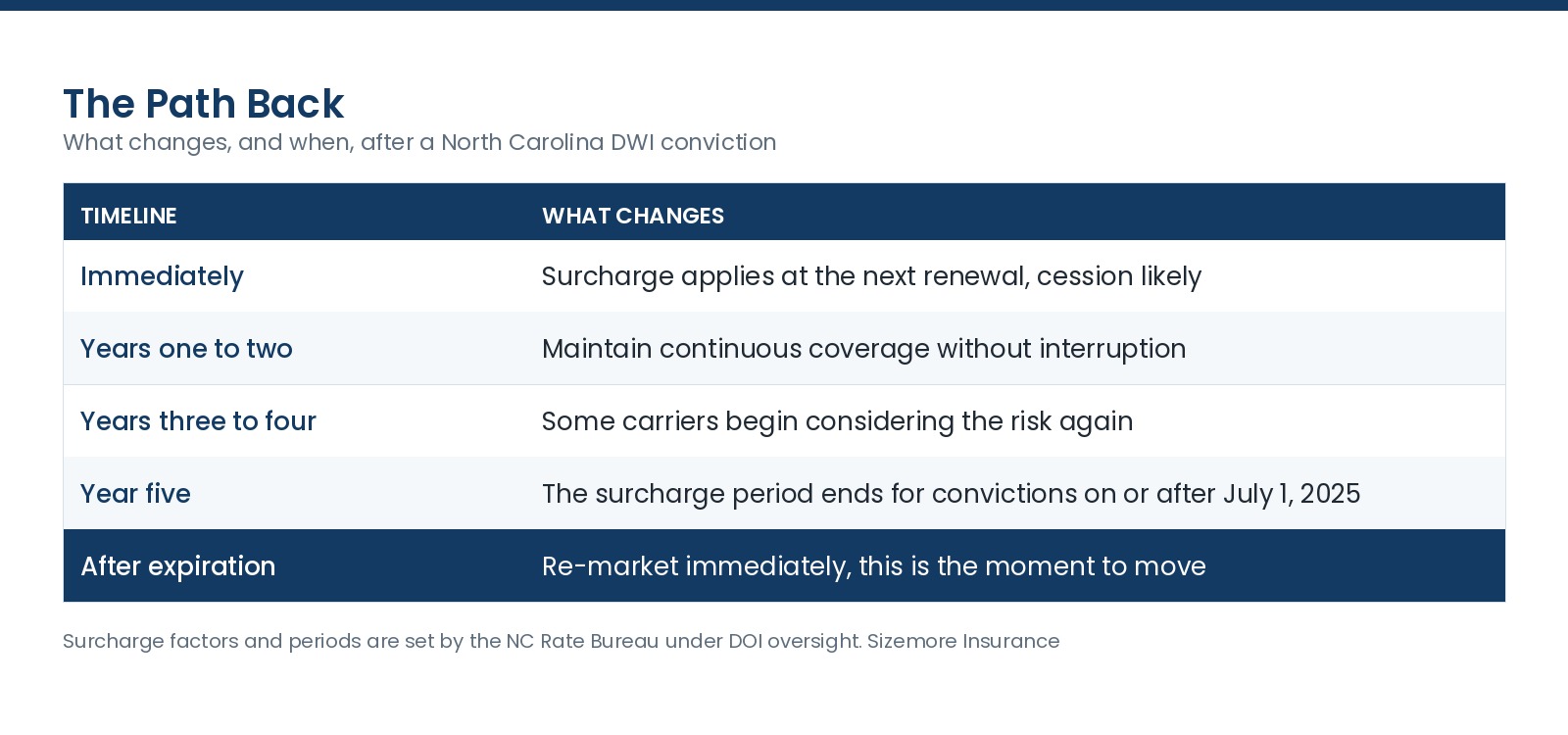
The takeaway: the single most important thing you control during those years is never letting coverage lapse. A lapse on top of a conviction extends the recovery considerably.
Surcharge factors, periods, and eligibility rules are set by the Rate Bureau under Department of Insurance oversight and are subject to change.
License revocation and insurance are separate tracks. You may need coverage to restore driving privileges, and the requirements come from the Division of Motor Vehicles rather than from your carrier.
A vehicle you own still needs coverage even while you are not driving it, if it remains registered. North Carolina monitors this through DMV, and a lapse produces its own penalties on top of everything else.
A named driver exclusion is sometimes an option. Where another household member needs coverage and the convicted driver will not be operating a vehicle, excluding that driver by name can make the household policy workable. It is a serious step with real consequences if the excluded driver ever drives. Discuss it carefully.
Ignition interlock and other requirements are court and DMV matters, not insurance ones, and they can affect which vehicles you operate.
Shopping still matters, at the right moment. The surcharge is standardized and cannot be shopped away. The base rate underneath it can be, and carrier willingness to retain rather than cede varies.
A second conviction is a different category entirely.
How long does a DWI affect insurance in North Carolina?
Five years for convictions assigned four or more points occurring on or after July 1, 2025, which includes DWI.
Will I be able to get insurance?
Yes. North Carolina's structure means very few drivers are uninsurable. Cost and placement change, availability generally does not.
Does North Carolina use an SR-22?
North Carolina handles proof of financial responsibility through its own certificates. Confirm current requirements with NCDMV, particularly if another state is involved.
Will my current company drop me?
Non-renewal is common. That is a placement question rather than an availability one.
Can switching companies reduce the surcharge?
No. It is standardized statewide. Base rate and retention appetite can differ.
What is the most important thing I can do?
Never let coverage lapse, and re-market the month the surcharge period ends.
Sizemore Insurance is an independent insurance company that has been placing coverage in North Carolina since 1977. We place difficult auto risks regularly and we will tell you honestly what the road back looks like. Insurance made just for you.
Surcharge factors, periods, and eligibility rules are set by the North Carolina Rate Bureau under Department of Insurance oversight and are subject to change. Licensing and registration requirements are set by NCDMV. This article explains insurance consequences and is not legal advice. Consult an attorney about a criminal charge.