A debt service coverage ratio loan underwrites the property’s rental income rather than the borrower’s personal income. That changes what the lender cares about on the insurance side, and it changes it in a specific direction.
If the loan is secured by the rent, the coverage protecting the rent gets read closely.
What Is Different
Loss of rents matters more. On a conventional loan it is a coverage the borrower should want. On a DSCR loan it protects the income the loan was underwritten against, and lenders frequently specify a minimum period, commonly six or twelve months.
Entity ownership is the norm rather than the exception. Most DSCR loans are made to an LLC, which means the named insured question is live on every deal rather than occasionally.
Rent documentation ties to the insurance. The lease or market rent analysis supporting the loan should be consistent with the loss of rents limit on the policy. Two documents in the same file saying different things about the rent invites a question.
Speed matters more. DSCR closings move fast and insurance is frequently the last item.
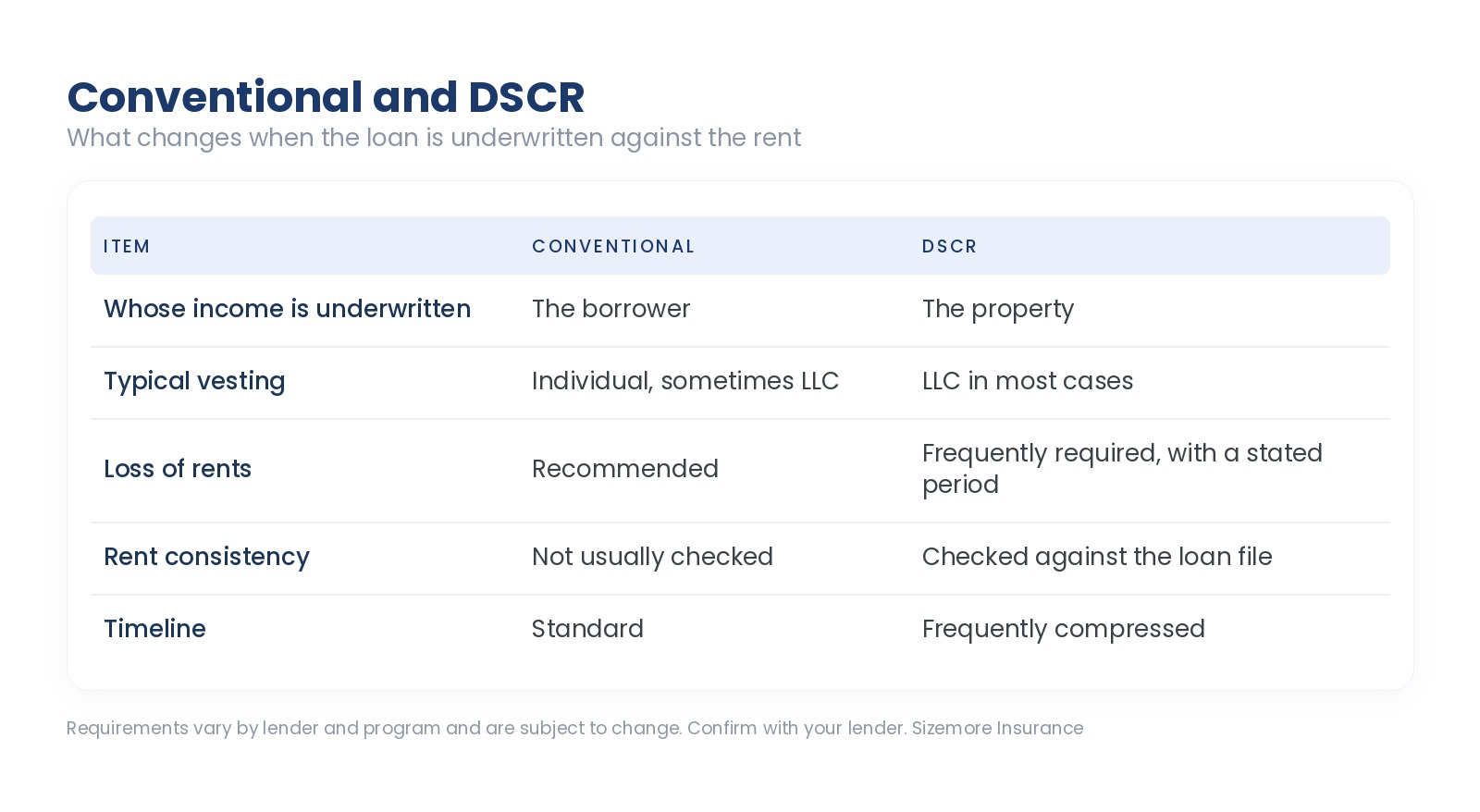
The takeaway: on a DSCR loan the loss of rents limit and the named insured are underwriting items rather than housekeeping.
Requirements vary by lender and program and are subject to change. Confirm with your lender.
What Gets Evidence of Insurance Rejected
The named insured does not match the vesting. The loan is to an LLC and the policy names the borrower personally. This is one of the most common rejections on a DSCR deal and it is entirely avoidable.
Loss of rents is missing or below the required period. A policy with a percentage-based loss of rents limit that works out to four months does not satisfy a twelve-month requirement.
The dwelling limit is below the required amount.
Actual cash value instead of replacement cost.
The mortgagee clause is wrong, including a prior lender or a servicer name that does not match.
The effective date is after closing.
Flood is missing on a mapped property.
The entity name is subtly wrong, including a missing LLC suffix, a middle initial, or a punctuation difference from the state filing. Underwriters at DSCR lenders read these carefully.
Getting It Right the First Time
Send us the term sheet. It states the insurance requirements and it saves a round trip.
Confirm the exact entity name from the state filing or the operating agreement, not from memory.
Confirm the lease or market rent and set loss of rents to the required period at that rent.
Confirm the mortgagee clause from the lender’s own instructions rather than a prior document.
Bind effective on or before closing and get evidence of insurance issued the same day where the property is eligible.
Tell us if the vesting might change, because a late change means a rewrite.
Where This Gets Complicated
Multiple properties in one loan require schedules and consistency across them.
A newly formed LLC may not have documentation ready, and the name has to be final before we bind.
Seasoning requirements on some DSCR programs affect timing rather than insurance.
Short-term rental income underwritten on a DSCR loan raises both the occupancy question and the loss of rents calculation, because platform income is irregular.
A property in a rehab does not fit a DSCR structure until it is rent-ready, which means the insurance changes at the same time the loan does.
Cash-out refinances trigger the same document review as a purchase.
Prepayment and portfolio structures are loan questions rather than insurance ones, and they affect how many policies are in play.
Common Questions
Is DSCR insurance different from a normal landlord policy?
The policy is generally the same form. What differs is that loss of rents and the named insured are underwriting items rather than preferences.
Why does loss of rents matter so much?
The loan was underwritten against the property’s income. The lender wants the income protected, frequently for a stated period.
Does the policy have to name the LLC?
If the LLC is taking title and borrowing, generally yes, matching the state filing exactly.
What is the most common rejection?
Frequently a named insured that does not match the vesting.
How fast can this be done?
Frequently same day where the property is eligible and the information is complete. Send the term sheet.
What if the entity name is slightly off?
Fix it before binding. DSCR underwriters read the name character for character.
The Bottom Line
- Send us the term sheet, because it states the requirements.
- Confirm the exact entity name from the filing, not from memory.
- Set loss of rents to the required period at the documented rent.
- Take the mortgagee clause from the lender’s instructions.
- Bind effective on or before closing.
- Lock the vesting before we bind, because a late change is a rewrite.
Sizemore Insurance is an independent insurance company founded in North Carolina in 1977, writing in both North Carolina and South Carolina. Send the term sheet and the entity name and we will have evidence of insurance back the same day where the property is eligible. Insurance made just for you.
Requirements, programs, and documentation standards vary by lender and are subject to change. Nothing here is legal or lending advice. Confirm requirements with your lender and review your own policy with your advisor.