This is the coverage everything else hangs on. The filing attaches to it, brokers specify it, and a serious accident is decided by it.
It is also the one where the structural choices matter most and get the least attention.
What It Covers
Bodily injury and property damage you cause to others while operating a covered auto.
Defense costs, generally in addition to the limit rather than inside it, which is a substantial benefit in a class where litigation is common.
Coverage for permissive users and employees operating covered autos, subject to the policy’s definition of who is insured.
Attached trailers in most forms, while attached to a covered power unit.
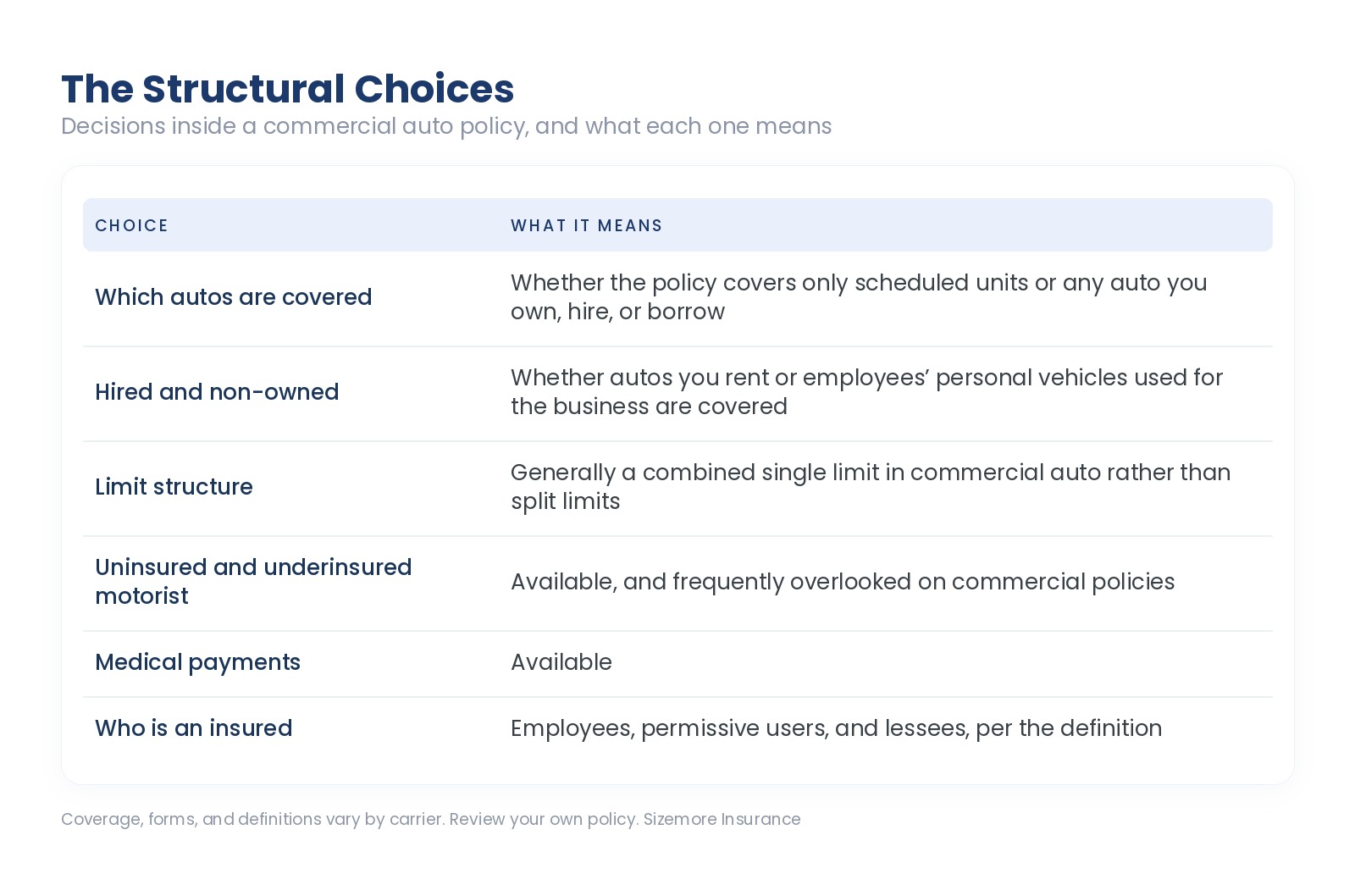
The takeaway: how the policy defines which autos are covered decides whether a truck you added last week, or a rental you took after a breakdown, is insured at all.
Coverage, forms, and definitions vary by carrier. Review your own policy.
The broadest approach covers any auto you own, hire, or borrow, which prevents the newly acquired vehicle problem. A narrower schedule-only approach requires you to report every unit, and forgetting one is a claim without coverage.
The Limit
Federal financial responsibility requirements set a floor for interstate operations, varying by weight and commodity. Broker and shipper contracts commonly require more.
Neither is a measure of your exposure.
A serious injury accident involving a commercial truck can produce a claim well beyond a common contractual requirement. Above your limit, the claim reaches the business, and for many carriers the business is the equipment and the equipment is the livelihood.
That is the argument for an excess layer, which gets its own article.
Where This Gets Complicated
The MCS-90 sits on this policy and it protects the public rather than you. Every gap in this coverage becomes a debt through that endorsement.
Listed drivers matter here most. An unlisted or unapproved driver in a serious accident is the classic denied claim.
Radius and commodity are rated and frequently warranted on this policy as well as on cargo.
Trailers you do not own raise questions the auto policy may not answer. Trailer interchange is separate.
Loading and unloading can be an auto claim or a general liability claim depending on the facts, which is one reason to carry both.
Uninsured and underinsured motorist coverage is available on commercial auto and frequently declined without much thought. In North Carolina, contributory negligence makes your own coverage more valuable than it would be elsewhere, because a disputed fault finding can leave you recovering nothing from the other driver.
Newly acquired vehicles have a reporting window that varies by form. Know yours, and report anyway.
Common Questions
What does commercial auto liability cover?
Injury and property damage you cause to others while operating a covered auto, plus defense costs.
How much do I need?
At least your federal filing requirement and at least what your contracts require, and your exposure is larger than either. Price an excess layer.
Are my trailers covered?
Attached trailers generally are. Trailers you do not own need trailer interchange coverage.
Is a rental truck covered?
Only if the policy covers hired autos. Check the covered autos designation.
Do I need uninsured motorist coverage on a commercial policy?
It is worth carrying, and it matters more in North Carolina because contributory negligence can leave you with nothing from an at-fault driver.
What happens if I add a truck and forget to report it?
It depends on the covered autos designation and the newly acquired vehicle provision. Report it, and know which form you have.
The Bottom Line
- Check the covered autos designation, because it decides whether a new or borrowed unit is insured.
- Carry a limit above your contractual requirement, and price an excess layer.
- Confirm hired and non-owned coverage if anyone drives a rental or a personal vehicle for the business.
- List and approve every driver.
- Consider uninsured and underinsured motorist coverage, particularly given North Carolina’s negligence rule.
- Report new equipment immediately rather than relying on a reporting window.
Sizemore Insurance is an independent insurance company that has been placing coverage in North Carolina since 1977. Send us your declarations page and your broker requirements and we will tell you whether the limit and the structure hold up. Insurance made just for you.
Coverage, forms, definitions, and requirements vary by carrier, jurisdiction, and contract and are subject to change. Nothing here is legal advice or a coverage determination. Review your own policy or talk to your advisor.